There are two ways to put a lightning rod on a structure in 2026, and the lightning-protection industry has been arguing about which one is correct for forty years. The argument is partly technical and partly commercial. This article tries to be neutral.
1. The two technologies in 90 seconds
Franklin (conventional) rod
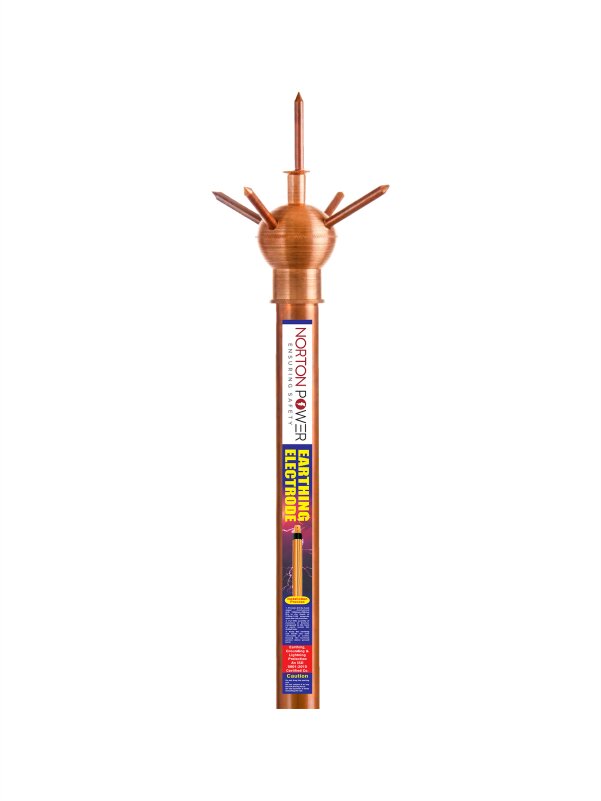
Invented by Benjamin Franklin in 1752. A pointed metallic rod mounted at the highest point of the structure, connected to ground via a down-conductor and an earth electrode. It works by being the easiest path to ground when a lightning channel is forming overhead — the lightning prefers to hit the rod rather than the structure.
The protected zone is computed via the “rolling sphere” method in IEC 62305: imagine a sphere of radius R (which depends on the chosen protection level I-IV) rolling over the structure; everything the sphere does not touch is protected. Multiple rods, masts, or catenary wires may be required for adequate coverage.
ESE (Early Streamer Emission) arrestor
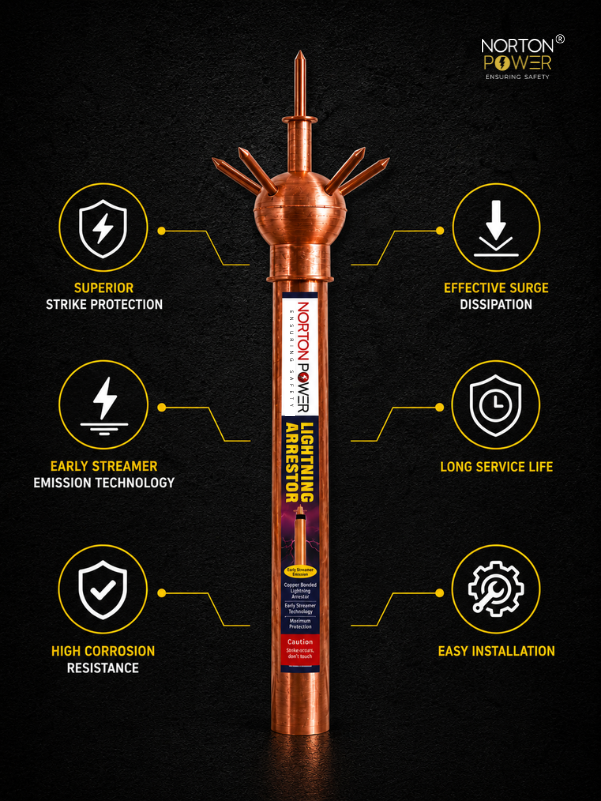
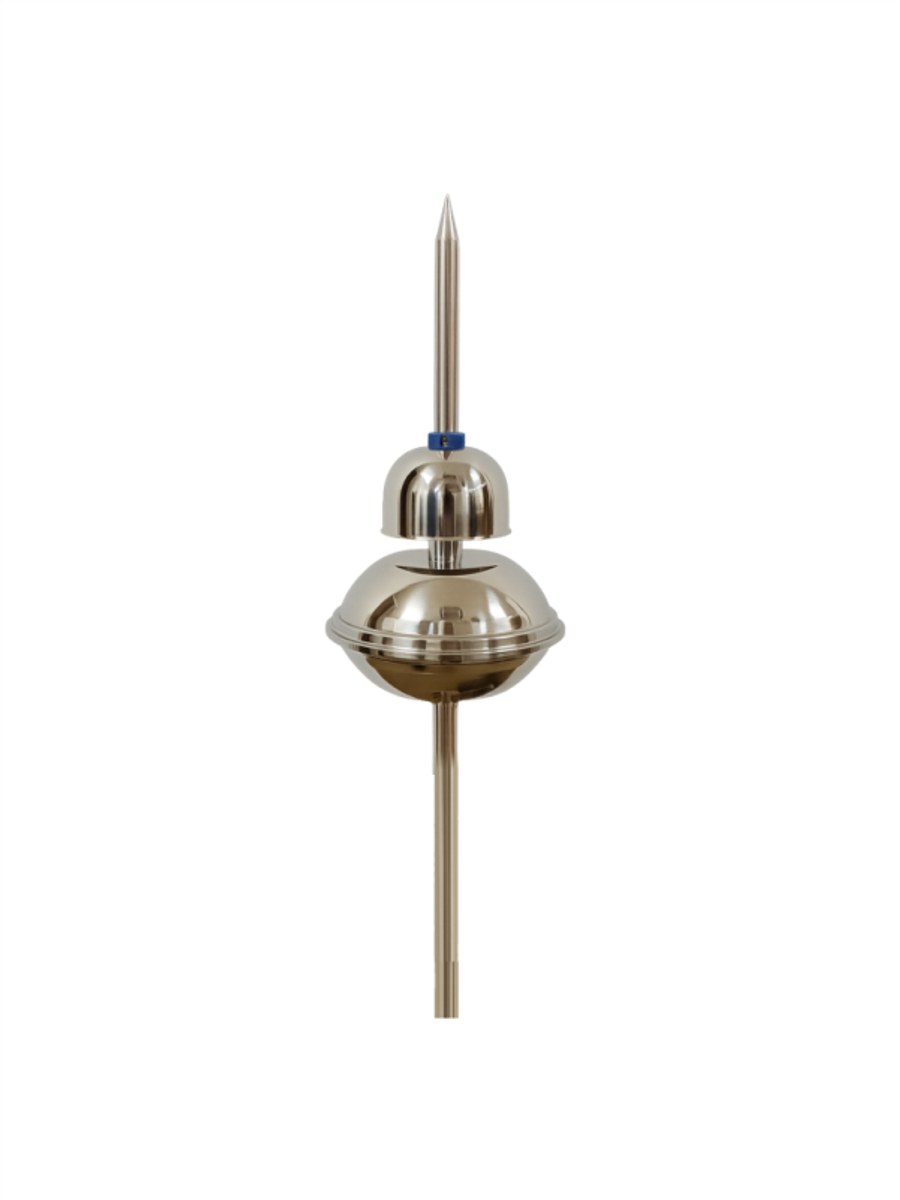
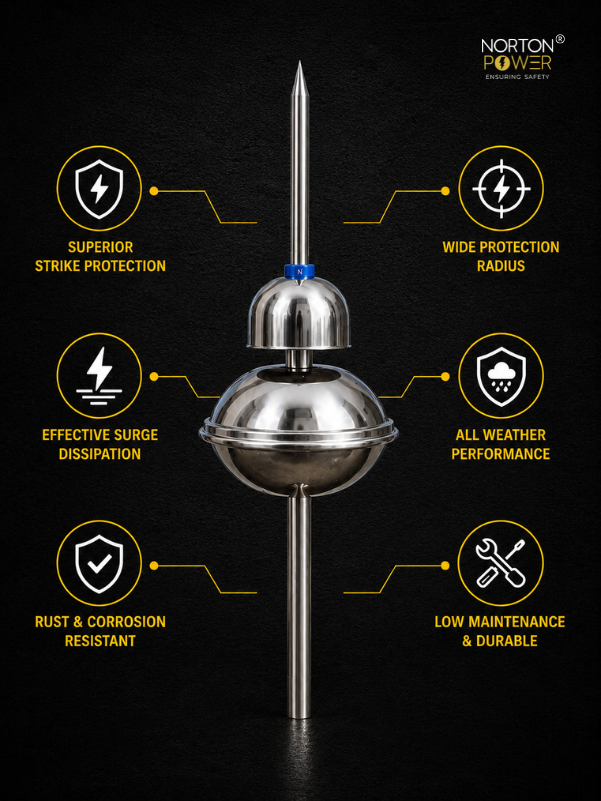
A Franklin rod with an added device at the tip — a passive ionisation chamber or active piezoelectric unit — that releases an upward leader marginally earlier than a passive rod of the same height would. “Marginally earlier” means tens of microseconds: 15, 25, 40, or 60 µs, corresponding to the device’s “delta-T” rating.
The protected zone is computed via the protection-radius formula in NF C 17-102:2011 (the French standard adopted across India, Spain, Brazil, and parts of Asia for ESE devices). At a typical 5 m mast height with a 25 µs delta-T device, the formula yields a protected radius of roughly 50-70 m for protection level II — significantly larger than what a Franklin rod of the same height would protect under IEC 62305.
2. The argument
ESE manufacturers say the larger radius is real, repeatable, and tested. The published independent research is mixed: some lab tests show measurable early triggering; some field studies show ESE-protected structures struck on the periphery of the claimed zone.
IEC 62305 does not recognise ESE’s larger protection radius. NF C 17-102 does. For a project specified under IEC 62305, you must use Franklin or mesh-type rods sized via the rolling sphere. For a project specified under NF C 17-102, you may use ESE with the larger radius. Many engineering tenders in India explicitly allow either standard.
The honest summary: the ESE technology works and reduces installations on large open sites; the magnitude of the improvement is contested in research literature; the regulatory blessing depends on which standard the project follows.
3. The site profile that should tip you to each
| Site characteristic | Recommendation |
|---|---|
| Compact building (commercial / residential, footprint < 20 × 20 m) | Franklin / IEC 62305. The rolling sphere covers it with 1-2 rods; ESE is overkill. |
| Substation or switchyard (open footprint, masts already required) | Either works. If the substation client already has a Franklin standard, stay with it. Greenfield is a candidate for ESE if the tender allows. |
| Solar PV plant (large open footprint, 5+ acres) | ESE is usually more economical. A 25-40 µs ESE on a 10-12 m mast can replace several Franklin masts. |
| Telecom or broadcast tower | Tower itself is the strike receptor. Use Franklin / mesh at the top in conjunction with the tower’s grounding system. |
| Stadium, exhibition ground, fuel depot (wide open, structures up to a few storeys) | ESE shines here. The wide radius from a single high mast clears the whole footprint. |
| Petrochemical / refinery (mixed structures, explosion-risk zones) | Project usually mandates IEC 62305 for insurance reasons. Franklin / mesh. |
| Historic / heritage building | Franklin (mesh hidden in roof structure preferred). ESE on a heritage roof is visually intrusive. |
4. Cost comparison at the same protection level
Like-for-like, on a single mast, an ESE arrestor costs 8-15x more than a Franklin rod of the same height. The cost crossover is when you need multiple Franklin masts to cover an area that one ESE could cover. Rough thumb-rule: above ~2,000 m² of open footprint, the ESE solution becomes cheaper at the total-installed level.
Costs to factor in:
- Number of masts (foundations, civil work)
- Down-conductor copper running from each mast to the earth pit network
- Earth-pit count (each mast needs its own earth termination)
- Mast height (taller is more expensive at non-linear rate)
- Inspection cycle (more masts = more annual inspection)
The single-ESE solution often saves on copper down-conductor runs and earth pits more than the per-unit cost difference.
5. What to spec when you order
For an ESE order
- Delta-T rating: 15, 25, 40, or 60 µs (higher = larger radius)
- Protection level: I, II, III, or IV per NF C 17-102 (I is the most stringent)
- Mast height (this is the only on-site variable that materially affects radius)
- Tip material: AISI 316 stainless steel is the durable choice for Indian coastal / industrial environments
- Mounting hardware compatibility with your mast diameter
- Calibration certificate per unit (any reputable manufacturer supplies this)
For a Franklin order
- Rod material: 12 mm or 14 mm copper-bonded for cost-effective; 25 mm pure copper for premium / high-exposure
- Length above support: typically 1-2 m above the highest point of the structure
- Down-conductor: 25 mm × 3 mm copper tape or 8 mm copper round, run with gentle curves (no sharp bends)
- Earth pit: copper-bonded 250 µm rod with earth-enhancing compound is the standard pair
6. Closing thought
The argument over ESE’s exact protection radius will outlive most of the buildings either rod is protecting. For a specifying engineer, the practical questions are simpler: which standard does the project follow, what does the site footprint look like, and what is the total-installed cost. Answer those and the choice between ESE and Franklin almost always becomes obvious.