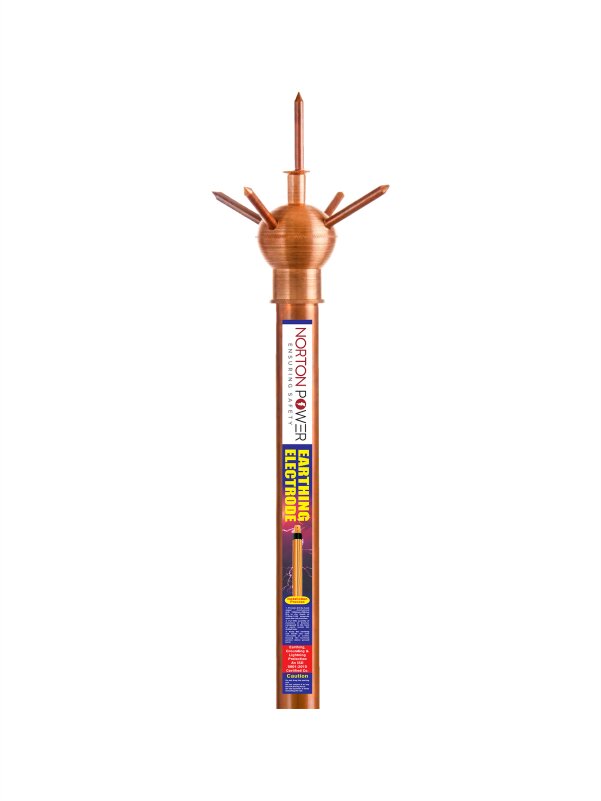
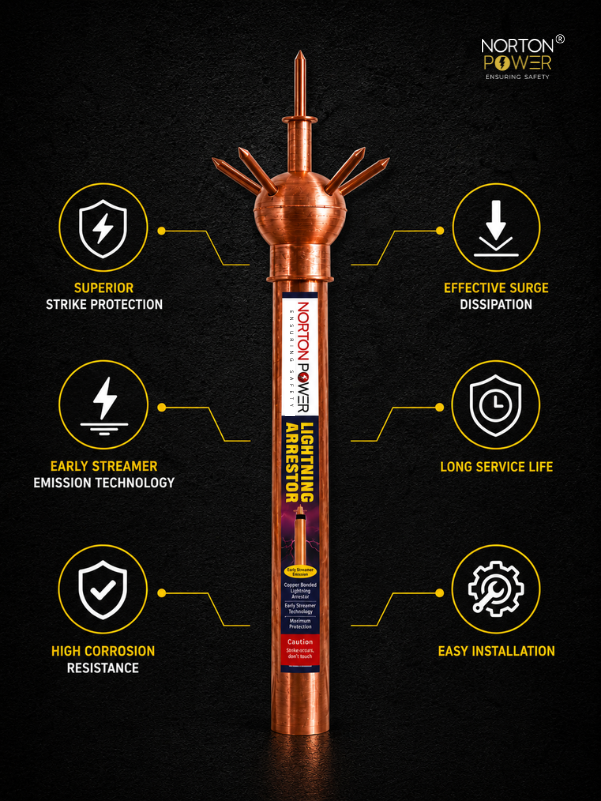
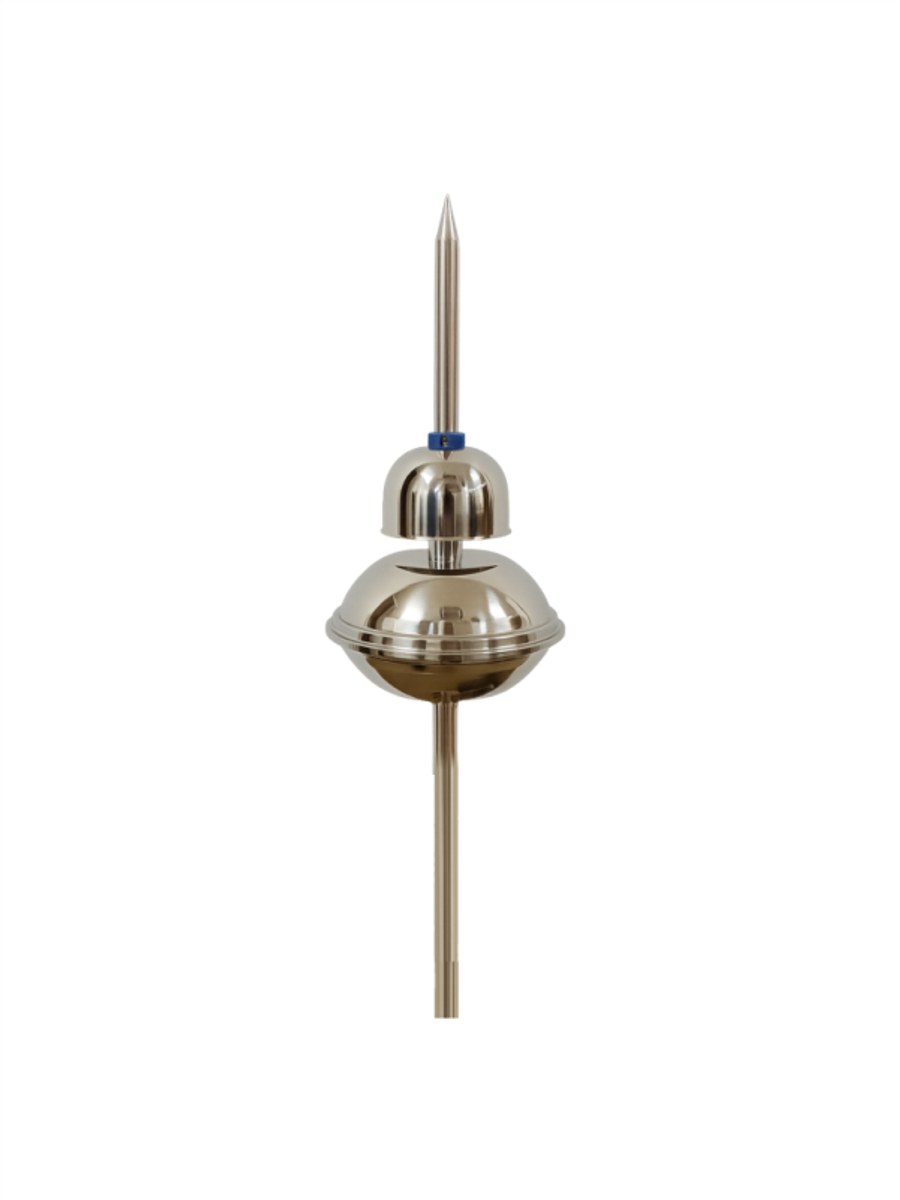
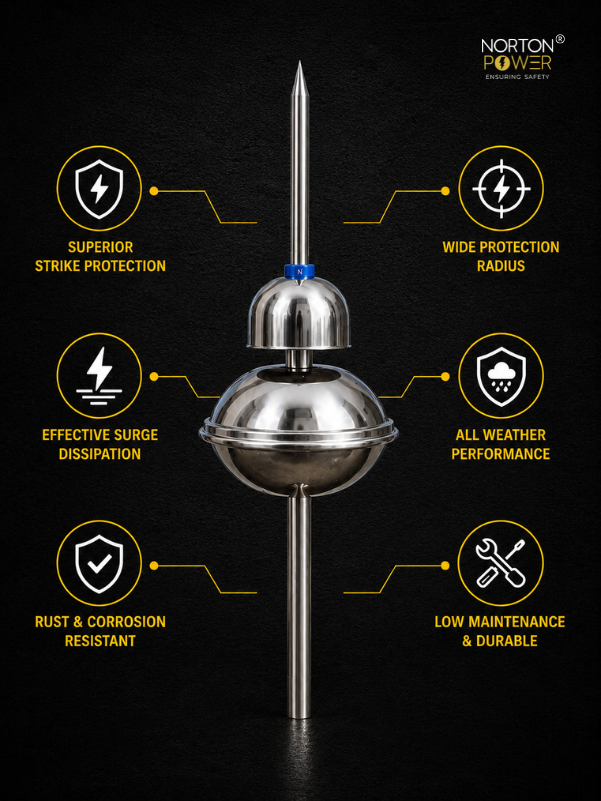
They are different devices for different jobs. A lightning arrester (lightning conductor) protects a structure from a direct strike by sending it to earth. A surge arrester is connected to the electrical system to clamp the over-voltage that a strike or switching event sends down the line - this is what protects a transformer or substation equipment.
The difference
| Device | Protects against |
|---|---|
| Lightning arrester / conductor | A direct strike on the structure |
| Surge arrester (SPD / LA on line) | Over-voltage surges on the wiring |
| On a transformer | Surge arresters at the bushings clamp incoming surges |
| On a building | Structural arrester + surge protection both |
The transformer and substation case
When people search for a lightning arrester for a transformer or substation, they usually mean the line-connected surge arrester at the transformer bushings. The structure itself is also protected by masts and a low-resistance earth grid - both are needed.