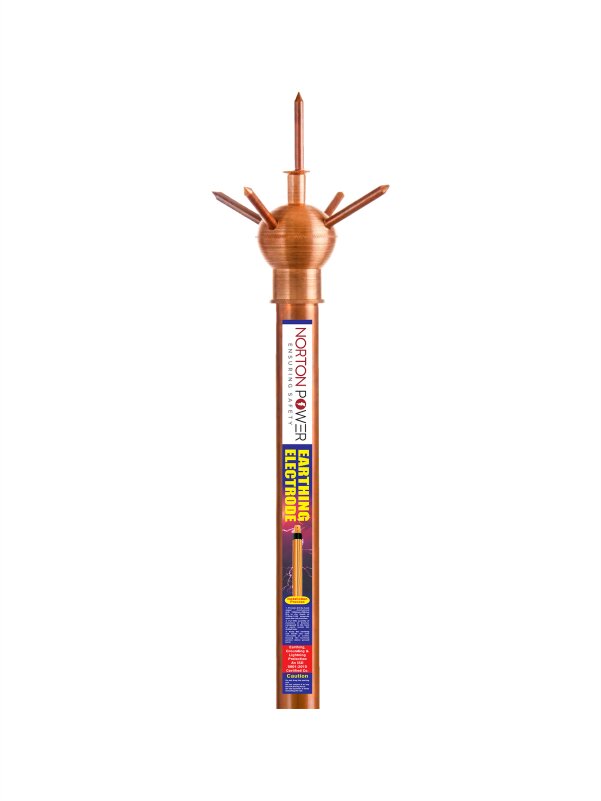
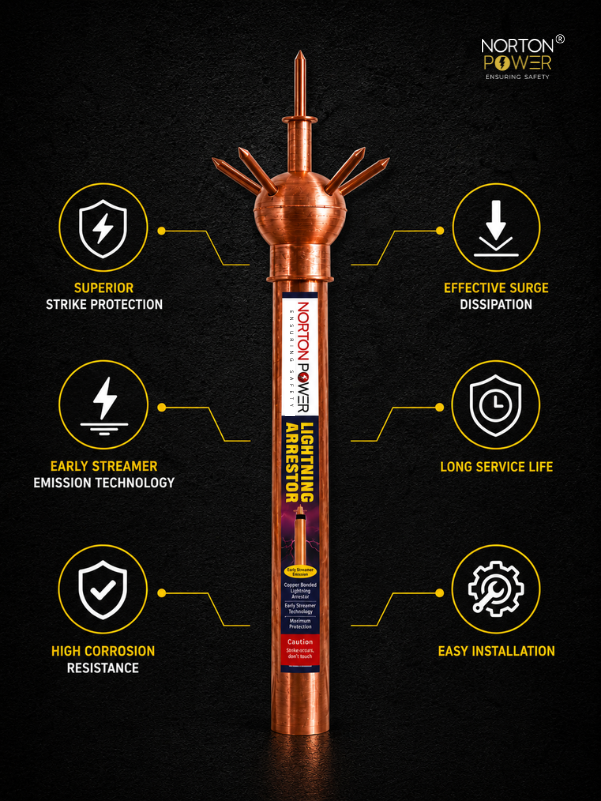
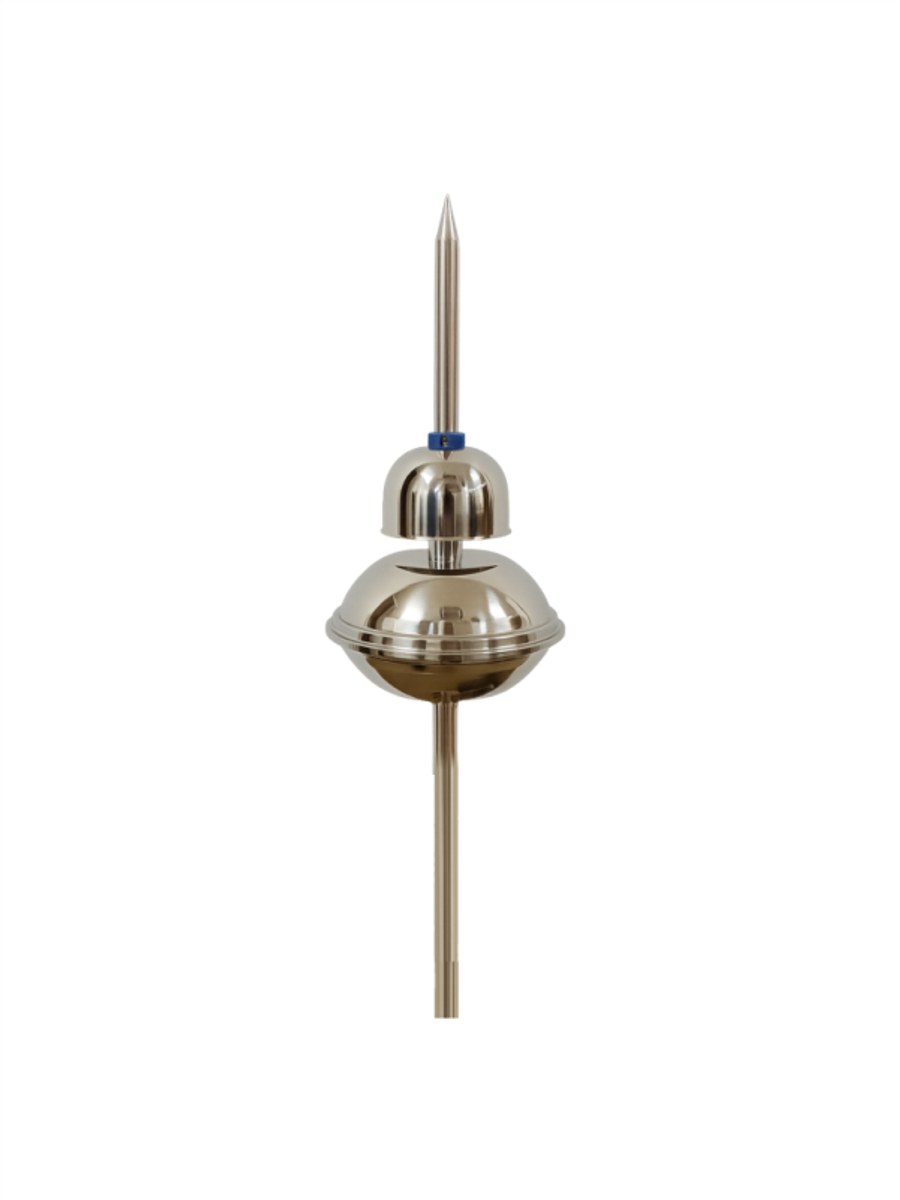
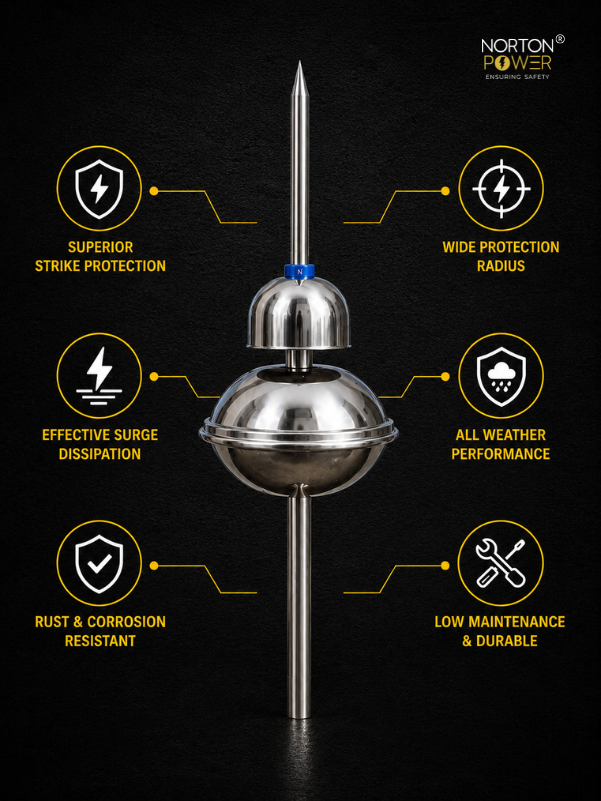
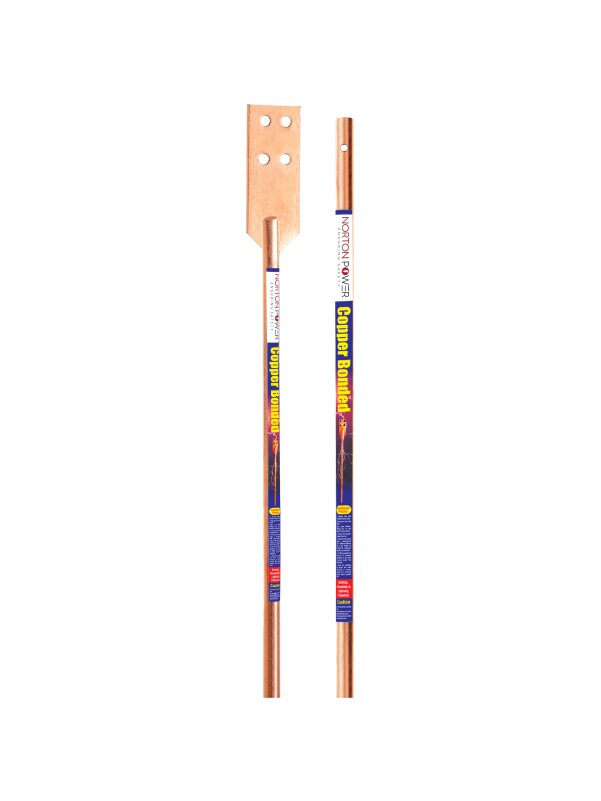
A lightning arrester - sometimes called a thunder protector - is a system that gives a lightning strike a safe path to the ground instead of through a building. It has three parts: an air terminal at the highest point to intercept the strike, a down-conductor to carry the current, and a low-resistance earth to dissipate it.
How it works
The earthed air terminal is the easiest path for a descending strike, so lightning attaches to it rather than the roof. The current runs down the conductor and spreads harmlessly into the earth through the electrodes. The system is sized and placed to a standard (IS/IEC 62305, or NF C 17-102 for ESE).
What it does not do
It protects the structure, not the wiring - the voltage surge still needs surge protection devices on the board. And it only works if the earth is low resistance, which is why the earthing is the critical half of the job.