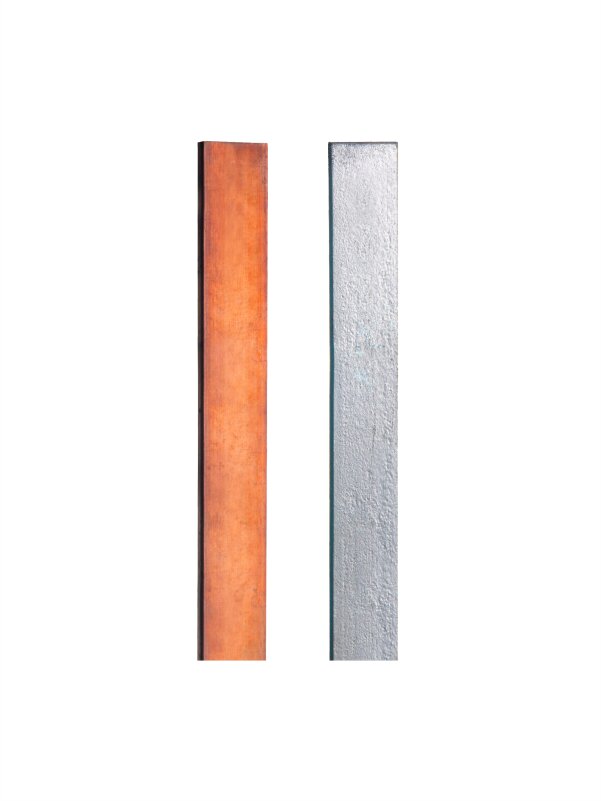
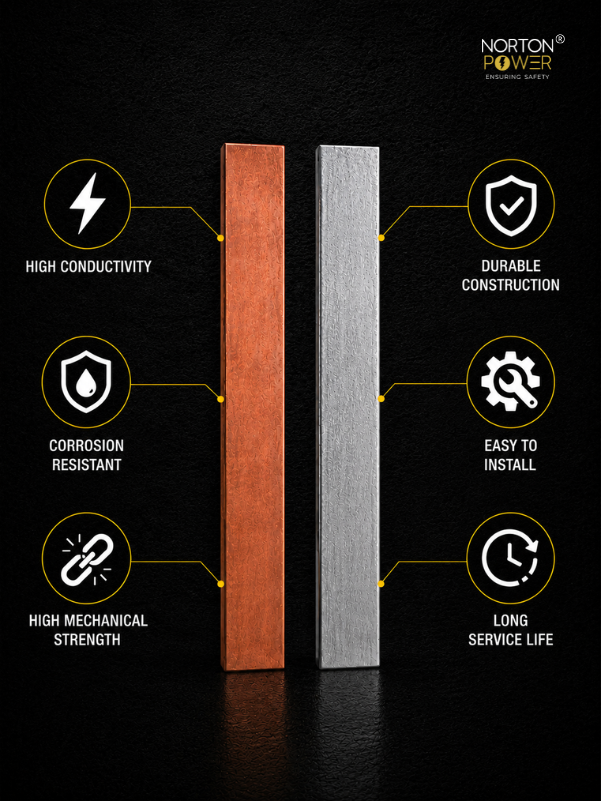
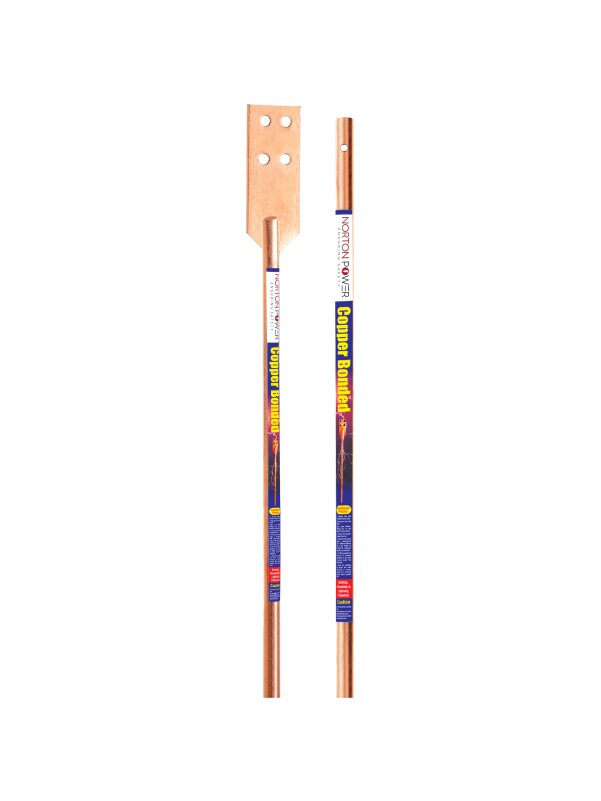
Copper earthing strip is a flat copper conductor used to interconnect electrodes, form earth grids and run lightning down-conductors. It carries roughly two and a half times the fault current of a GI strip of the same size, does not corrode like steel, and lasts the life of the installation - which is why it is specified for substations, data centres and HV work despite the higher cost.
1. Standard copper strip sizes
| Copper strip size (mm) | Typical use |
|---|---|
| 25 x 3 | Equipment bonding, clean earth |
| 25 x 6 | Distribution and panel earth |
| 32 x 6 | Earth grid risers |
| 50 x 6 | Main grid, substation and HV earthing |
2. Copper vs GI strip
| Factor | Copper vs GI |
|---|---|
| Fault current per size | Copper about 2.5x higher |
| Corrosion and life | Copper does not rust; GI loses its zinc over time |
| Cost | Copper higher upfront; GI cheaper |
| Best for | Copper for HV, data, lightning; GI for general LT |
3. Where copper strip is specified
- Substation and HT earth grids where fault currents are high.
- Data centres and clean-earth references where corrosion must be nil.
- Lightning protection down-conductors and ring earths.
- Any site where the earthing must outlast the building without re-work.