If you're searching for the difference between earthing and grounding, the short answer is: they refer to the same fundamental concept — providing a low-resistance path from electrical equipment to the mass of the earth. Indian and British engineering practice calls it earthing; North American practice calls it grounding. For most procurement and design decisions in India, the words are interchangeable.
But the standards traditions behind each word lead to subtle scope differences, especially in projects that draw from international specifications. This article explains where the line is and when the distinction matters.
1. Where each term comes from
Earthing — British / Indian / IEC tradition
Used in IS 3043 (Indian Standard for earthing practice), BS 7430 (British Standard for earthing of equipment), and IEC 60364 (international wiring installations). "Earth" specifically refers to the mass of the planet earth as the zero-potential reference.
Grounding — North American / IEEE tradition
Used in the US National Electrical Code (NEC), IEEE 80 (substation grounding), and Underwriters Laboratories standards (UL 467 for grounding electrodes). "Ground" originated as a generic reference plane (which could be the earth, a chassis, or a common bus) and over time narrowed to mean the same as "earth" in most contexts.
2. Where the two terms overlap
In a modern installation, both terms cover the same three connection types:
- Equipment earthing / equipment grounding: bonding the metal enclosure of equipment to earth, so a line-to-frame fault drains to earth and trips protection.
- Neutral earthing / neutral grounding: connecting the transformer neutral to earth, defining the system voltage reference.
- Lightning protection earthing / lightning protection grounding: providing a low-impedance path for lightning surge currents to dissipate into the soil.
All three are required in a compliant installation under both IS 3043 and the NEC.
3. Where the two terms quietly diverge
Some subtle scope differences worth knowing:
| Distinction | Earthing (IEC / IS) · Grounding (NEC / IEEE) |
|---|---|
| Reference object | "Earth" = the planet earth itself · "Ground" = nearest zero-potential reference (often but not always the earth) |
| Chassis-to-frame bonding | Called "equipotential bonding" separately from earthing · Often called "equipment grounding" |
| DC supply common | "DC return" or "0 V rail" · Often called "DC ground" |
| Signal reference in electronics | "Signal earth" or "0 V" · "Signal ground" or "Gnd" |
| Standards-compliant cross-reference | IS 3043, BS 7430, IEC 60364 · NEC, IEEE 80, UL 467 |
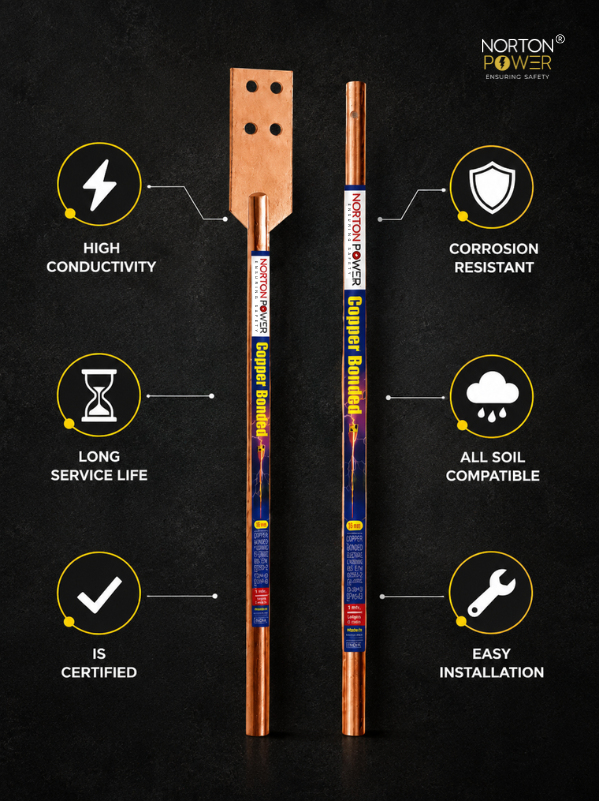
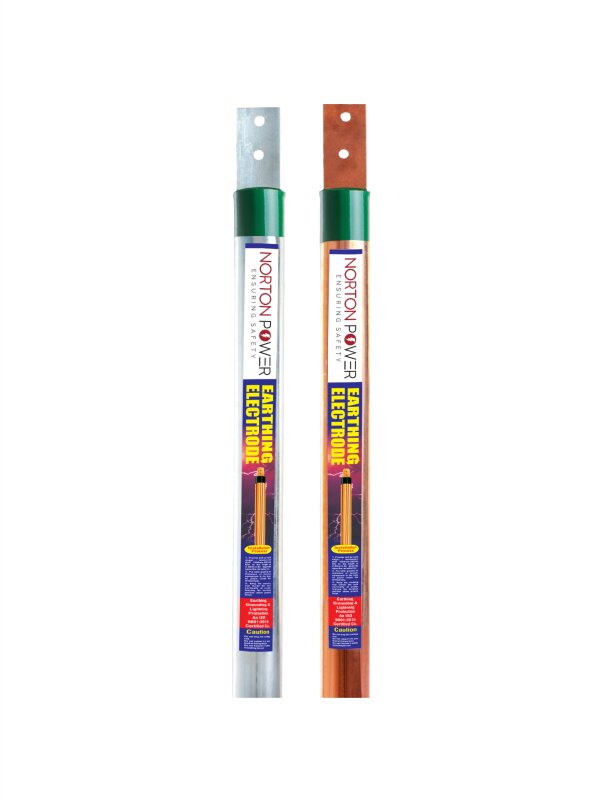
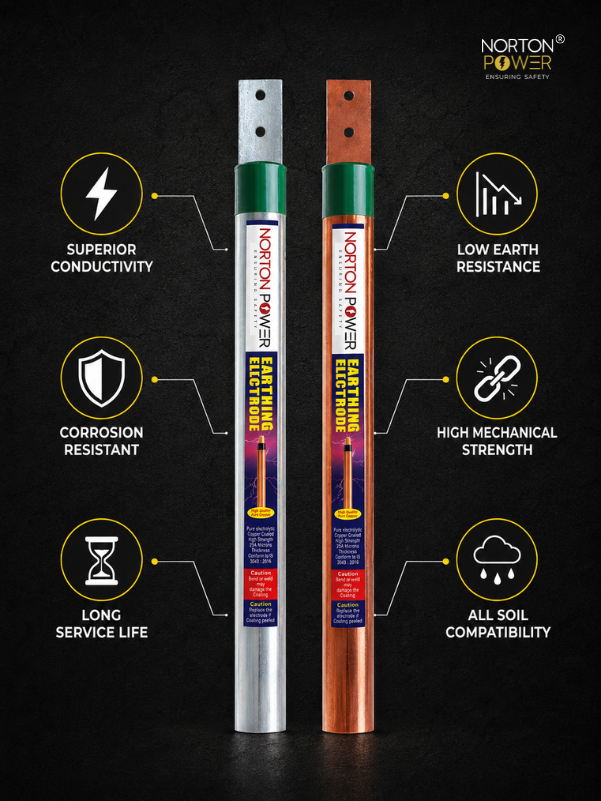
The distinctions are mostly terminological. The physical installation — copper bonded rod in soil, earth strip to equipment — is identical under either naming convention.
4. When the distinction matters
For most Indian projects: it doesn't matter. Spec writers use "earthing" by default; manufacturers ship under either term.
It matters when:
- Your tender is bilingual or cross-standards (Indian client, American EPC) and you need to satisfy both IS 3043 and UL 467. Norton Power's copper bonded rods are dual-certified — that solves it.
- You are importing equipment that is grounding-certified (UL listing) into an installation that needs earthing certification (CPRI / BIS). The rod hardware is interchangeable; the test reports are not.
- You are writing technical documentation for a project with international stakeholders — pick one term and stick to it throughout.
5. Practical answer for procurement
If your tender says "earthing rod, copper bonded, 17 mm × 3 m, 250 µ Cu, IS 3043 compliant" and an American supplier offers a "grounding rod, 5/8" × 10', copper bonded, UL 467" — these are functionally the same product. Imperial vs metric dimensions differ slightly; the underlying material and performance are identical.
Norton Power's copper bonded rods carry both IS 3043 and UL 467 compliance, with metric and imperial dimensions available. Specify in your preferred terminology; we'll match.