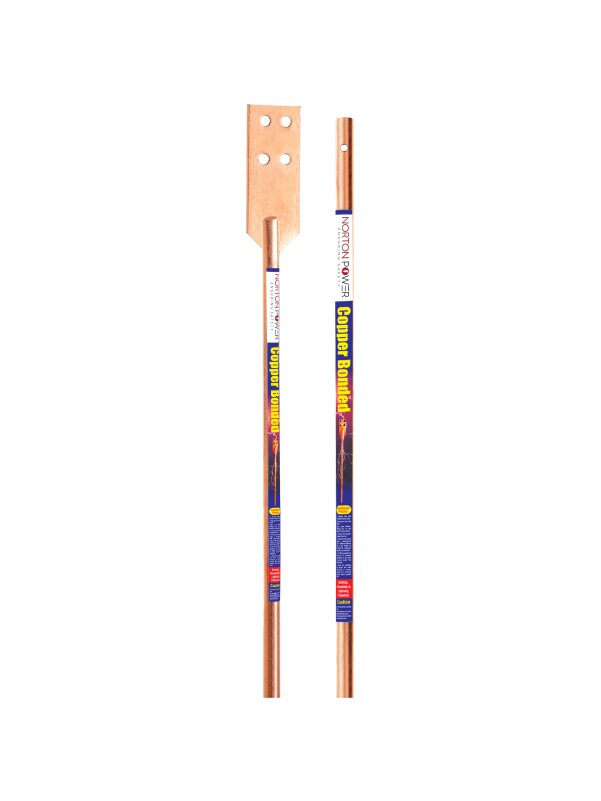
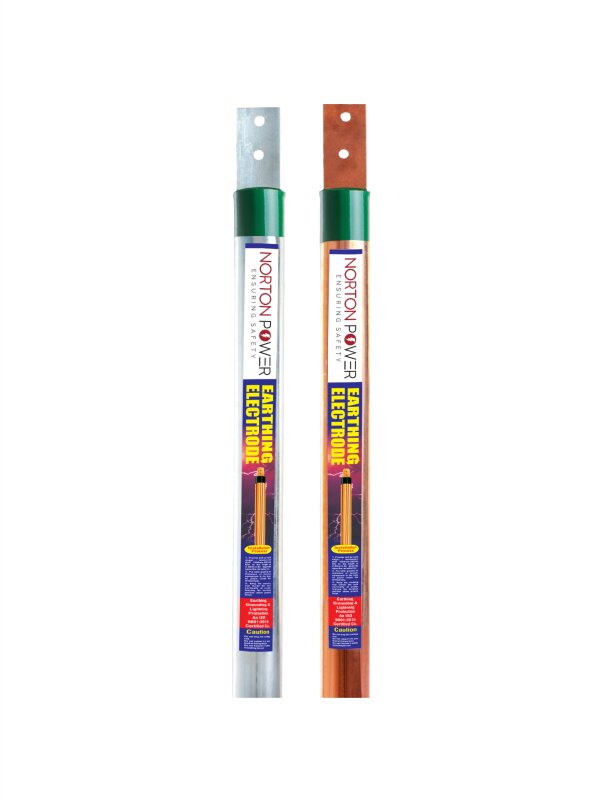
An earthing rod is specified by diameter, length, conductor material and coating thickness. The common copper bonded rod diameters are 14.2, 17.2, 20 and 25 mm, in lengths of 1, 2 and 3 metres that couple together for deeper driving, with a 250-micron copper coating to UL 467.
1. Standard sizes
| Diameter | Typical use |
|---|---|
| 14.2 mm | Light and residential earthing |
| 17.2 mm | Commercial and general industrial |
| 20 mm | Heavy industrial and substations |
| 25 mm | High fault current and deep driving |
Lengths are commonly 1, 2 and 3 metres. Rods are threaded and coupled with a coupling dowel so several can be driven in line to reach moist soil and a lower resistance.
2. Coating and material
The copper coating thickness is the number that decides life: 250 microns to UL 467 is the benchmark for a 30-year-plus rod. Thinner coatings (50 to 100 microns) cost less but corrode through sooner. See why UL 467 specifies 250 microns.
3. Specification checklist
- Diameter and length matched to the soil and fault current.
- Copper coating thickness stated (250 micron to UL 467 for long life).
- Thread and coupling dowel for extension to depth.
- Pointed driving end and driving head or stud.
- Test certificate (CPRI or equivalent) with the supply.