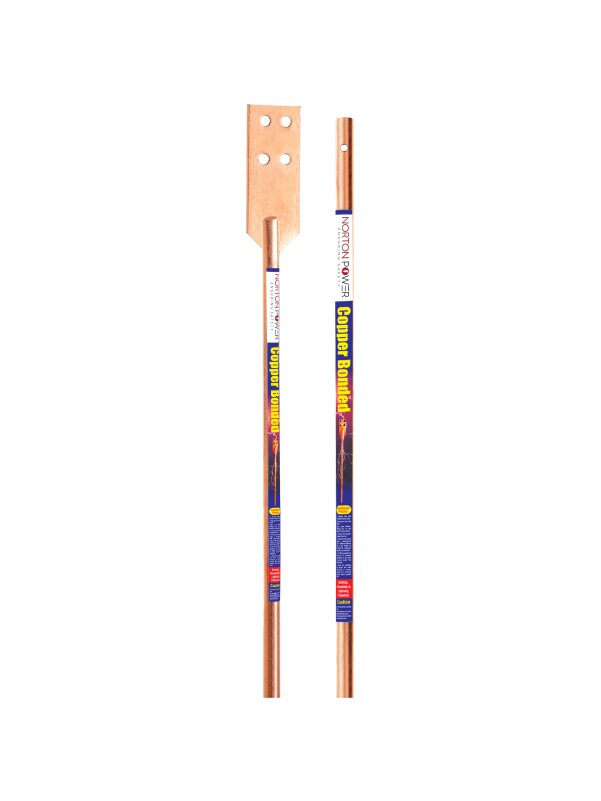
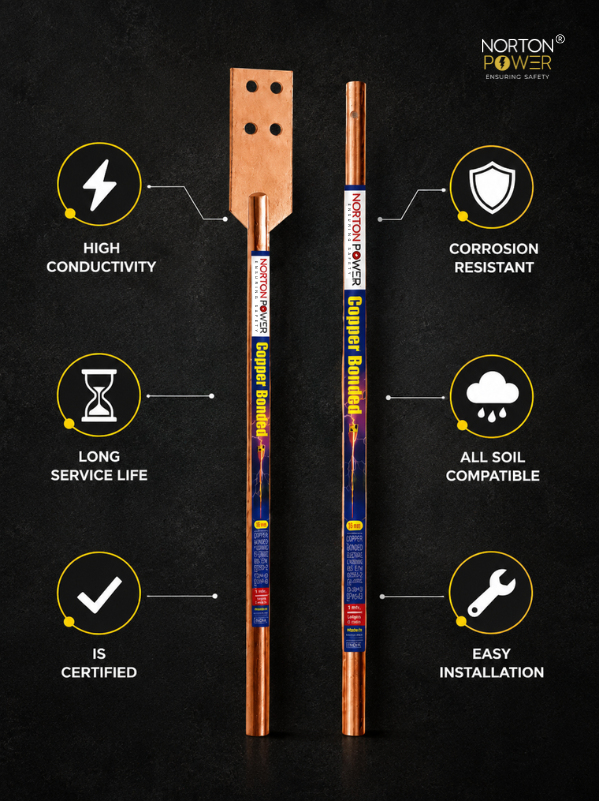
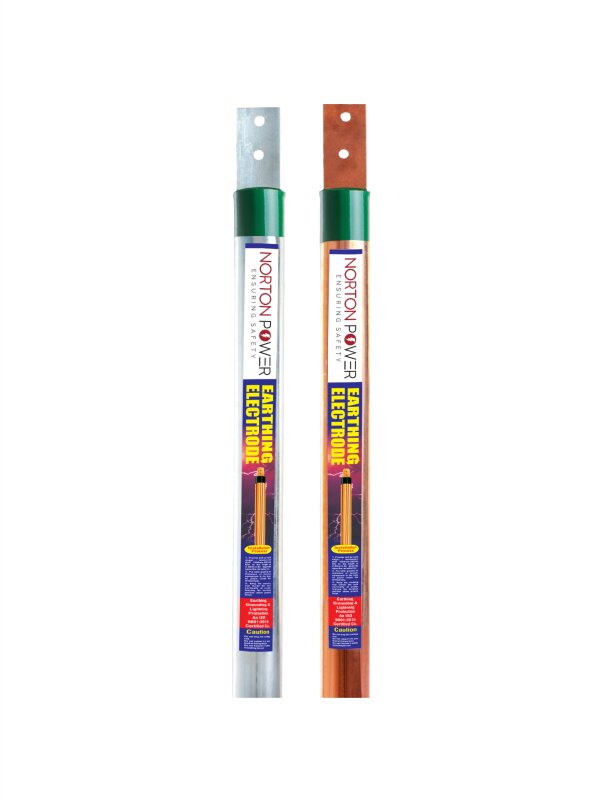
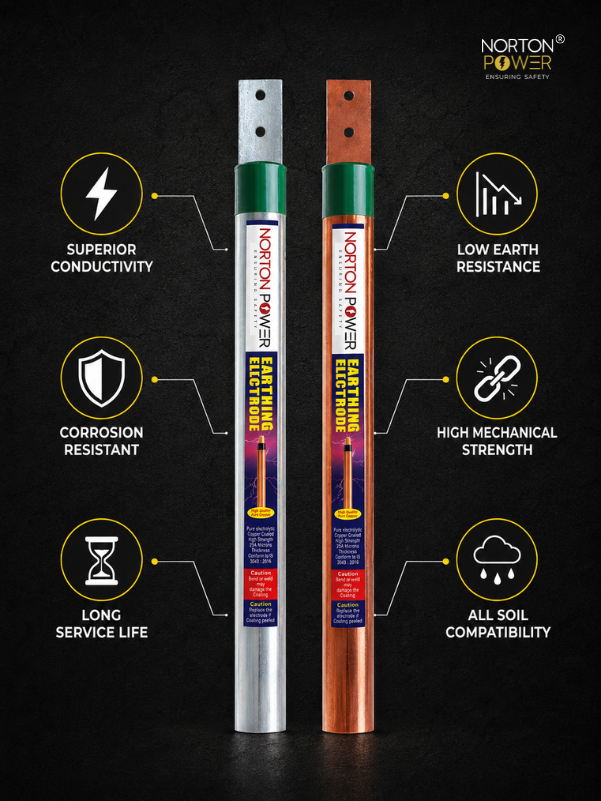
Earthing rods differ mainly in the conductor material and its coating, which decide life, corrosion resistance and cost. The four common types are copper bonded steel, solid copper, galvanised iron and stainless steel.
1. Copper bonded steel rod
A high-tensile steel core molecularly bonded with 250 microns of copper to UL 467. It combines the strength to be driven deep with the corrosion resistance and conductivity of copper, and is the most widely specified rod. See why UL 467 specifies 250 microns.
2. Solid copper rod
All copper, with the best conductivity and life, used for the most critical or corrosive sites - at the highest cost and with less driving strength than a bonded rod.
3. Galvanised iron (GI) rod
Steel with a zinc coating - the lowest cost, but the zinc depletes over time, so service life is shorter. Used for temporary or budget installations.
4. Stainless steel rod
Used in aggressive or chemical soils where even copper corrodes, and where dissimilar-metal issues must be avoided.
| Rod type | Life and where it fits |
|---|---|
| Copper bonded (250 micron) | 30+ years; the default for most sites |
| Solid copper | Longest life; critical and corrosive sites |
| Galvanised iron | Shorter life; budget or temporary |
| Stainless steel | Aggressive or chemical soils |