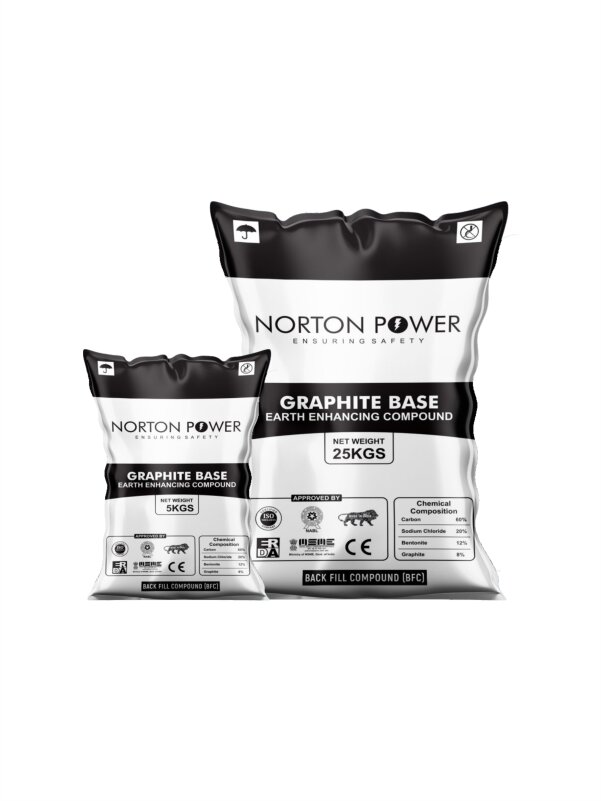
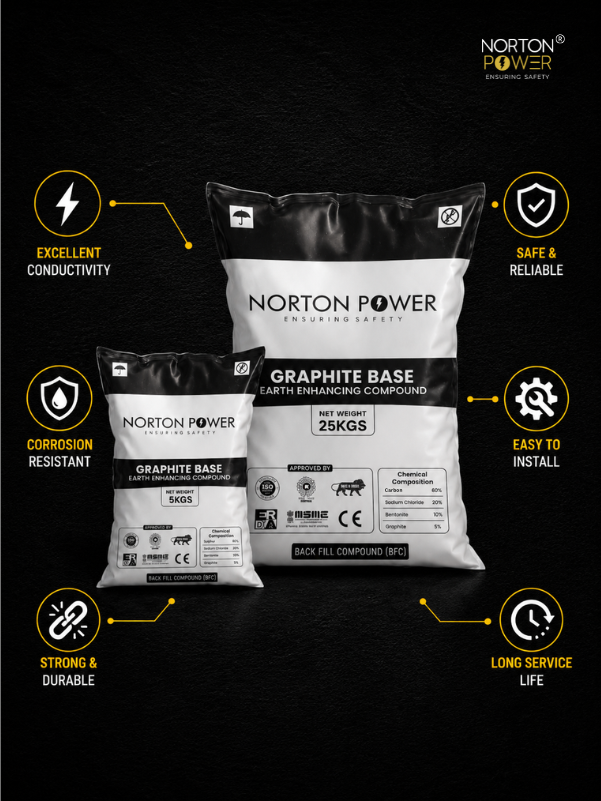
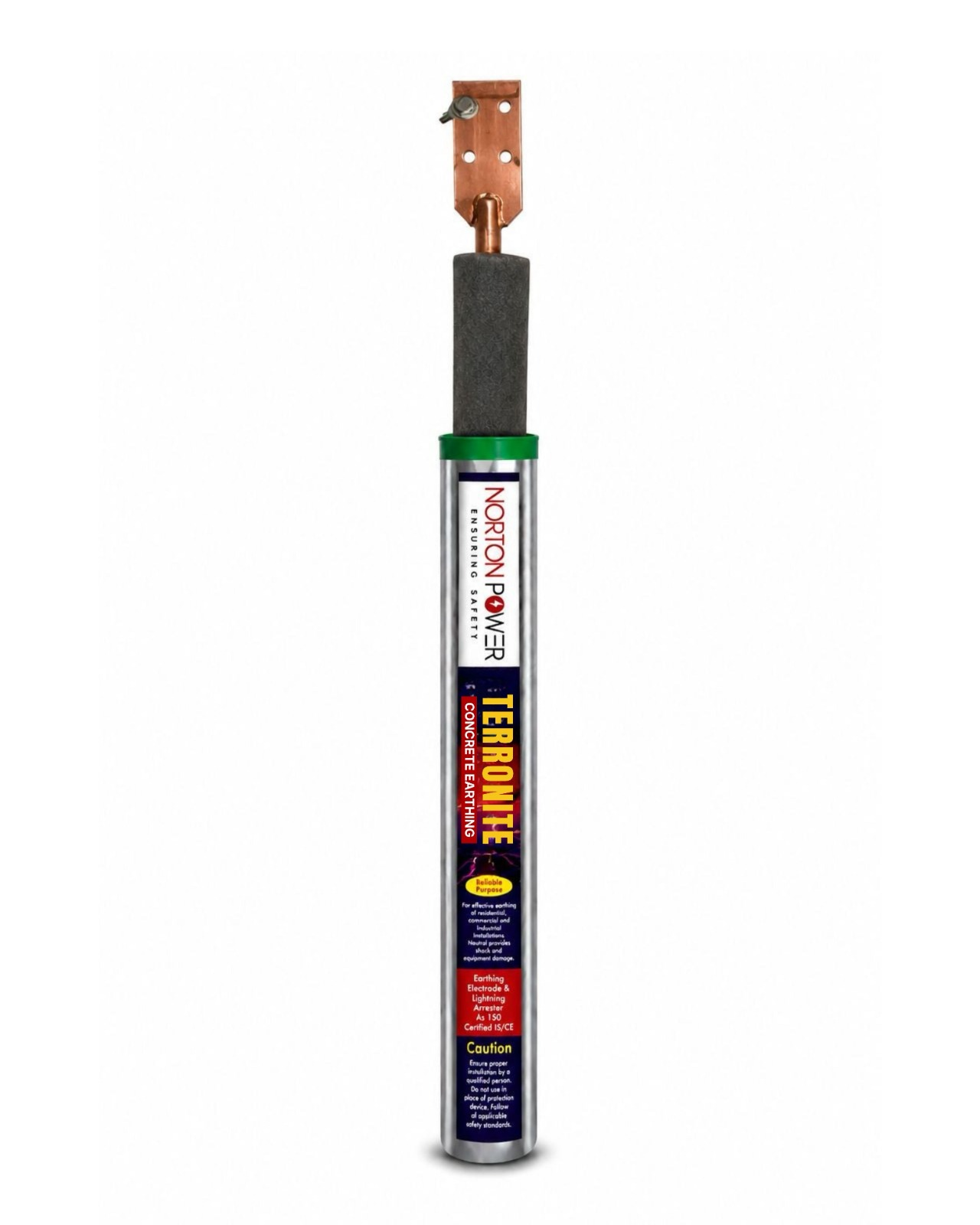
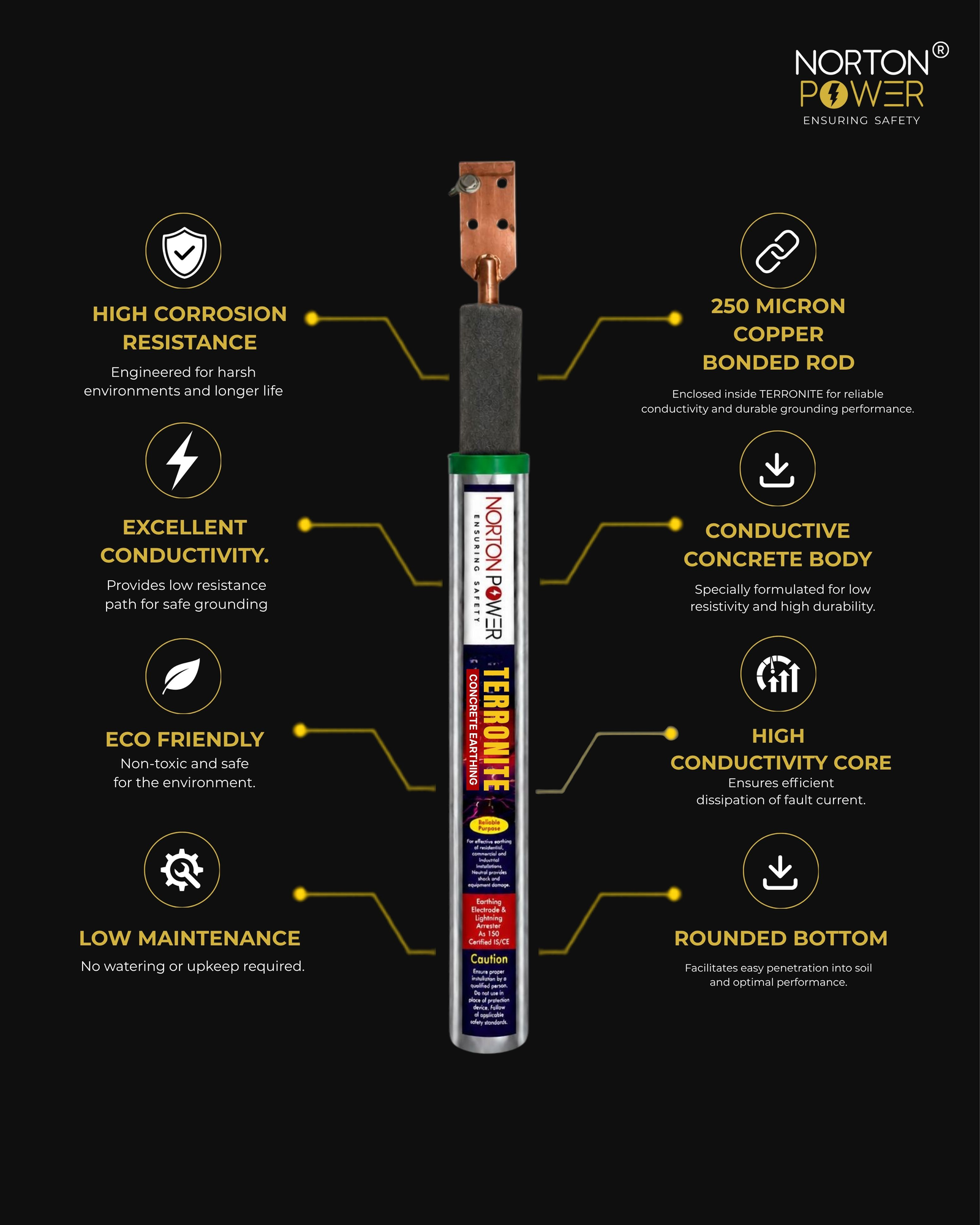
Grounding compound, back-fill compound, earth-enhancing compound, earthing enhancement compound and earth-resistance-reducing compound are all names for the same product: a conductive material packed around an electrode to lower its earth resistance. A good compound is graphite or bentonite based, holds moisture, and does not corrode the electrode.
1. What it actually does
- Lowers the resistivity of the material in contact with the electrode.
- Increases the effective electrode diameter, enlarging the contact area with the soil.
- Retains moisture around the electrode so the resistance stays low through dry seasons.
- Being non-corrosive and non-leaching, it protects the electrode instead of eating it.
2. How much to use
Typically 10 to 25 kg per electrode, mixed with water to a slurry and poured around the rod or pipe in the pit, then allowed to set. Follow the product dosing for your pit size. See the earth-enhancing compound how-and-when guide for the method.
3. Why it beats salt and charcoal
| Factor | Compound vs salt and charcoal |
|---|---|
| Corrosion | Compound is non-corrosive; salt eats the electrode |
| Maintenance | Compound is set-and-forget; salt pits need re-treatment |
| Stability | Compound holds resistance; salt washes away |
| Standards | Conductive back-fill is covered by IEC 62561-7 |