Chemical earthing electrodes look similar on a datasheet, so compare them on what matters: the internal conductor, the conductive medium around it, the standards it is tested to, and the independent test reports. A low price with a thin coating or no test report is not a bargain.
The comparison checklist
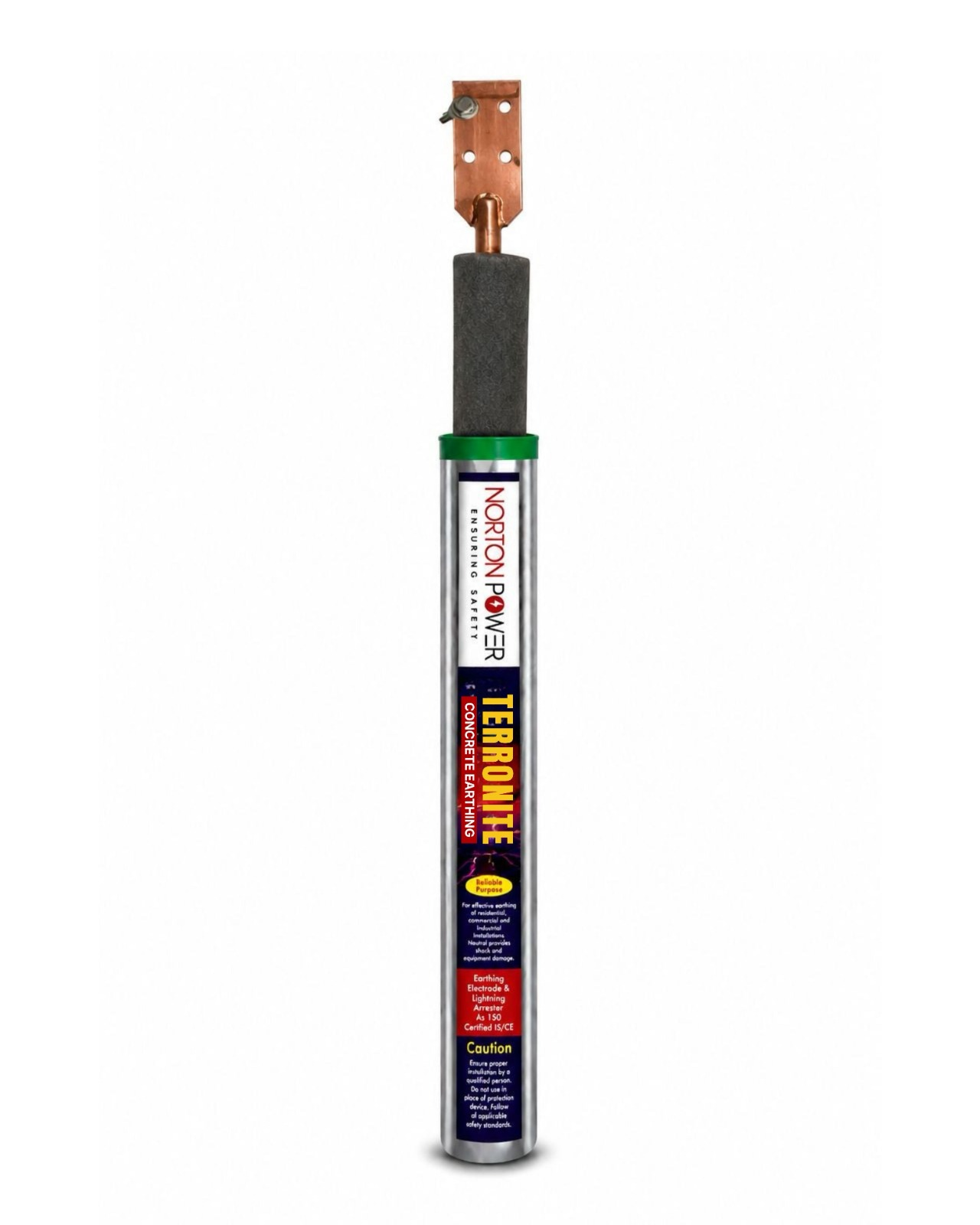
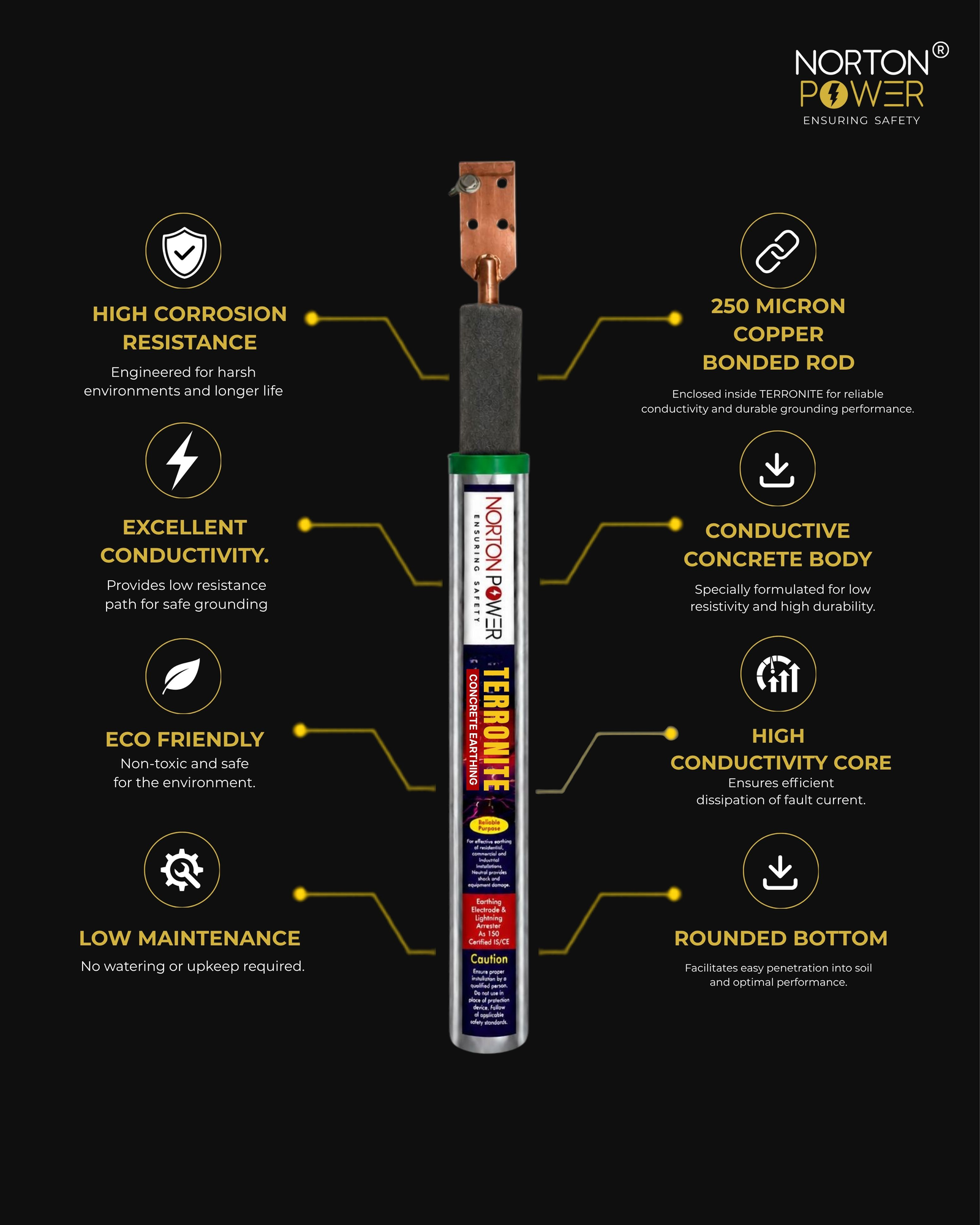
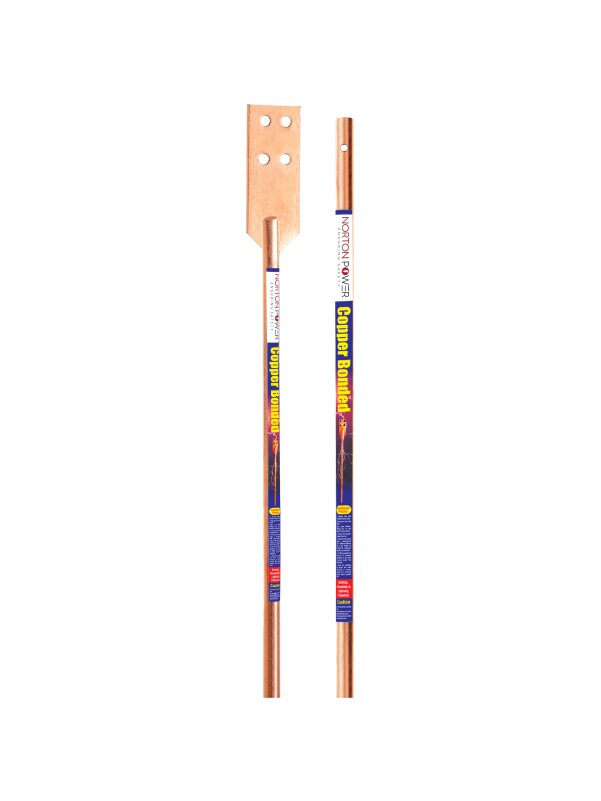
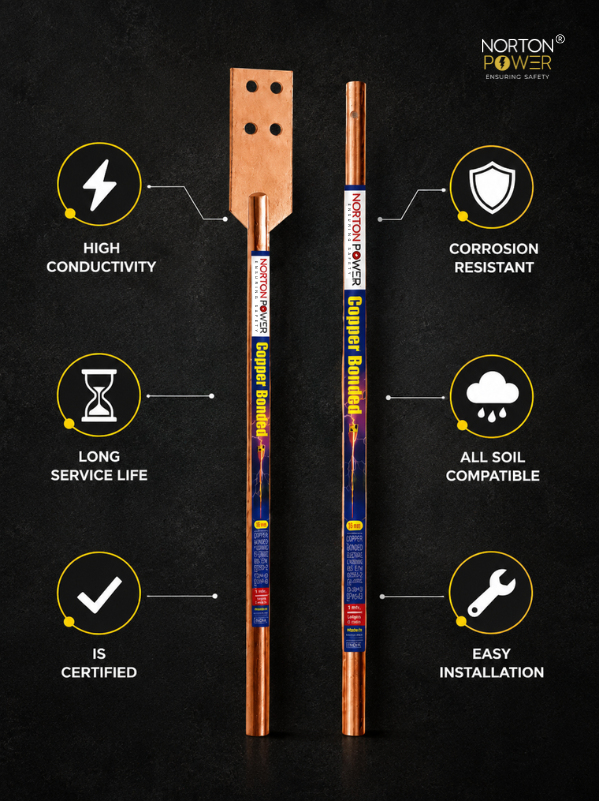
- Internal core - a copper bonded rod to UL 467 (250 micron) lasts; thin coatings do not.
- Conductive medium - a low-resistivity, non-corrosive, non-leaching backfill, not just salt.
- Resistivity of the medium stated (a low ohm-m figure) and how it holds through dry seasons.
- Standards - IEC 62561-7 for the backfill and IS 3043 for earthing.
- Independent test reports (CPRI or equivalent) for fault current.
- Stated service life and maintenance (nil re-treatment is the target).
Why the core decides the life
The conductive concrete protects the core, but the core still carries the current - so a genuine 250-micron copper bonded or solid copper core is what gives a 40-year-plus life. Ask for the coating thickness in microns and the test report, not just the brand name.