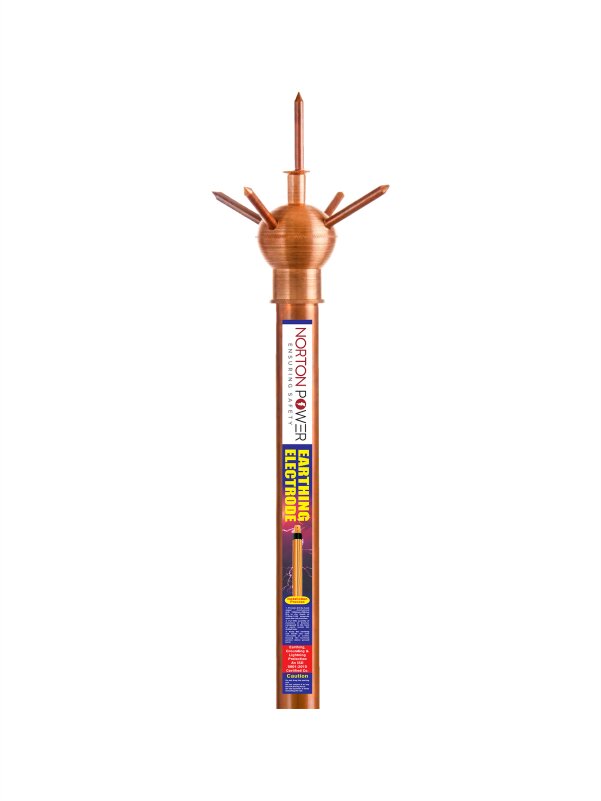
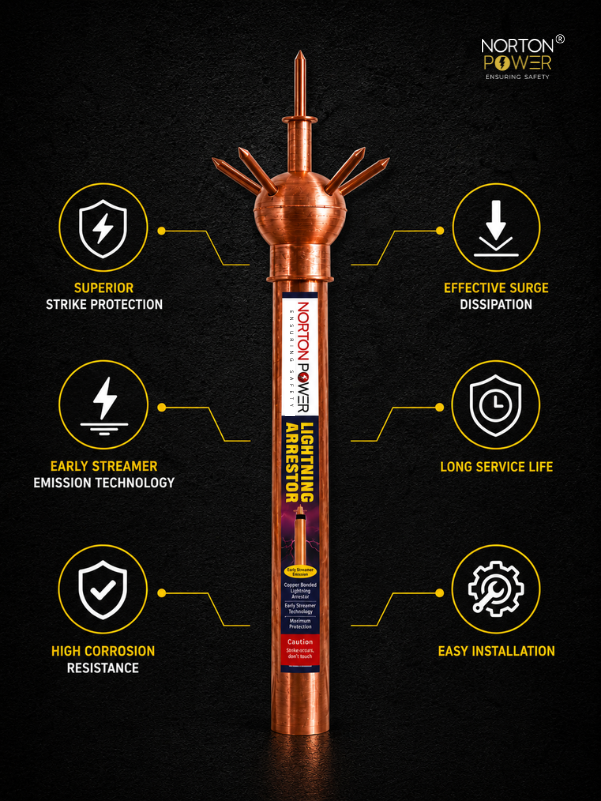
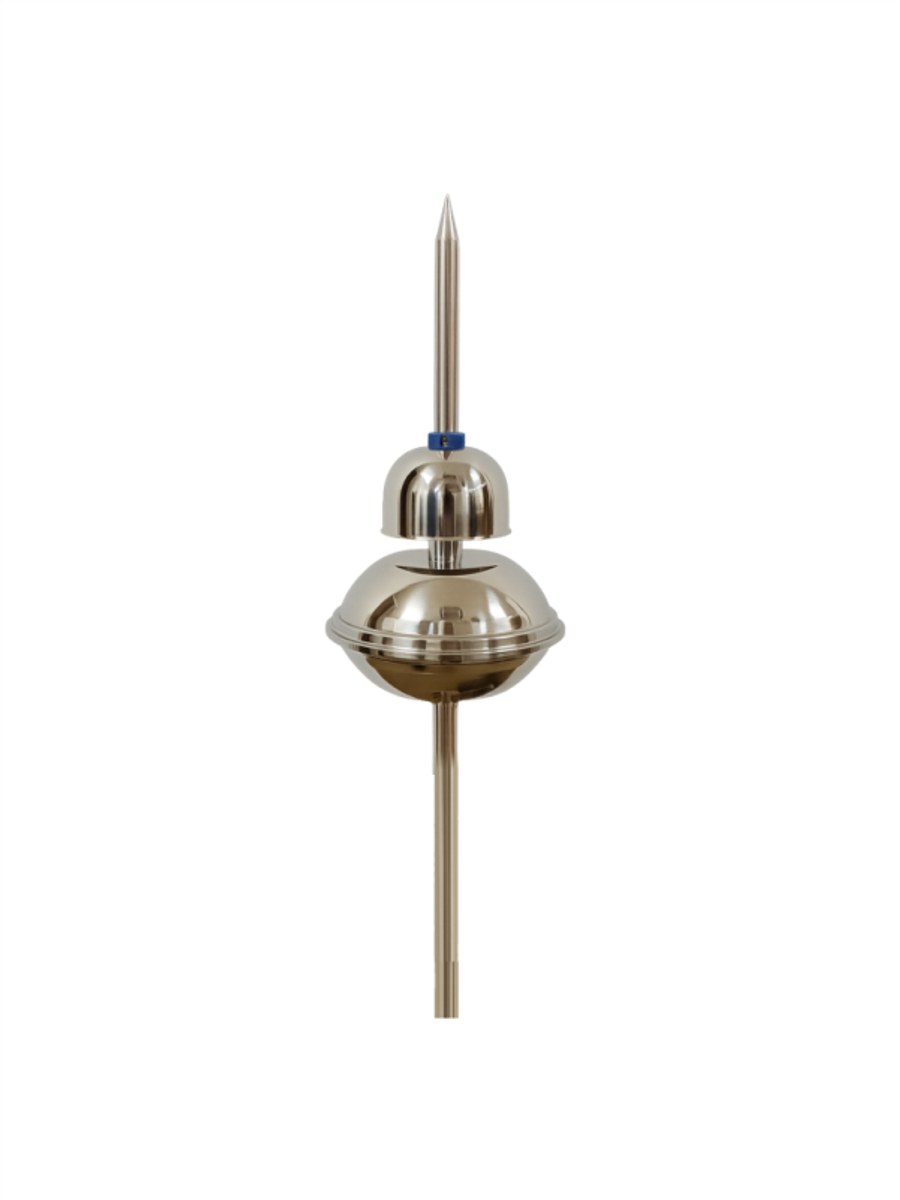
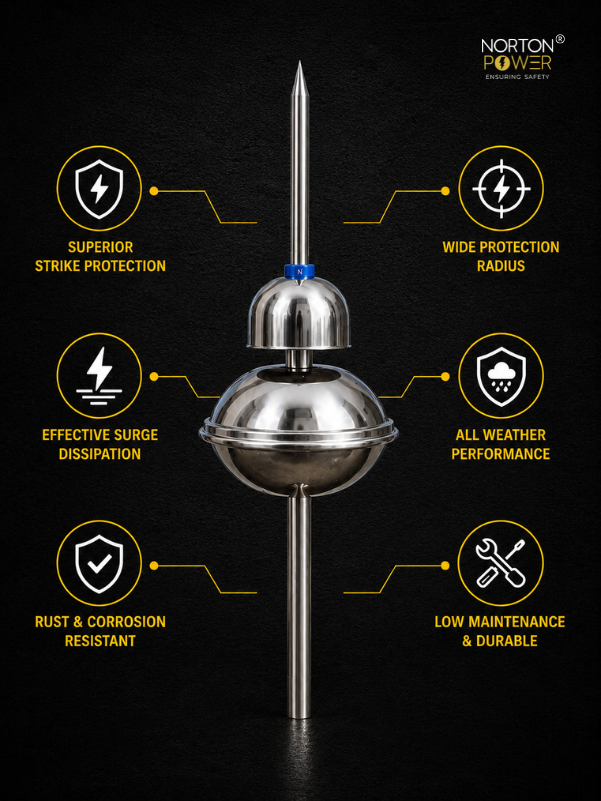
A building lightning arrester is part of a lightning protection system (LPS): air terminals on the roof, down-conductors to earth, a ring earth, and surge protection for the electrical and data systems. For commercial and high-rise buildings the system is designed to a risk assessment under NBC 2016 and IS/IEC 62305, which decides the protection level and the number of terminals.
How it is designed
- Risk assessment to IS/IEC 62305 sets the protection level (I to IV).
- Roof air terminals placed by the rolling-sphere or mesh method for that level.
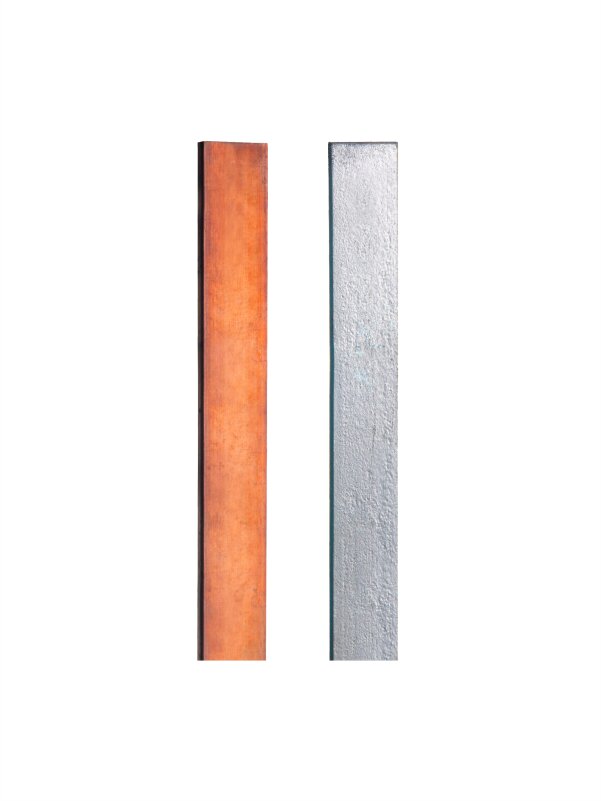
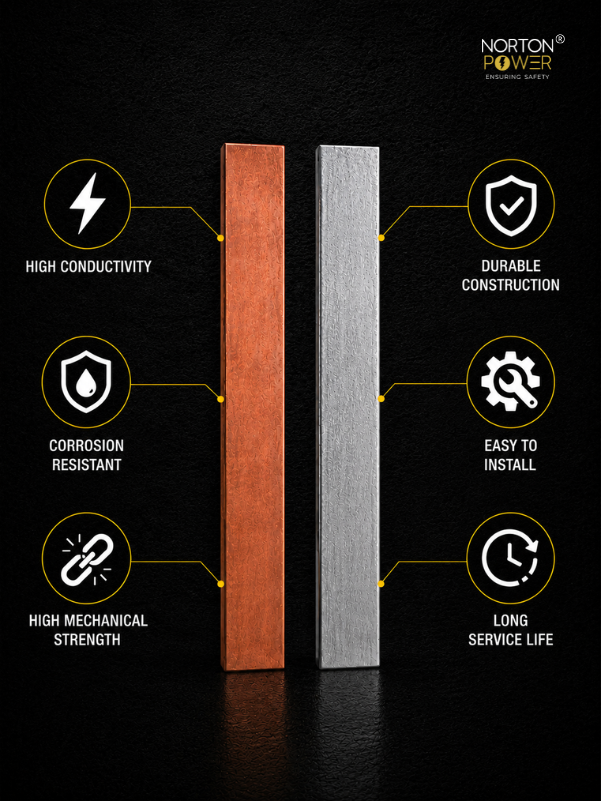
- Multiple down-conductors around the perimeter to share the current.
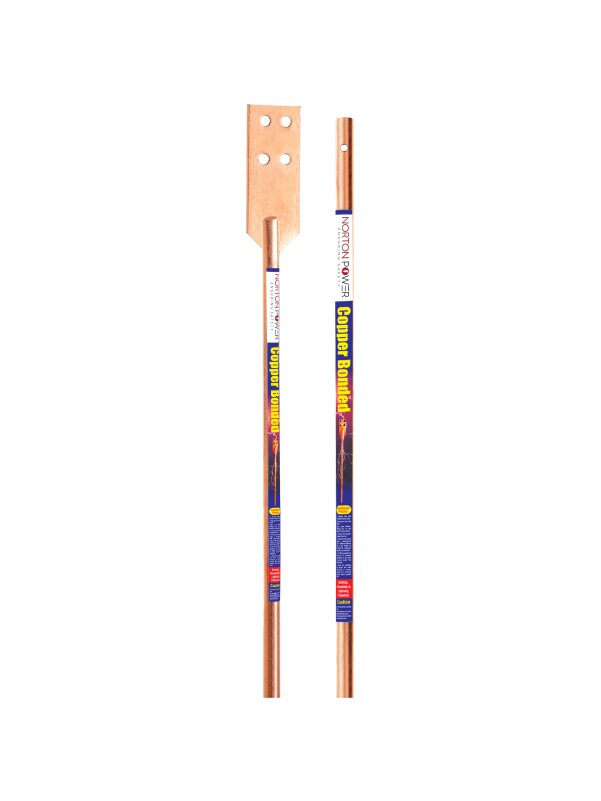
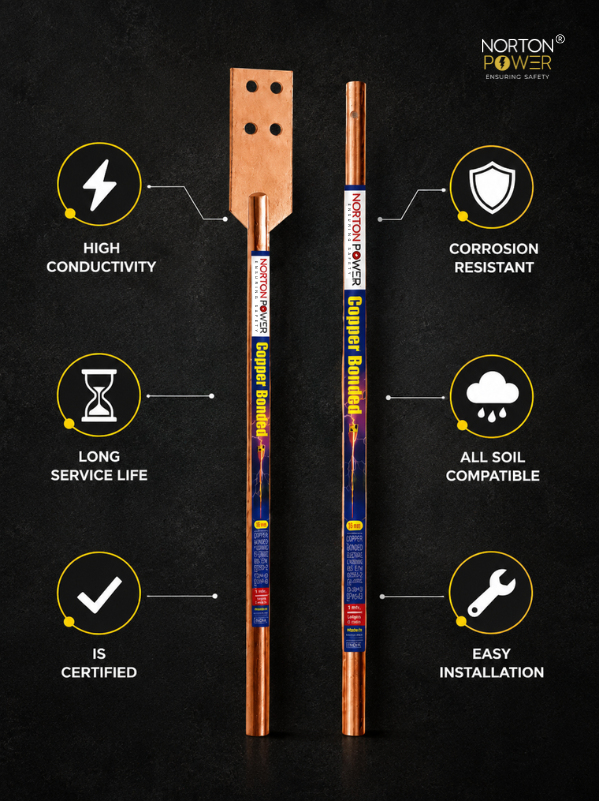
- A ring earth tied to the building foundation earth and structural steel.
- Surge protection devices on incoming power and data.
Conventional vs ESE for tall buildings
Conventional (Franklin/mesh) protection suits most buildings. For tall or large-footprint structures, an ESE (early-streamer) air terminal under NF C 17-102 covers a wider radius from a single mast - see the ESE vs Franklin guide. Either way the earth termination must be low resistance.