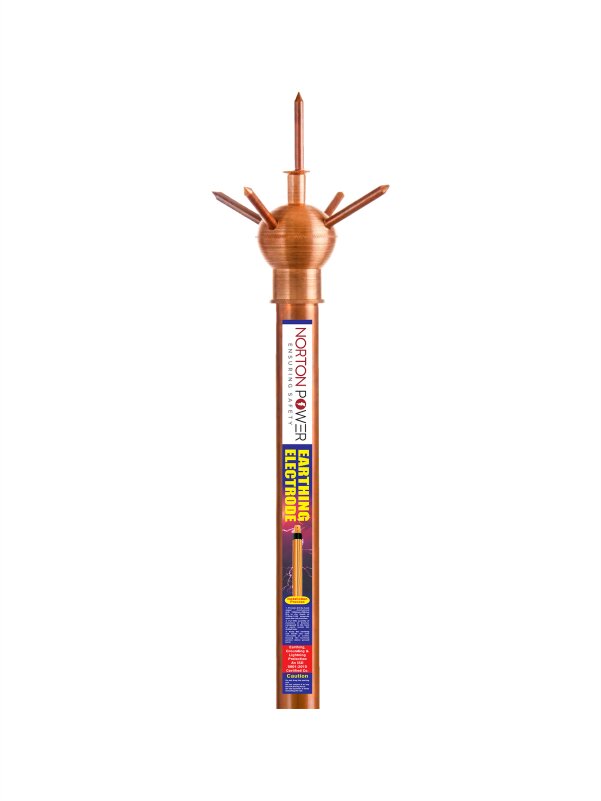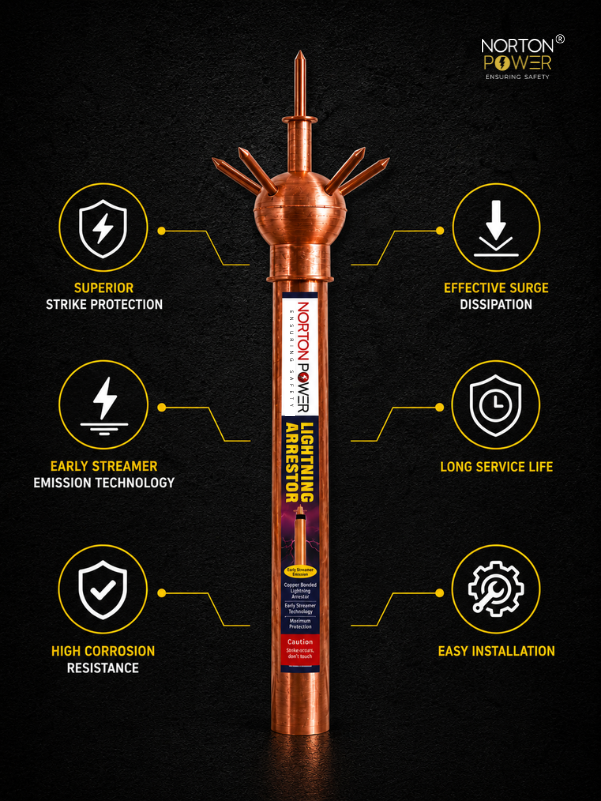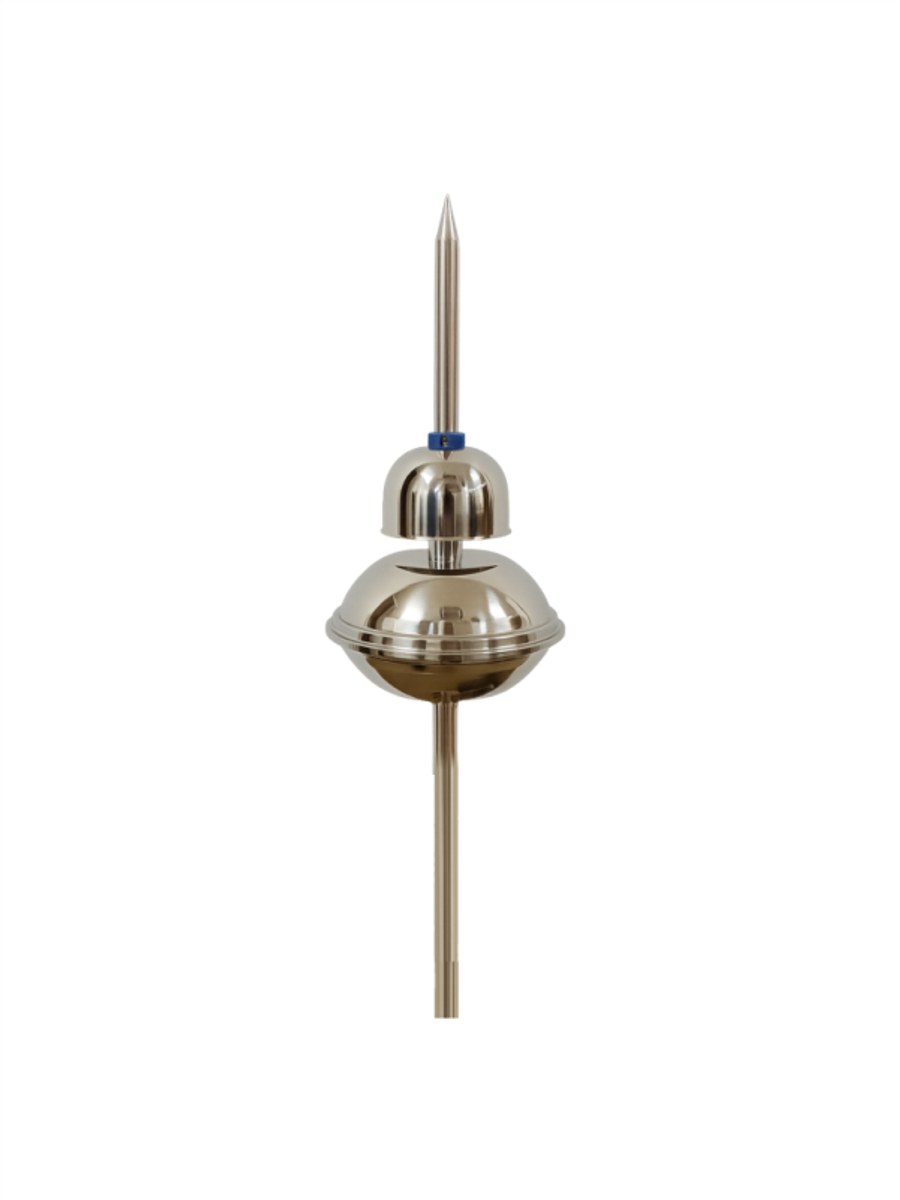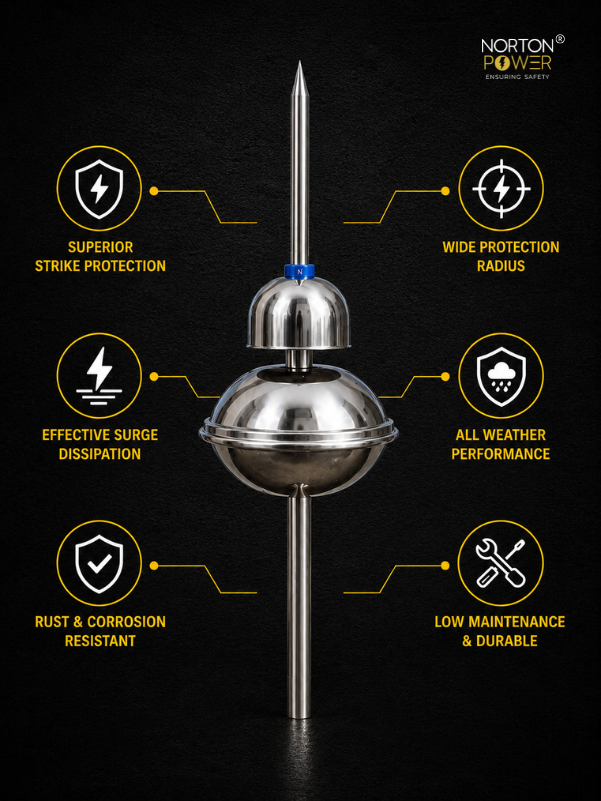
A lightning arrestor (lightning rod) is the metal terminal at the top of a structure that intercepts a lightning strike and gives it a safe path to earth. There are two families, conventional (Franklin) and ESE, made in copper, copper-bonded or GI, and the type, material and its earth all decide how well it protects. This guide covers the choices.
1. The two families
A conventional (Franklin) arrestor is a passive pointed rod whose protected zone is worked out by the rolling-sphere method under IEC 62305, often needing several rods or masts. An ESE (Early Streamer Emission) arrestor adds a device at the tip that triggers its upward leader marginally earlier, claiming a larger protection radius under NF C 17-102 from a single mast. Which one to use depends on the standard the project follows and the site, covered in our ESE-versus-Franklin comparison.
2. Material, and why it matters
The arrestor sits exposed at the highest, most weather-beaten point of the structure, so material drives its life:
| Material | Where it fits |
|---|---|
| Pure copper | Highest conductivity and corrosion life; premium and high-exposure sites. |
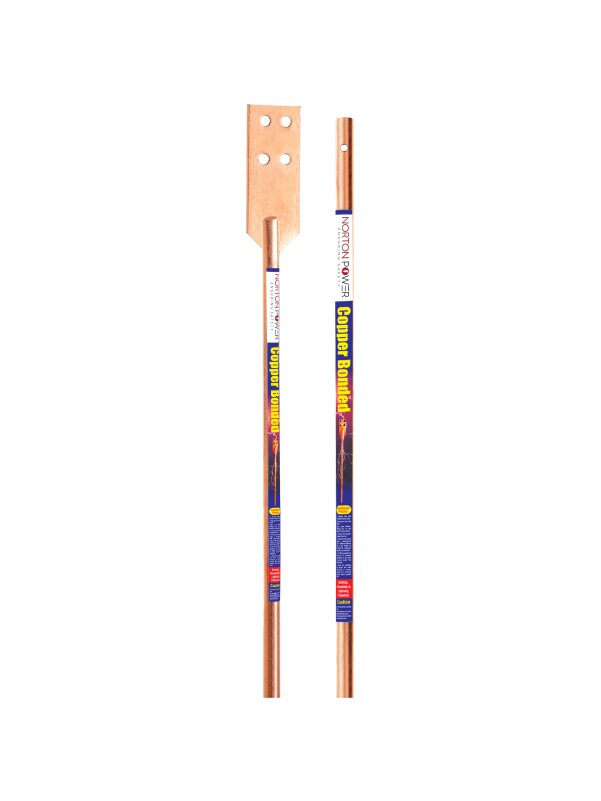
| Copper-bonded steel | Copper performance at lower cost; the common cost-effective choice. |
| GI (galvanised iron) | Budget/distribution use; shorter life as the zinc depletes. |
| Stainless (AISI 316) tip | For ESE tips in coastal / industrial atmospheres. |
3. Common sizes
- Conventional rods: 12 mm or 14 mm copper-bonded for cost-effective work; 25 mm pure copper for premium/high-exposure.
- Length above support: typically 1 to 2 m above the highest point.
- ESE: rated by delta-T (15, 25, 40, 60 microseconds) and protection level, mounted on a mast whose height sets the radius.
4. The arrestor is only as good as its earth
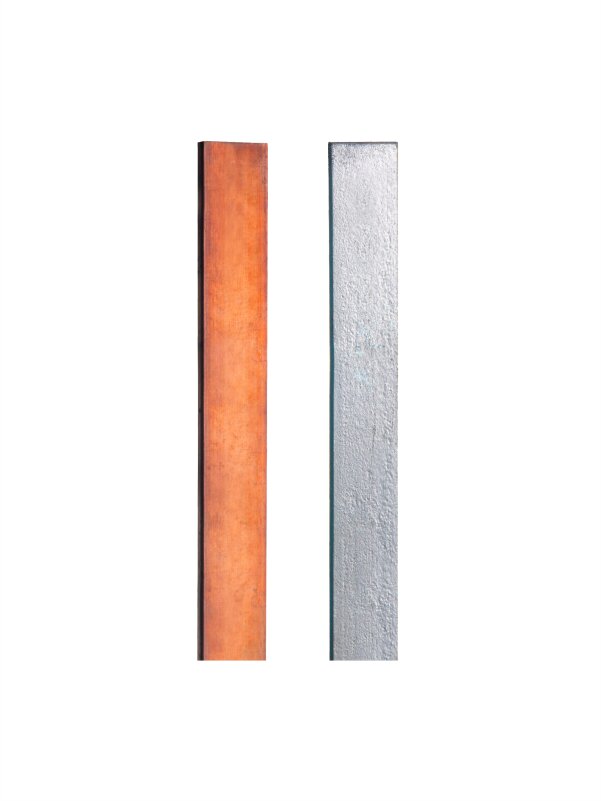
A lightning arrestor must connect through a down-conductor (25 x 3 mm copper tape, gentle curves, no loops) to a dedicated low-resistance earth pit, usually a copper bonded 250 micron rod with earth-enhancing compound, targeting a low ohm value. A good rod on a poor earth still fails.
5. How to choose
- Which standard does the project follow, IEC 62305 (Franklin/mesh) or NF C 17-102 (ESE)?
- Compact building or large open site? Compact favours Franklin; large open favours ESE.
- Material to match the environment (copper/copper-bonded for life; 316 tip for coastal ESE).
- A dedicated low-resistance earth pit and clean down-conductor for whichever you pick.