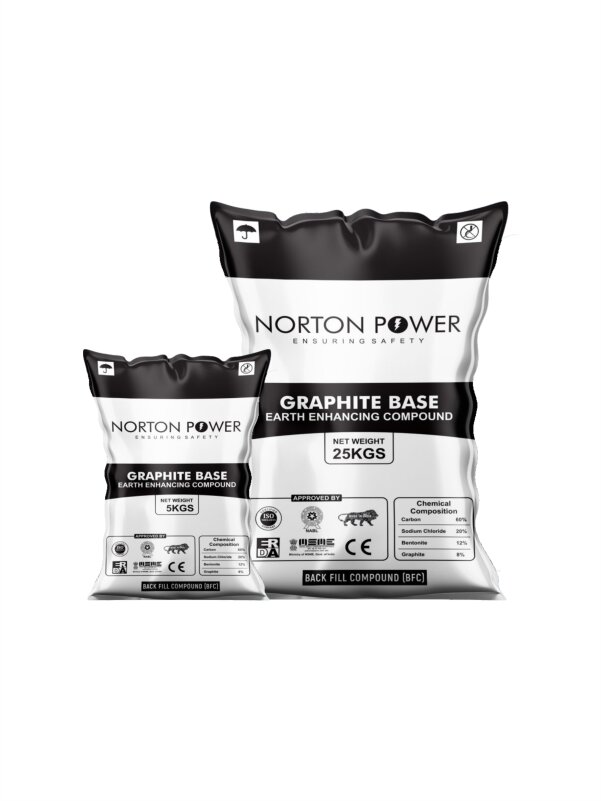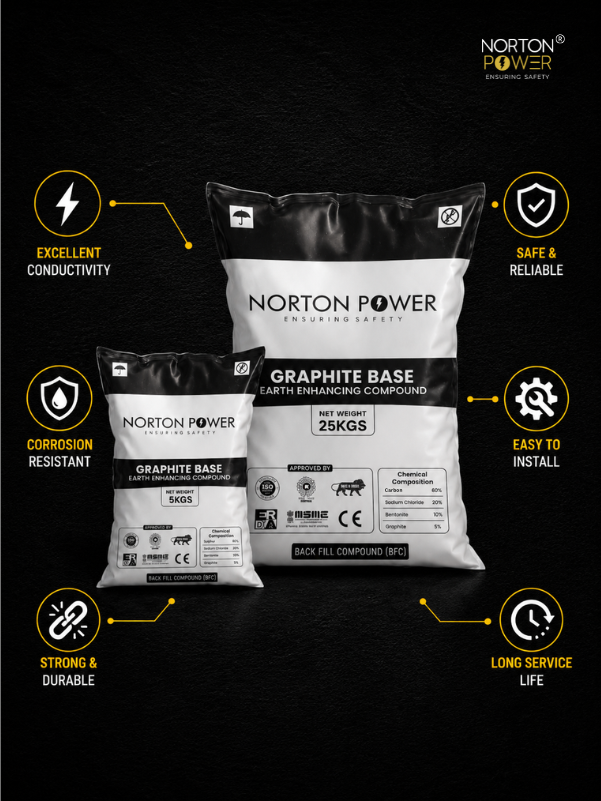
Earth-enhancing compound is a material packed around an earth electrode to lower its resistance to ground. It is searched by a dozen names, grounding compound, ground-enhancement material, earth resistance reducing compound, earth resistance improver, back-fill compound, graphite earthing compound, they almost all mean the same product. This guide clears up the terminology, compares the types, and shows what to specify.
1. The names all mean the same thing
If you are comparing quotes, these terms usually refer to the same category of product:
- Earth-enhancing compound / earth-enhancement compound
- Ground-enhancement material (GEM)
- Earth resistance reducing compound / earth resistance improver
- Back-fill compound / earthing back-fill
- Graphite (or carbon) earthing / grounding compound
What matters is not the name but the chemistry and performance, which is where the real types differ.
2. The compound types compared
| Type | How it performs |
|---|---|
| Graphite / carbon-based | Best modern choice: very low resistivity, moisture-retaining, non-corrosive, stable and largely maintenance-free. |
| Bentonite clay | Lowers resistance by holding moisture; performs poorly if it dries out, and is less conductive than graphite. |
| Salt and charcoal (legacy) | Cheap and local, but salt corrodes the electrode and washes out, so the pit drifts and the rod fails early. Avoid for permanent work. |
3. How it lowers resistance
A good compound has a very low intrinsic resistivity and greatly increases the effective contact area between the electrode and the soil, while retaining moisture. Around a rod it can drop the apparent local soil resistivity from, say, 150 ohm-metre to roughly 25 to 40 ohm-metre, cutting a single pit resistance by 60 to 75 percent.
4. Dosage and use
One 25 kg bag is the typical dose for a single 3 m rod pit; high-resistivity or deep pits use two. Mix with sieved soil, add water to a kneadable consistency, pack in layers, and allow 5 to 7 days to cure before the acceptance test. The step-by-step is in our how-and-when guide.
5. When compound is not enough
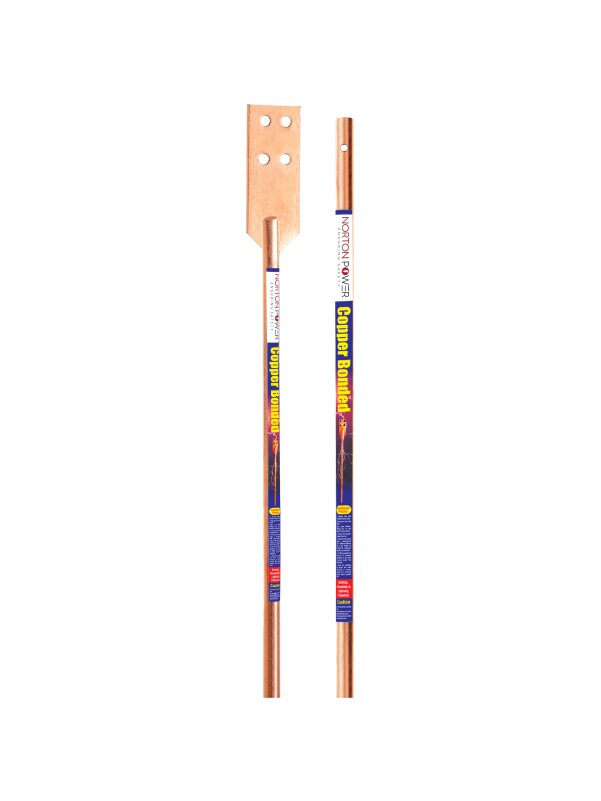
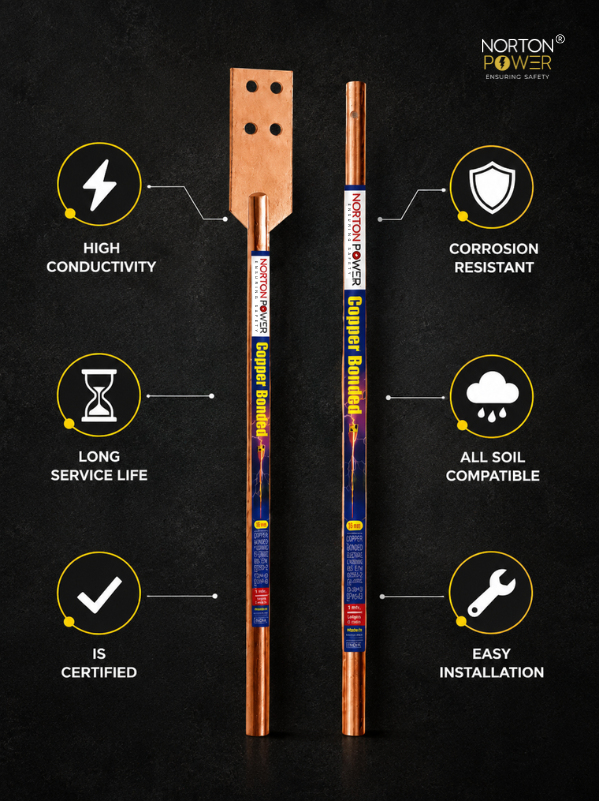
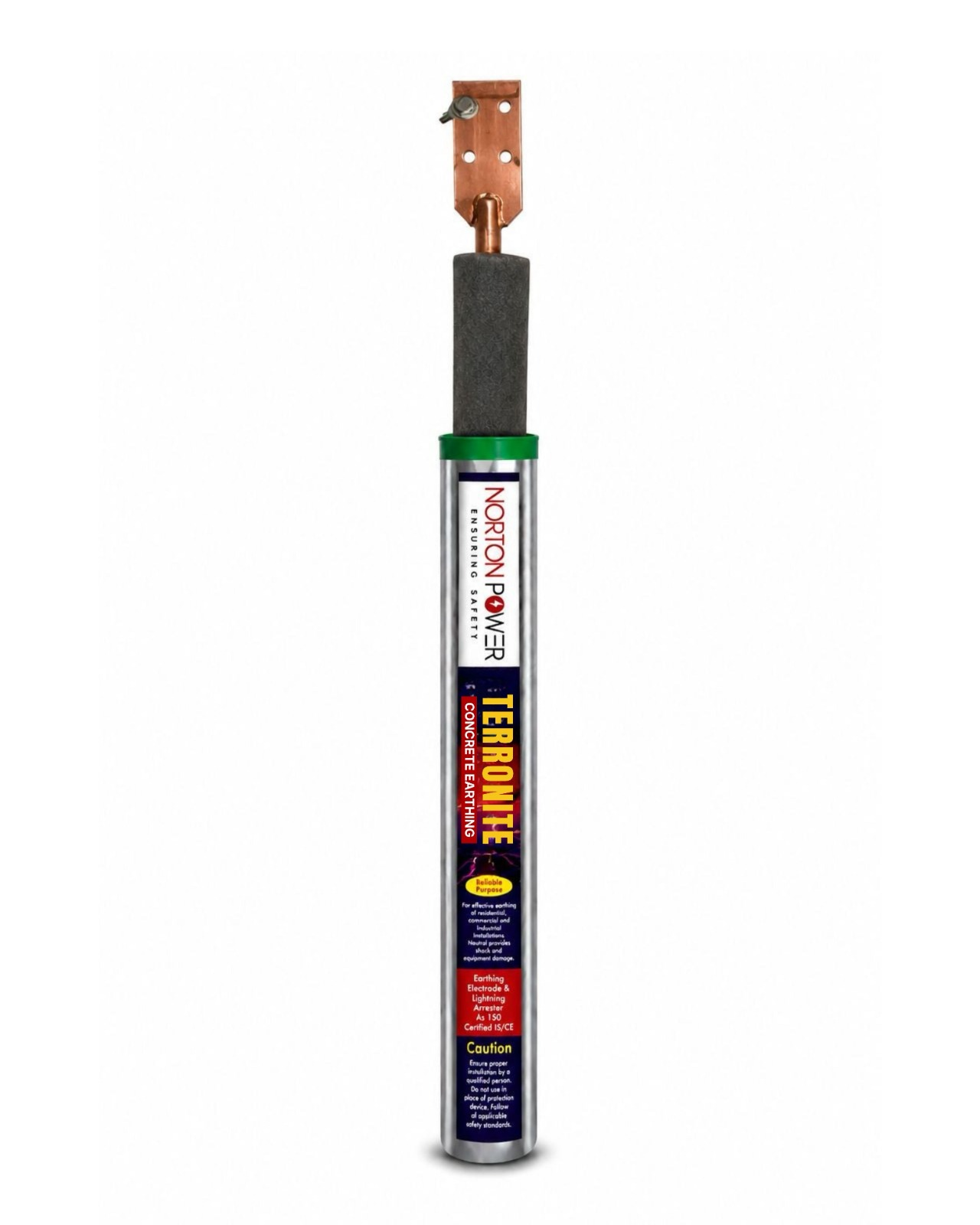
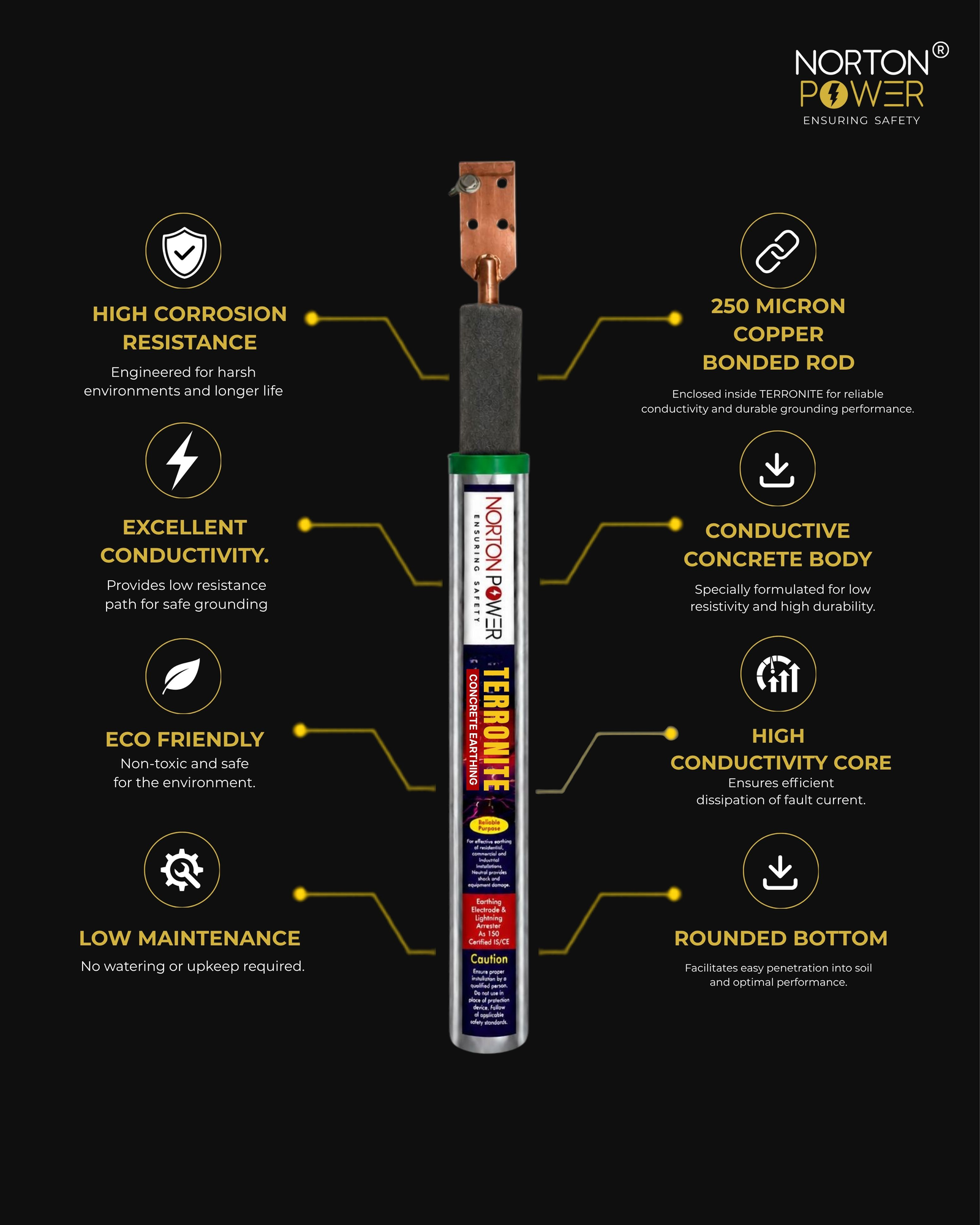
For ordinary moderate-to-high soil, compound around a copper bonded rod is the cost-effective answer. For rock, dry sand and extreme high-resistivity ground, step up to a conductive-concrete earthing electrode, which brings its own low-resistivity medium.
6. Checks before you buy
- Is it graphite/carbon-based and non-corrosive (not salt-based)?
- What is the quoted resistivity of the cured compound (lower is better)?
- Non-leaching / environmentally safe near a water table?
- What bag size, and how many bags per pit for your soil?
- Does the supplier size the rod + compound to your target resistance?