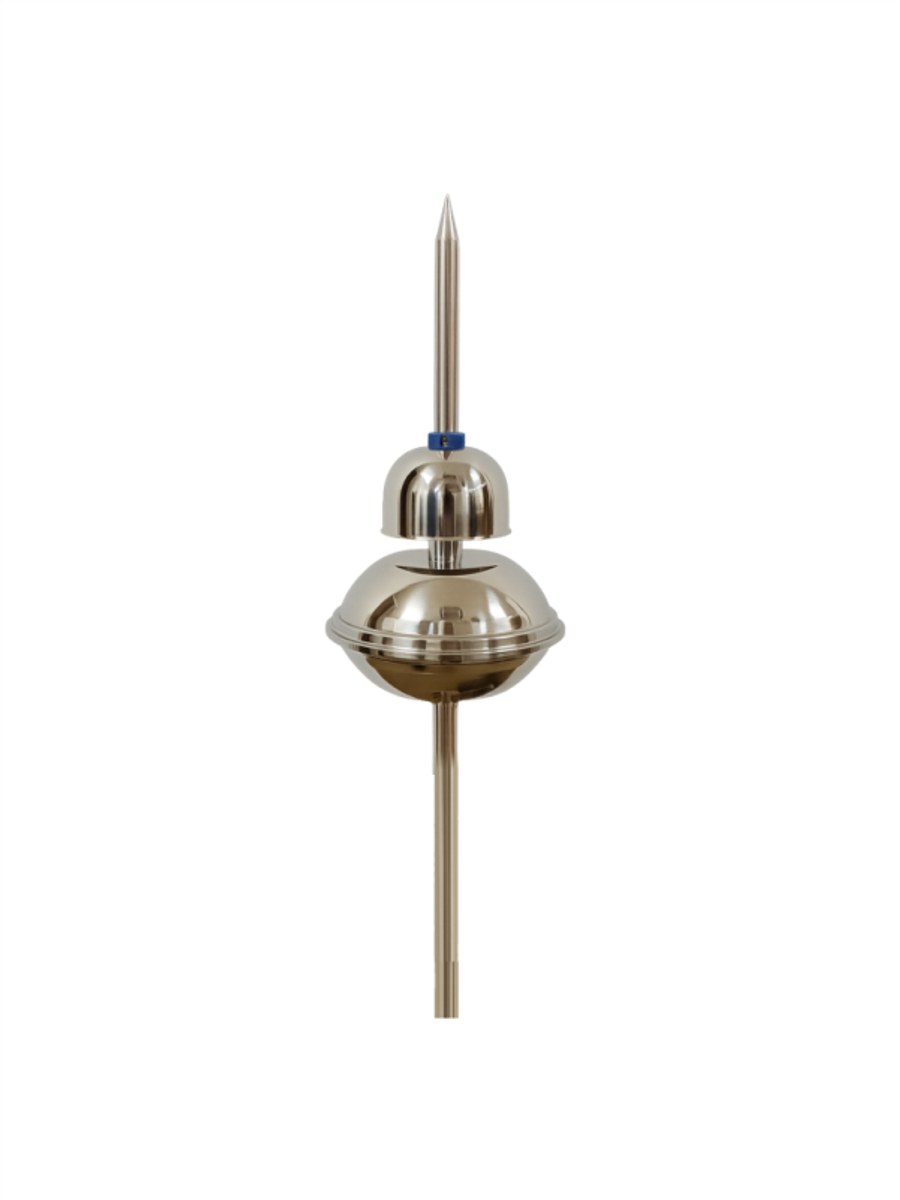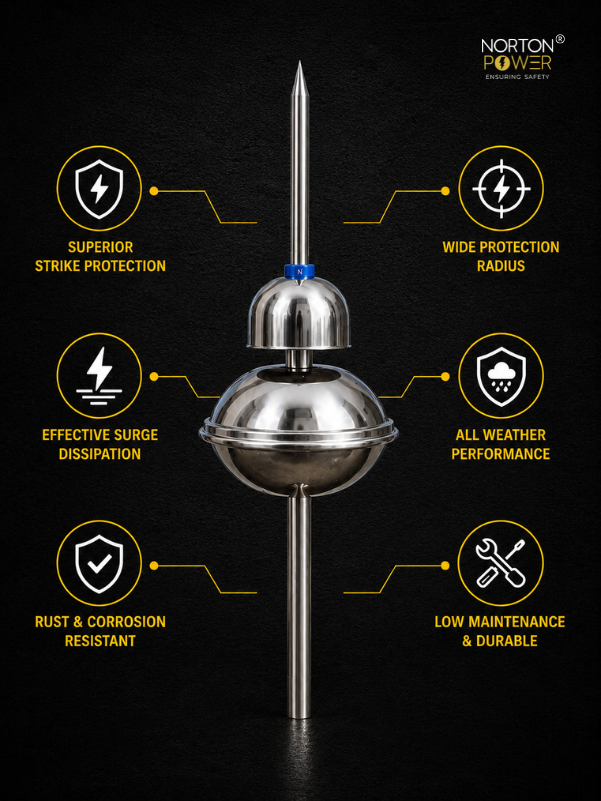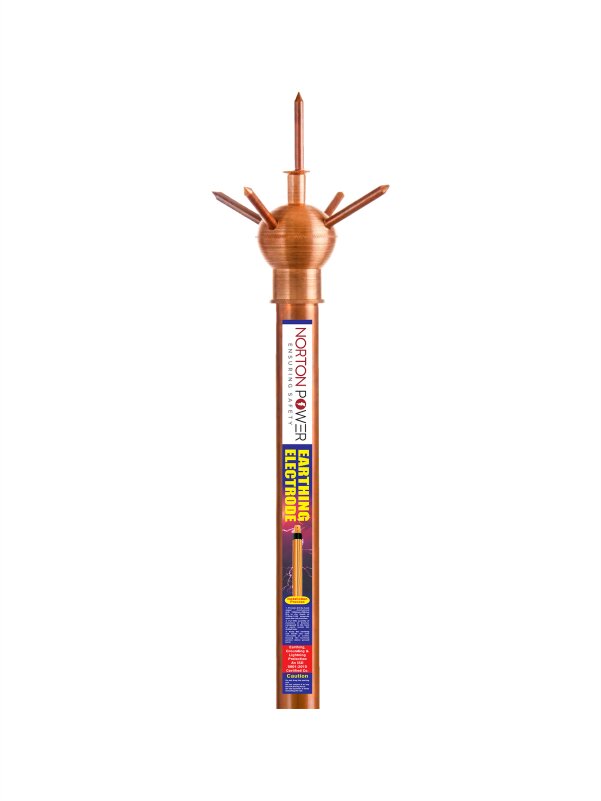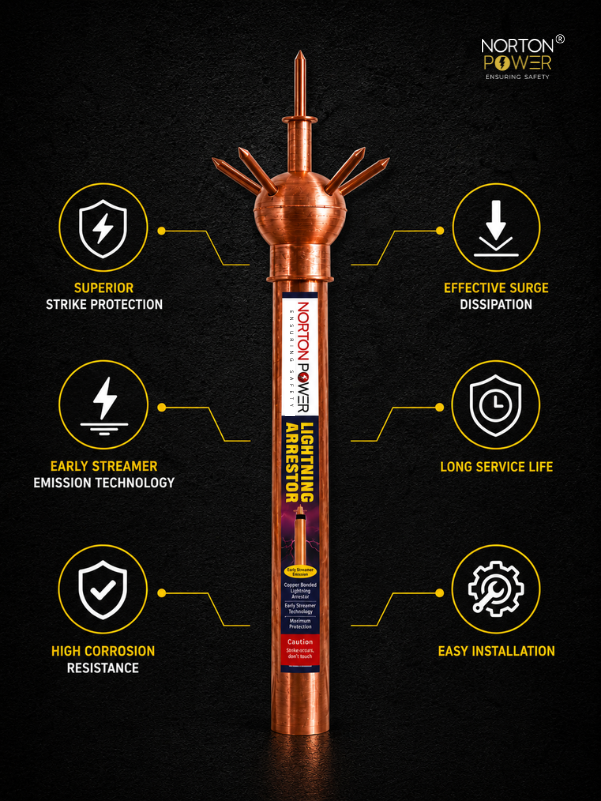
An ESE (Early Streamer Emission) lightning arrestor is a lightning rod with a device at its tip that releases an upward leader marginally earlier than a plain rod of the same height would, which under the NF C 17-102 standard is credited with a larger protection radius from a single mast. In plain terms, it is designed to reach out and catch the strike sooner, so one well-placed mast can protect a wide area. This explains how it works and where it fits.
1. How ESE works
When a downward lightning leader approaches, any tall grounded point tries to launch an upward leader to meet it. An ESE terminal contains a passive or active triggering unit that emits that upward leader tens of microseconds earlier than a passive rod would. That head-start is the device delta-T, rated at 15, 25, 40 or 60 microseconds, and a larger delta-T is credited with a larger protected radius.
2. The standard: NF C 17-102
ESE devices are designed and applied under NF C 17-102:2011, the French standard adopted across India, Spain, Brazil and parts of Asia. It gives a protection-radius formula based on the terminal height above the protected surface and the delta-T. Note that IEC 62305 does not recognise the larger ESE radius, so the project must be specified under NF C 17-102 to use it.
3. What sets the protection radius
Two things drive the radius: the height of the terminal above what it protects (the biggest on-site lever) and the device delta-T. At a typical 5 m mast height with a 25 microsecond device, the formula yields a protected radius of roughly 50 to 70 m for a mid protection level, far more than a plain rod of the same height would cover.
4. ESE vs a conventional rod
A conventional (Franklin) rod is cheaper per unit and IEC-62305-recognised, but needs multiple rods/masts to cover an area. An ESE covers a wide radius from one mast, which usually wins on total installed cost for large open sites (above roughly 2000 square metres of footprint). The full comparison, with the site profiles that tip each way, is in our ESE-versus-Franklin article.
5. Where ESE fits
- Large open footprints: solar plants, stadiums, warehouses, fuel and exhibition grounds.
- Tall single masts protecting a wide area from few points.
- Projects specified under NF C 17-102 (not strict IEC 62305).
6. What to specify
- Delta-T rating (15/25/40/60 microseconds) and protection level (I to IV).
- Mast height, the main on-site variable that sets the radius.
- Tip material: AISI 316 stainless for coastal/industrial air.
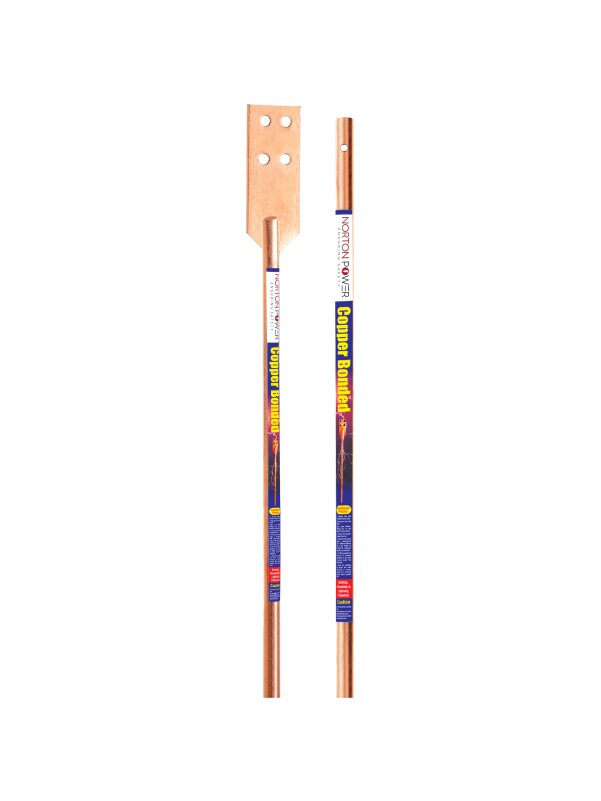
- Two down-conductors and a dedicated low-resistance earth pit (copper bonded rod plus compound). The install steps are in our ESE installation guide.