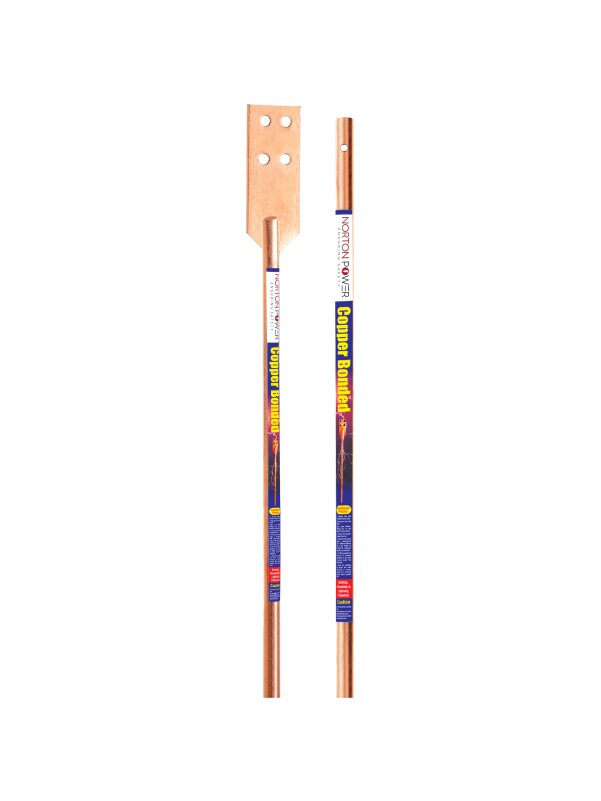
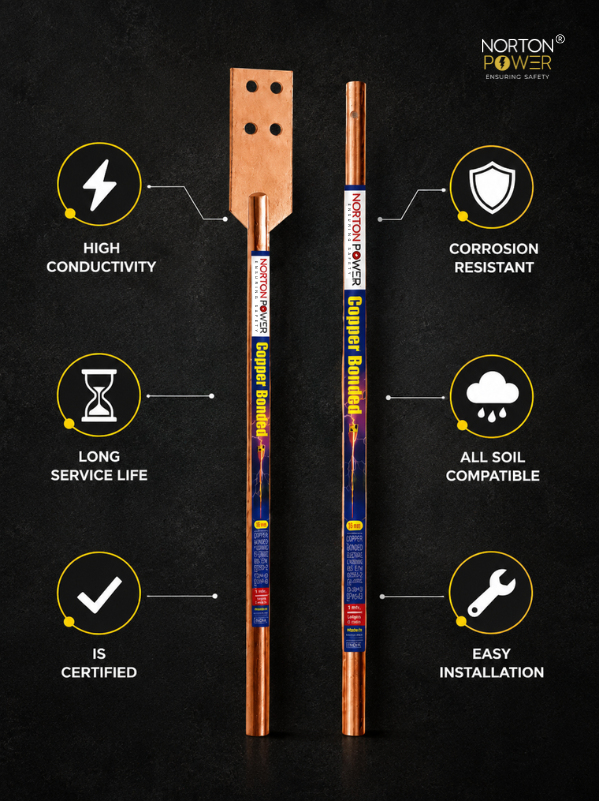
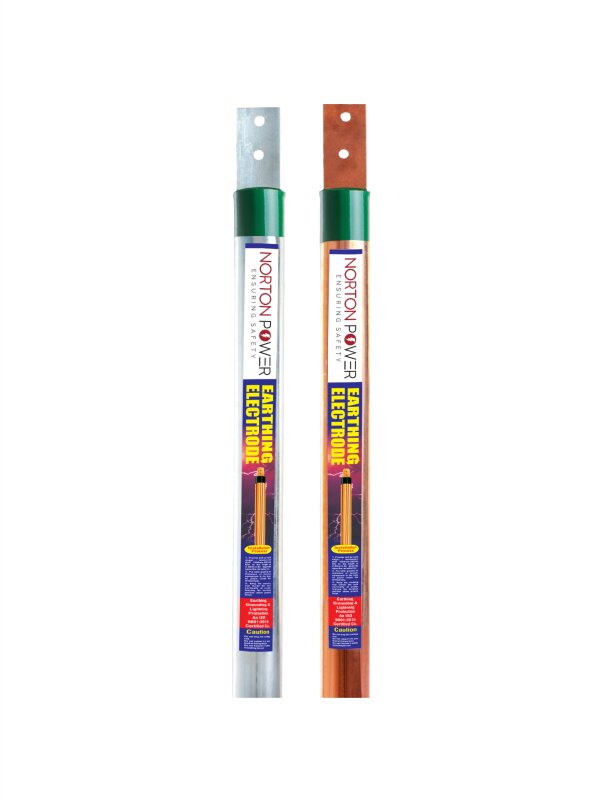
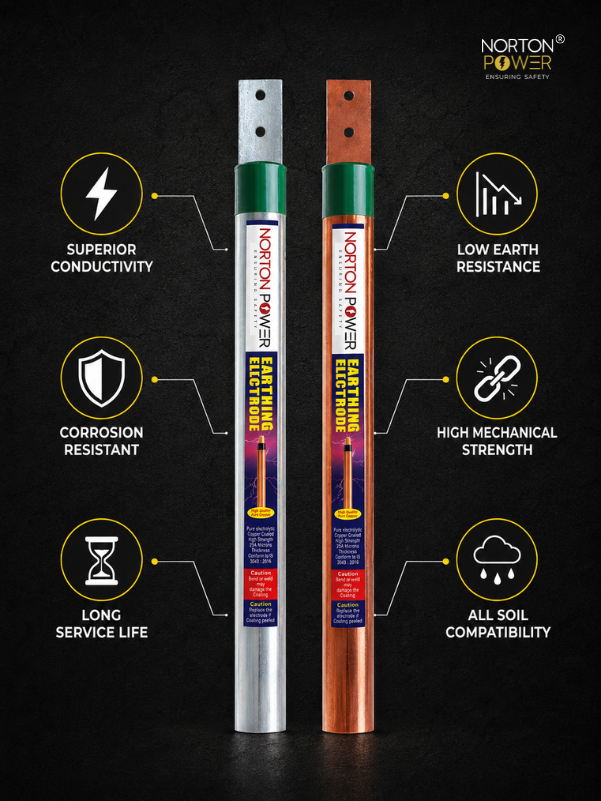
Rod earthing is an earthing method that uses a metal rod driven vertically into the ground as the electrode. The rod gives fault current and lightning current a low-resistance path into the soil, protecting people and equipment. It is the most common earthing method because it is quick to install and easy to extend to depth.
1. How it works
The rod is driven until it reaches moist, stable soil. When a fault occurs, current flows down the rod and spreads out into the surrounding earth. The deeper and more conductive the soil it reaches, the lower the earth resistance and the safer the system.
2. What sets the resistance
- Soil resistivity - wet clay is low, dry sand and rock are high.
- Rod length and depth - deeper into moist soil gives a lower resistance.
- Number of rods - rods in parallel, spaced apart, lower the resistance.
- Backfill - an earth-enhancing compound around the rod lowers the contact resistance.
3. When to use rod earthing
Rod earthing suits most soils where a rod can be driven to moist ground. In rocky, sandy or high-resistivity soil where a rod cannot reach stable earth, a pipe or plate electrode, or a conductive-concrete electrode, performs better - see the four electrode types and the rocky-soil guide.