An airport packs almost every earthing challenge into one site: a huge open airfield exposed to lightning, a tall control tower, extremely sensitive navigation, radar and communication systems that cannot tolerate a noisy earth, aviation fuel where a single static spark is catastrophic, and thousands of people to keep safe. Each part needs its own treatment, all bonded into one coherent scheme. This guide walks through it.
1. Why airports are so demanding
- A vast open airfield and tall structures (control tower, radar, approach masts) make direct lightning strikes frequent.
- Navigation aids, radar and communications need a low-noise reference earth or their signals degrade — a safety issue in aviation.
- Aviation fuel handling means static electricity is a primary ignition risk demanding dedicated bonding.
- Public safety across terminals and aprons requires strict touch and step voltage control.
2. The earthing sub-systems
Control tower and navigation aids
The control tower gets a full building earth plus lightning protection, and the navigation, radar and communication systems get a dedicated low-noise reference earth (low-resistance copper electrode sets) bonded to the main earth through controlled paths so there are no earth loops corrupting the signals.
Fuel apron and hydrant systems
Every fuel line, hydrant, bowser and aircraft bonding point is tied to the earth grid, with dedicated static bonding at fuelling positions so no charge can build up during transfer. This is treated as a hazardous-area static-grounding system.
Airfield lighting and terminals
Runway and taxiway lighting circuits, and the terminal buildings, have their own earthing and bonding, all connected back to the site earth so the whole airport is one equipotential mass.
3. Lightning protection
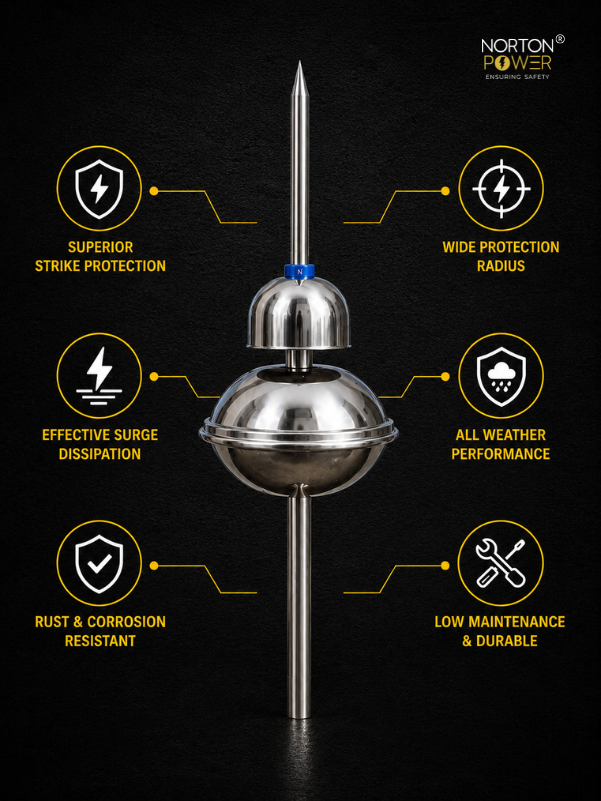
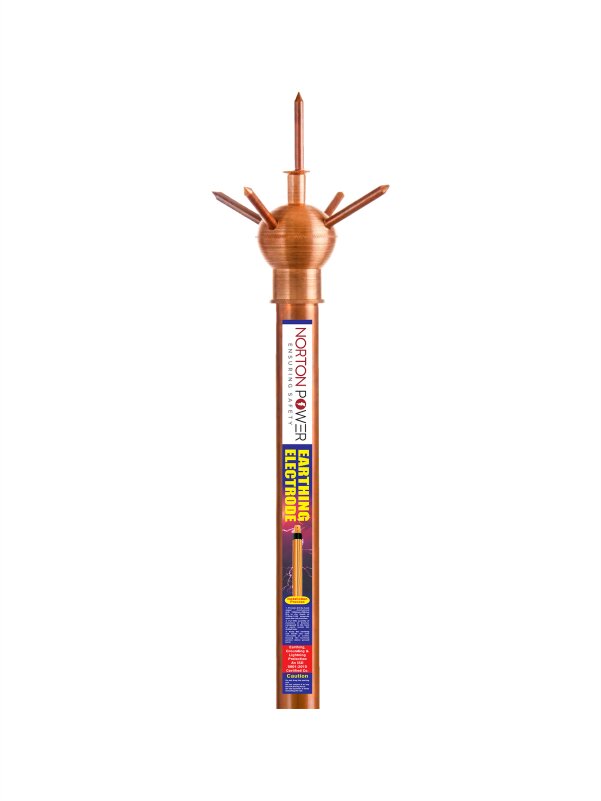
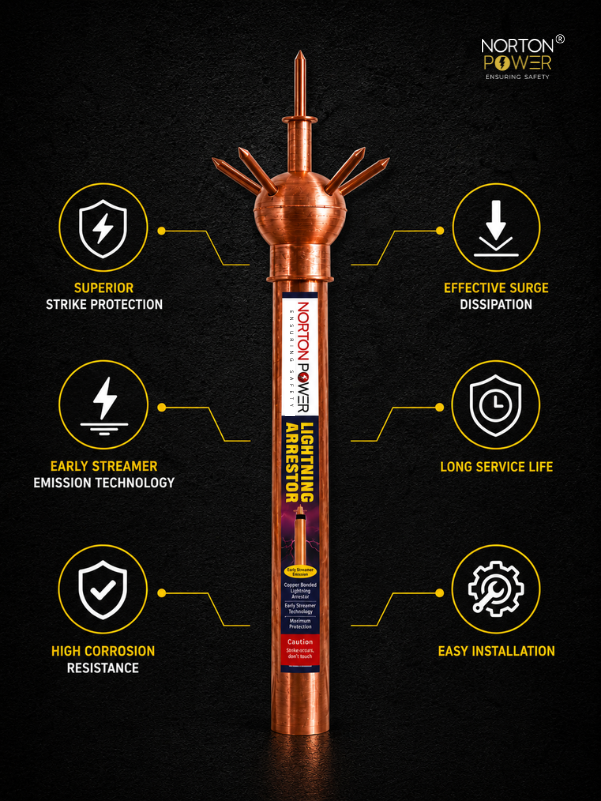
Tall structures (tower, radar, approach lighting masts) get air terminals and down-conductors to a low-resistance earth per IEC 62305, and the wide open apron relies on the tall structures as the primary receptors. Surge protection guards the sensitive electronic systems at every power and signal boundary.
4. Materials over a huge site
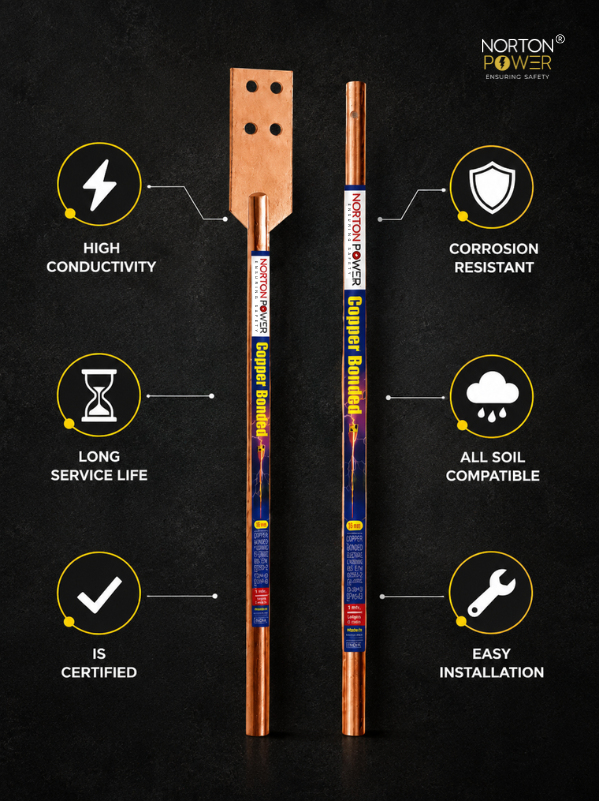
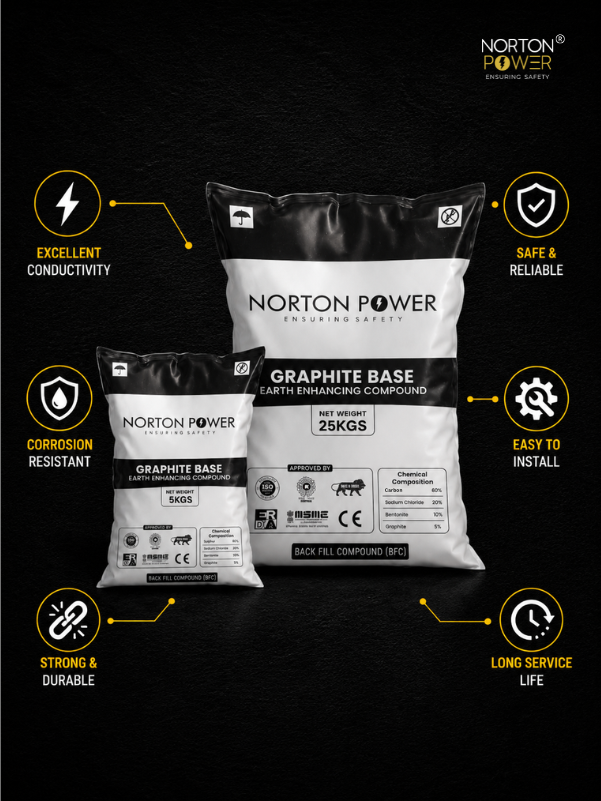
The scale and long life demand copper bonded 250 µm electrodes and copper conductors for low impedance and corrosion resistance, earth-enhancing compound to hit low resistance targets, and exothermic or high-integrity joints on the buried grid.
5. Checks before you buy
- Does the design give navigation/radar/comms a dedicated low-noise earth, separate from but bonded to the main earth?
- Is fuel-apron static bonding treated as a hazardous-area system?
- Copper bonded 250 µm electrodes and copper conductors sized for fault current and corrosion?
- Lightning protection to IEC 62305 on all tall structures, with surge protection on electronics?
- CPRI-tested electrodes and a sized BOM against the measured soil resistivity?