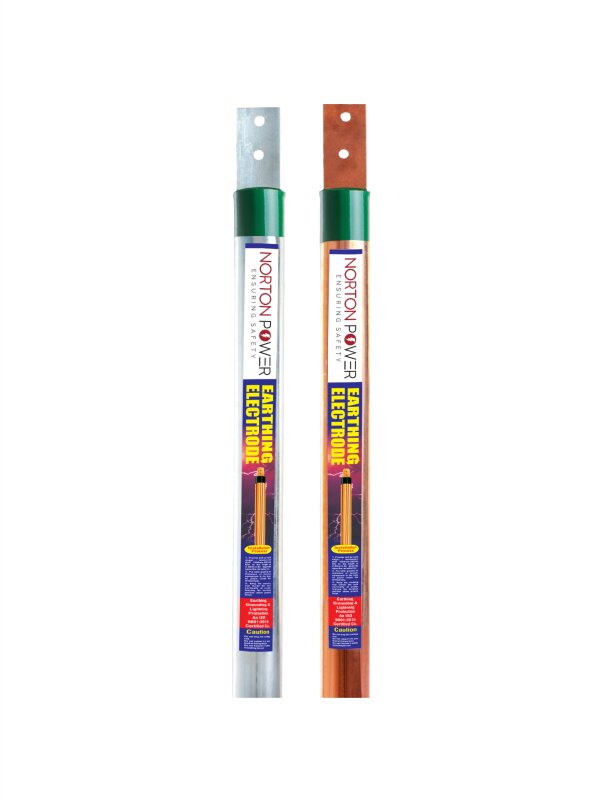
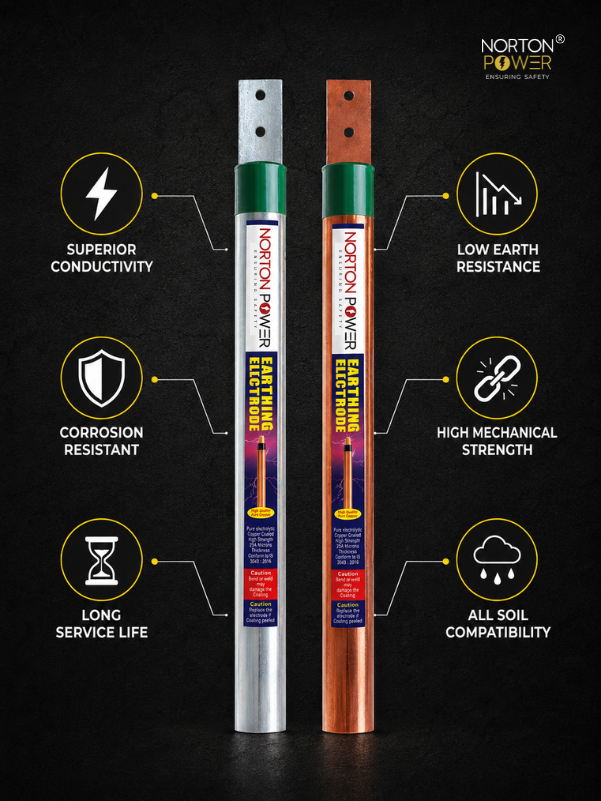
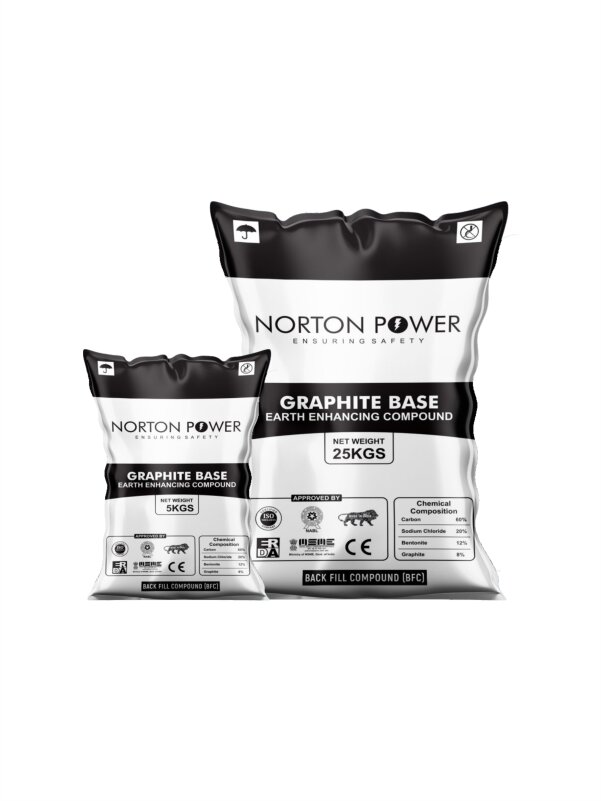
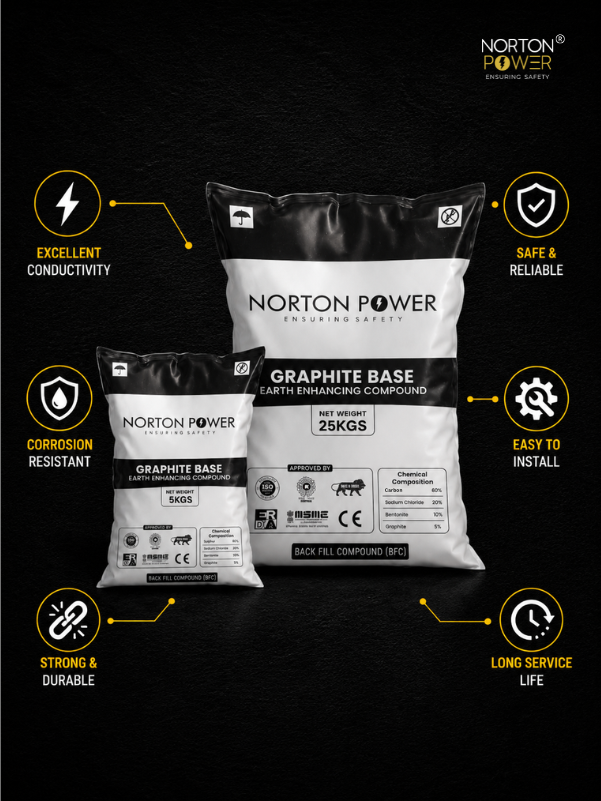
Double-pipe or pipe-in-pipe earthing uses an inner electrode pipe inside a larger perforated outer pipe, with earth-enhancing compound between them. The design gives a large, stable contact area and holds moisture, producing a low and steady earth resistance - which is why it is used for heavy machinery and critical equipment.
How it works
- Inner pipe is the main conductor, brought up to the terminal.
- Outer perforated pipe holds the backfill compound against the soil.
- Compound between the pipes lowers resistance and retains moisture.
- A funnel or watering pipe lets the pit be recharged in dry seasons.
When to use it
Use double-pipe earthing for machinery, generators and equipment that need a dependable low resistance, especially where soil dries out seasonally. For a permanent maintenance-free option in poor soil, a conductive-concrete electrode is the alternative.