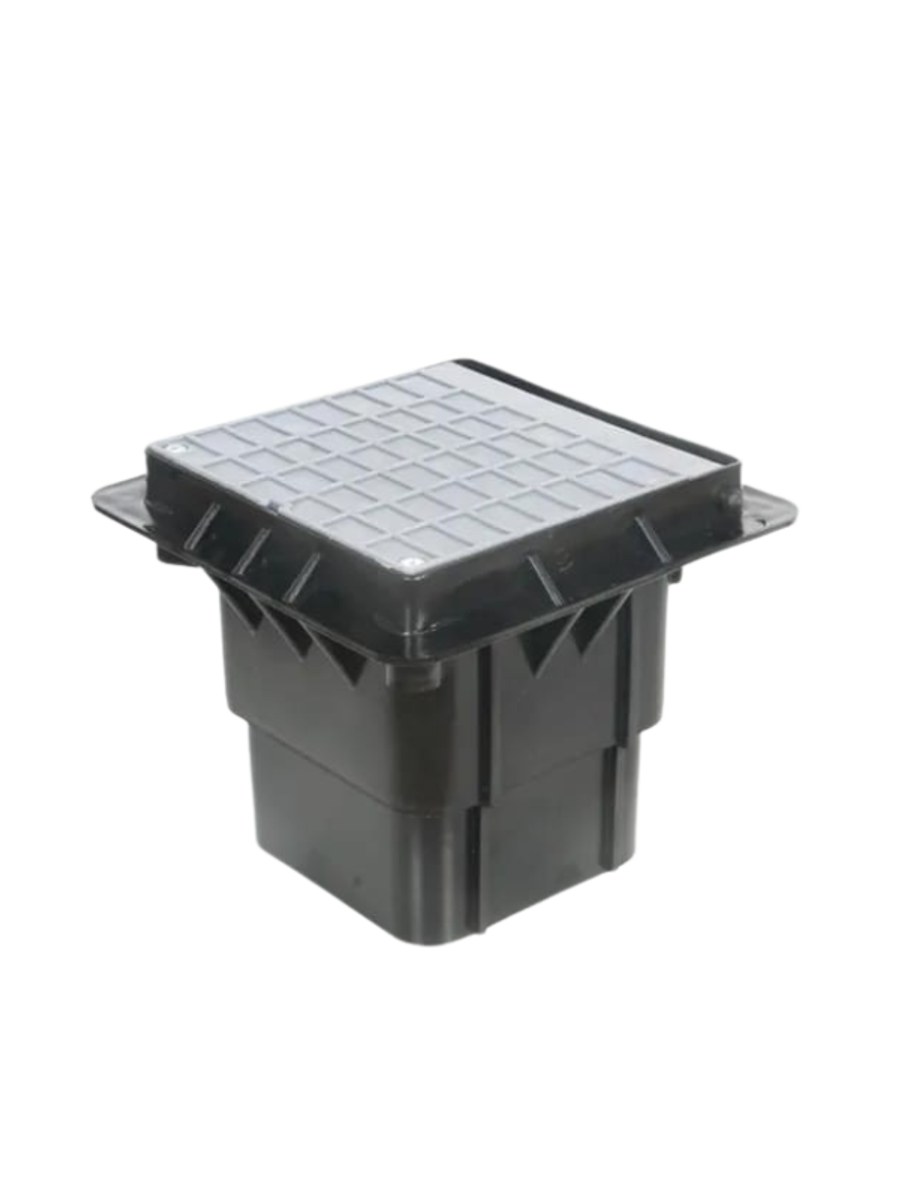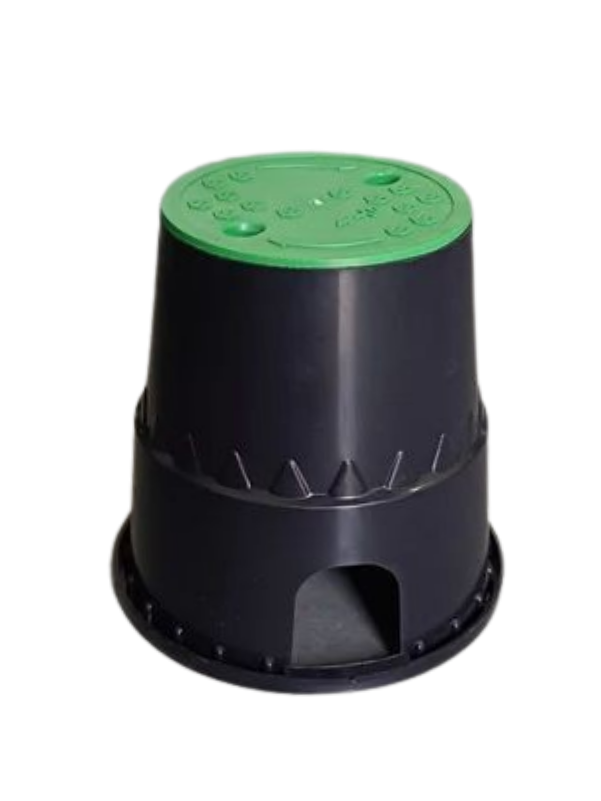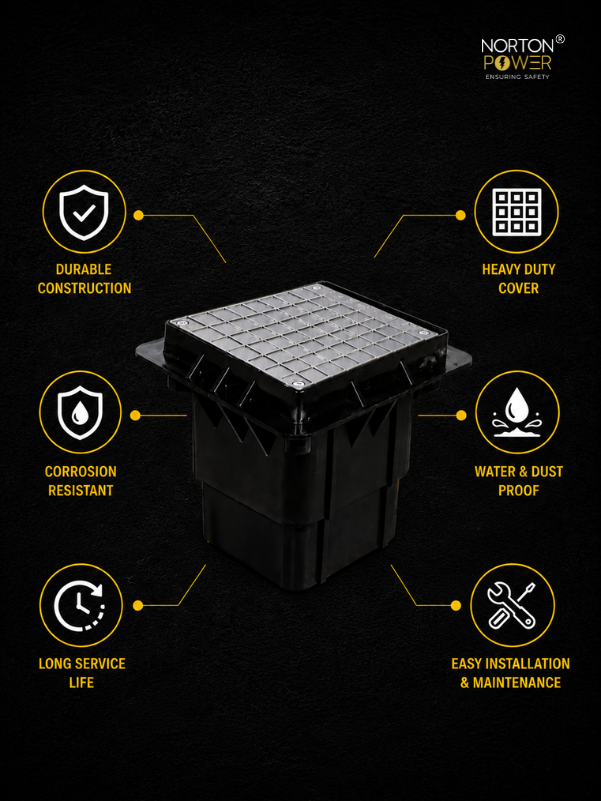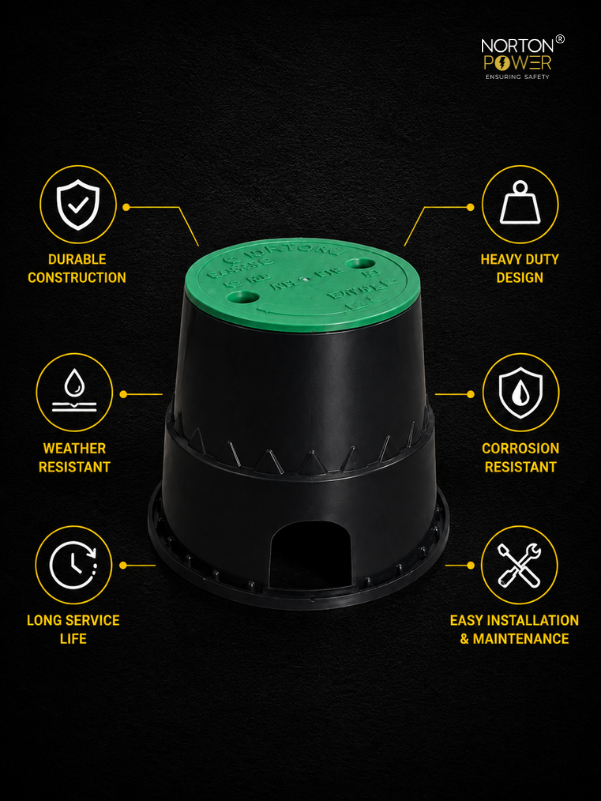
The earth pit cover is the cheapest item in an earthing pit and the one most likely to be specified as an afterthought. That is a mistake: the cover is what keeps the earth connection accessible for the annual IS 3043 resistance test, protects the joint from soil ingress and tampering, and — on substations and solar plants — can introduce a step-potential risk if the wrong material is used. This guide covers how to pick the right one.
1. What the pit cover actually does
- Keeps the rod-to-strip connection accessible for the periodic earth-resistance test IS 3043 requires.
- Protects the joint from moisture, soil ingress, and mechanical damage.
- Provides a tamper / theft barrier on public or unsupervised sites (copper joints are a theft target).
- Identifies the pit (labelled lid) so it can be matched to the layout drawing during inspection.
2. The four cover materials
| Material | Where it fits |
|---|---|
| Cast iron (CI) | Heavy-duty, vehicular / roadway zones. Strongest load class. Conductive and corrodes — not ideal in step-potential or saline zones. |
| Galvanised iron (GI) | Medium-duty industrial floors. Cheaper than CI, lighter, zinc coating slows corrosion. Still conductive. |
| SMC (sheet moulding compound) | Substations and solar plants. High strength-to-weight, non-conductive (no step-potential risk), corrosion-proof. The modern default for HV zones. |
| Polymer / HDPE | Light-duty, rooftop, residential and outdoor pits. Lightest, fully non-conductive, UV-stable, lockable. Not for vehicular loads. |
3. Loading class — match it to the traffic
Pick the cover by the heaviest load that will ever cross it, not the everyday load:
- Light duty — pedestrian / rooftop / landscaped areas: polymer or light GI.
- Medium duty — industrial floors, plant walkways, occasional light vehicles: GI or medium SMC.
- Heavy duty — yards and roadways with trucks / forklifts: cast iron or heavy-duty SMC rated for the axle load.
4. Conductive vs non-conductive — the step-potential point
On a substation or solar plant, a metallic (CI/GI) cover sitting directly over a live earth electrode can become a touch-potential hazard during a fault: the cover can rise to a dangerous voltage relative to the ground a person is standing on. Non-conductive SMC and polymer covers remove that risk at the cover itself. For any HV or high-fault-current installation, specify non-conductive SMC.
5. Sizing and shape
Covers come square (300×300 mm, 450×450 mm) and round. The cover must be large enough to give a hand and a spanner clear access to the rod-to-strip clamp. 300×300 mm suits a single-rod pit; 450×450 mm suits a multi-rod or strip-grid pit. Round and square covers are functionally equivalent — choose to match the chamber you are using.
6. Checks before you buy
- What is the load class, and does it cover the heaviest vehicle that will ever cross the pit?
- Conductive or non-conductive? (Non-conductive SMC/polymer for any HV / step-potential zone.)
- Is the lid lockable or sealable for theft-prone / public sites?
- Is the chamber + frame supplied with the cover, or just the lid?
- Is it corrosion-proof for the soil and climate (coastal, chemical, high-water-table)?
- Is the lid labelled / colour-identified for inspection mapping?