An earthing conductor is sized so it carries the fault current for the protection clearing time without overheating. IS 3043 and IEEE 80 use the same adiabatic rule: the minimum cross-section equals the fault current times the square root of the clearing time, divided by a material factor (about 205 for copper and 80 for galvanised steel).
The formula
Cross-section (sq mm) = fault current (A) times square root of time (s), divided by k. Use k about 205 for copper and 80 for GI. Then round up to the next standard strip size and add corrosion margin for GI.
Worked example
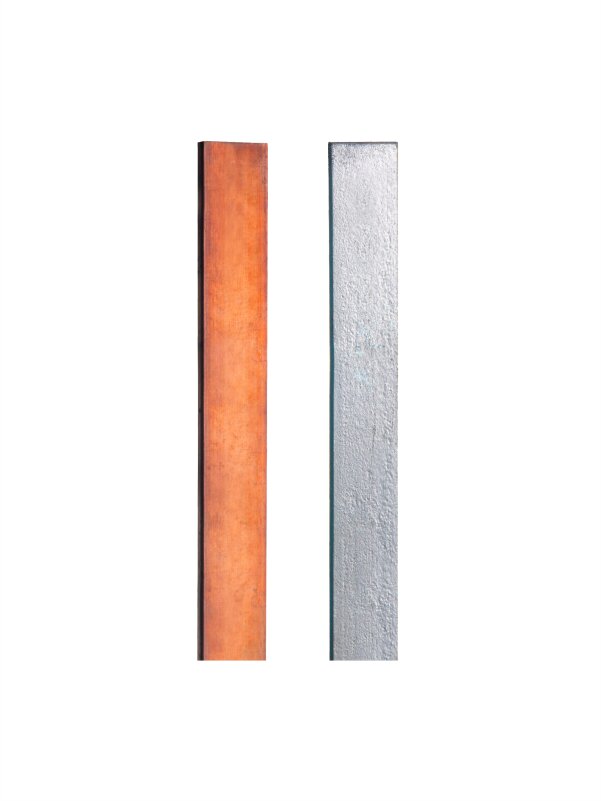
For a 25 kA fault cleared in 1 second: copper needs about 25000 divided by 205, or 122 sq mm, so a 25 x 6 mm copper strip (150 sq mm) is fine. In GI it needs about 25000 divided by 80, or 313 sq mm, so a 50 x 6 mm (300 sq mm) strip is marginal and 50 x 8 or larger is chosen with corrosion margin.