Every tall or public building in India needs a lightning-protection and earthing system by code, and it is one of the items a fire or occupancy inspector checks. Done right it is invisible; done wrong it is a life-safety and equipment risk. This guide covers what NBC 2016 and IEC 62305 expect and how the pieces fit together.
1. What the code requires
The National Building Code (NBC 2016, Part 8) and IS/IEC 62305 require a lightning-protection system on buildings above a risk threshold (height, occupancy, location). The system is three connected parts: an air termination on the roof, down-conductors to ground, and an earth-termination network — all bonded to the building electrical earth so the whole structure is equipotential.
2. Rooftop air termination: ESE or mesh
| Approach | When it fits |
|---|---|
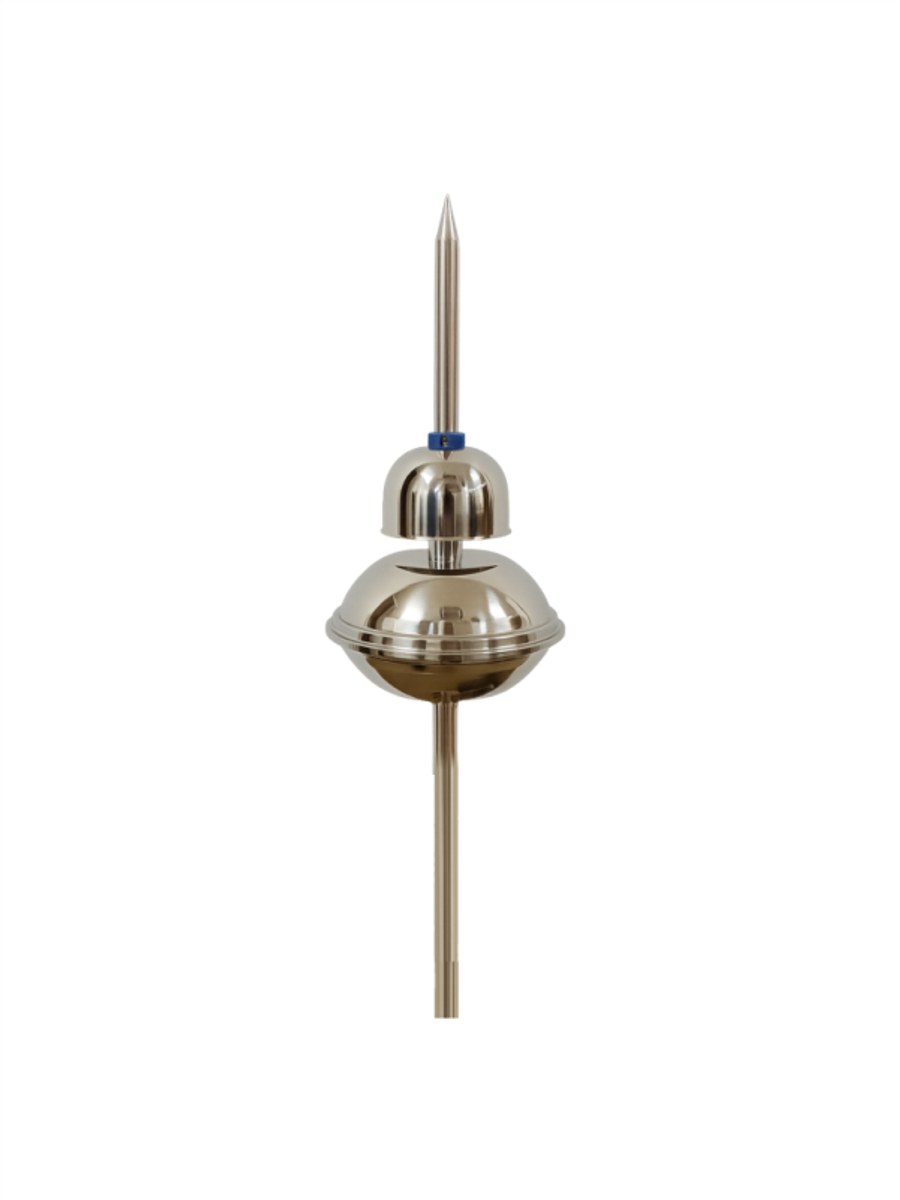
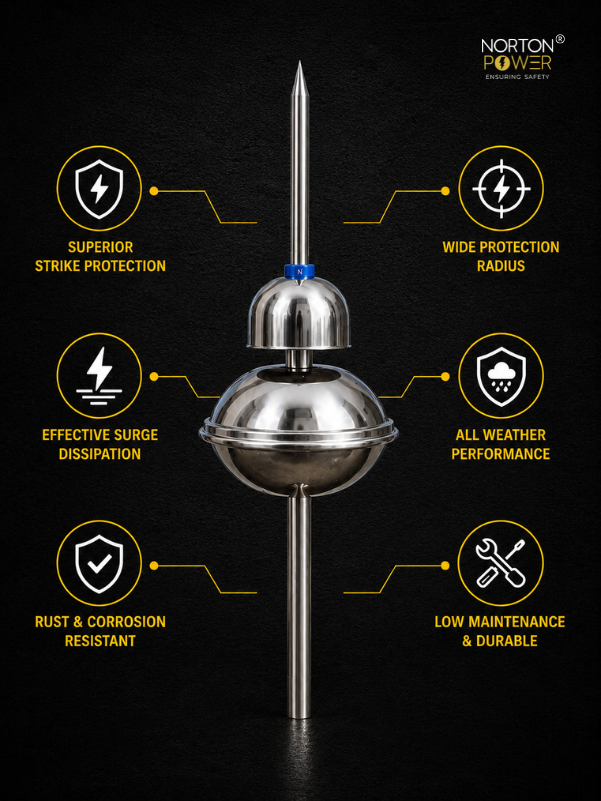
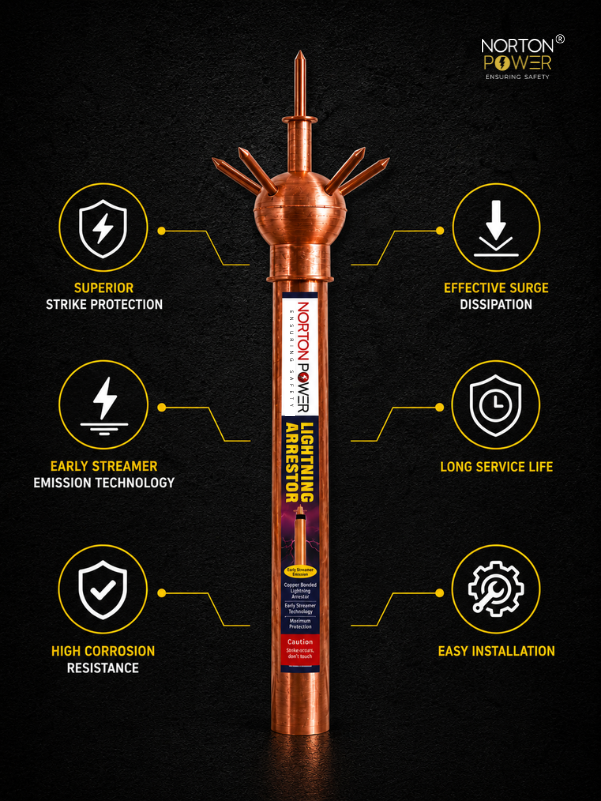
| ESE arrestor (NF C 17-102) | A single tall mast gives a wide protection radius covering the whole roof and rooftop plant — clean and popular for high-rises where the tender allows ESE. |
| Conventional / mesh (IEC 62305) | Franklin rods or a mesh conductor grid over the roof; required where the project is specified strictly to IEC 62305. |
The air terminal must stand clear of, and protect, rooftop assets — water tanks, lift machine rooms, HVAC, signage and antennas.
3. Down-conductors
- At least two down-conductors by the most direct routes on opposite faces (more on a large footprint).
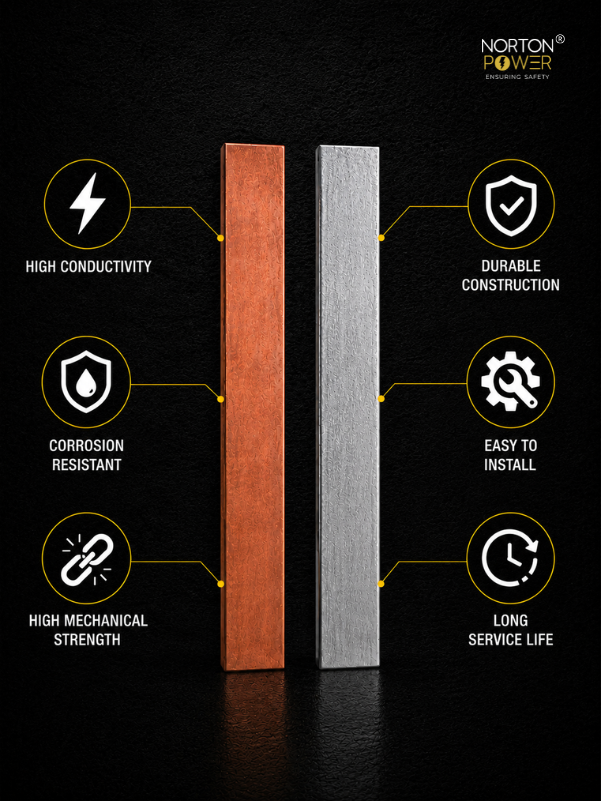
- Copper tape (25 × 3 mm) or the building rebar as a natural down-conductor where designed for it.
- Gentle curves, no tight bends or loops; test/isolating joints near ground level for testing.
4. The earth-electrode network
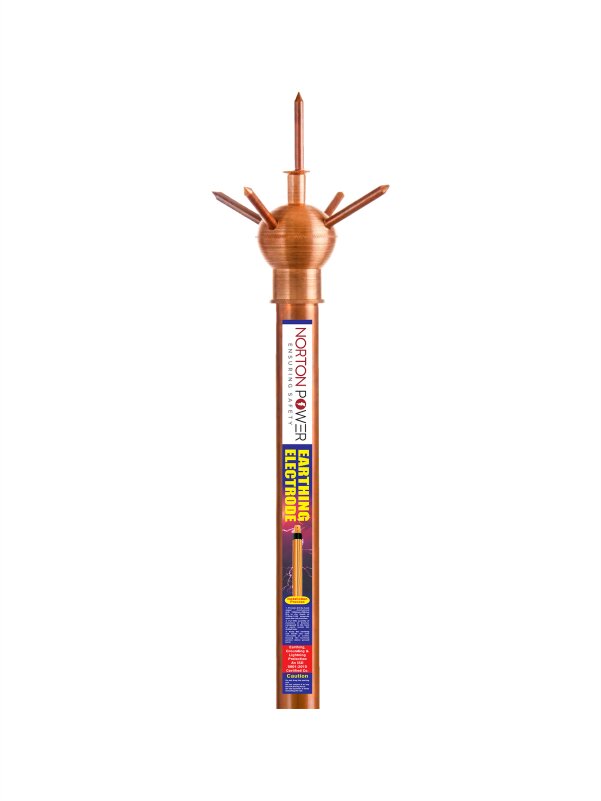
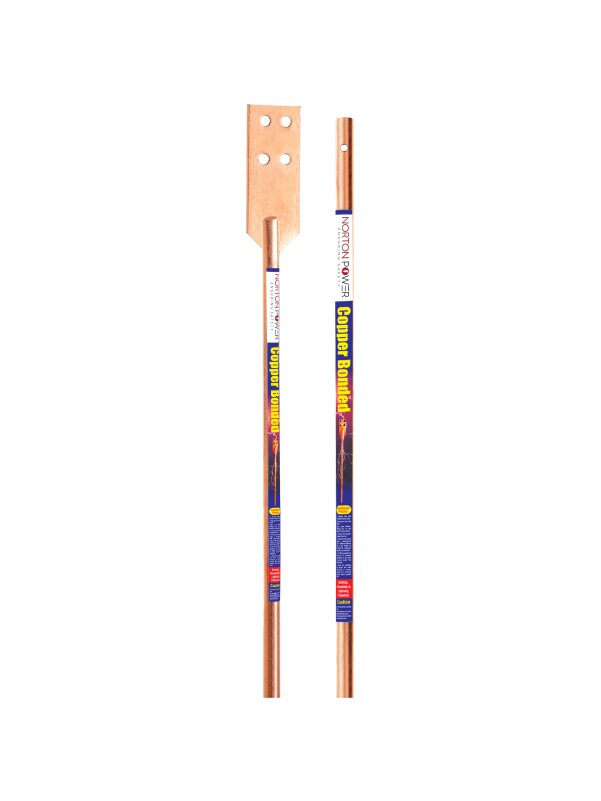
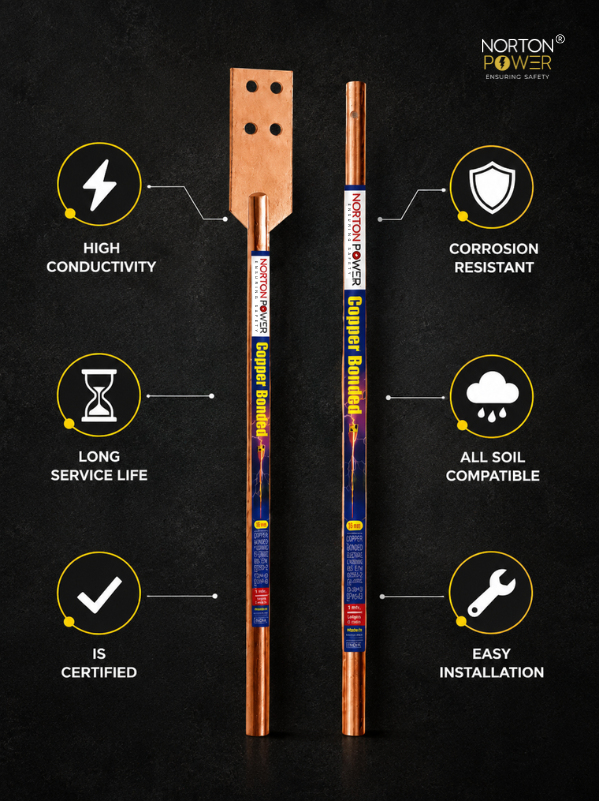
Each down-conductor ends in an earth pit — copper bonded 250 µm rods with earth-enhancing compound — and the pits are tied together by a buried ring conductor around the building. Target resistance is commonly ≤ 5 Ω, lower where the tender demands it. The lightning earth bonds to the building electrical and equipment earth so there is one equipotential mass.
5. Equipotential bonding and pit access
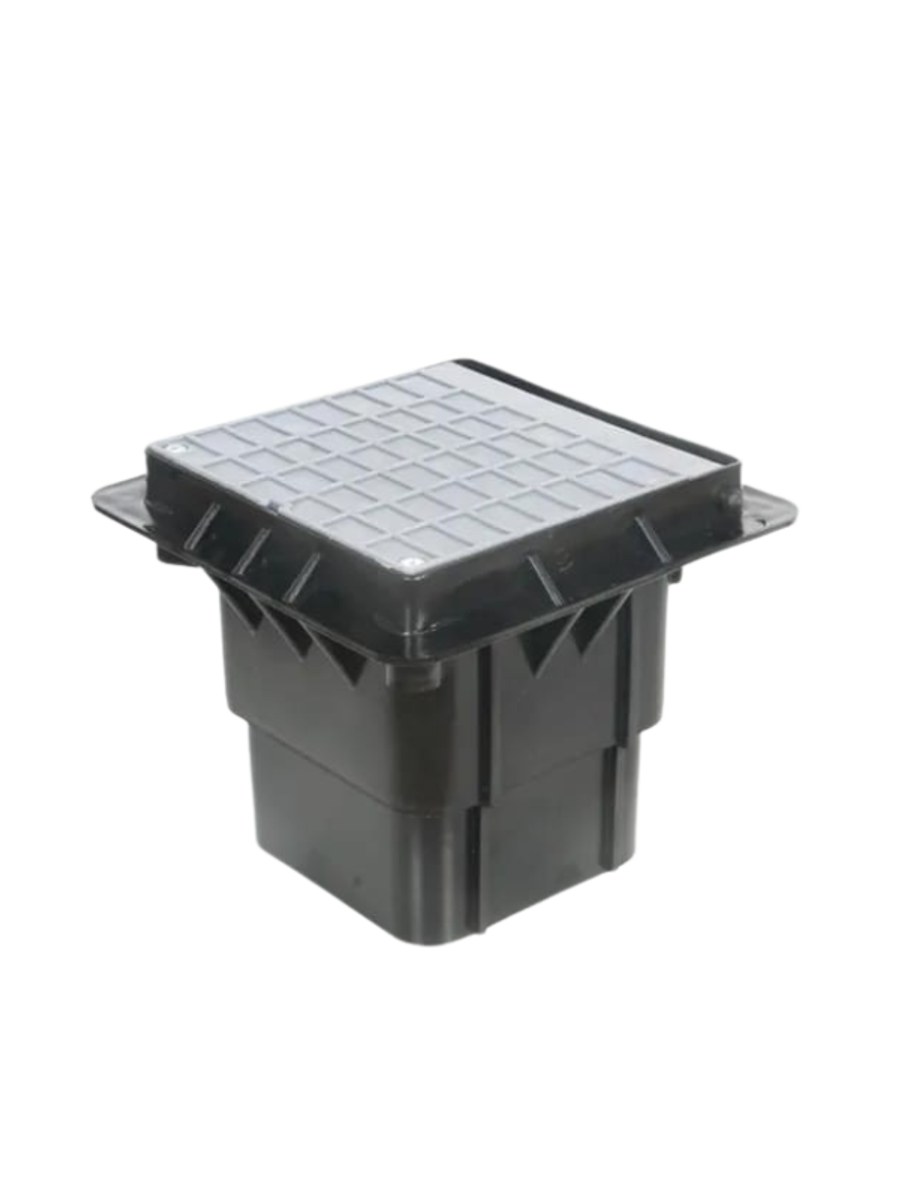
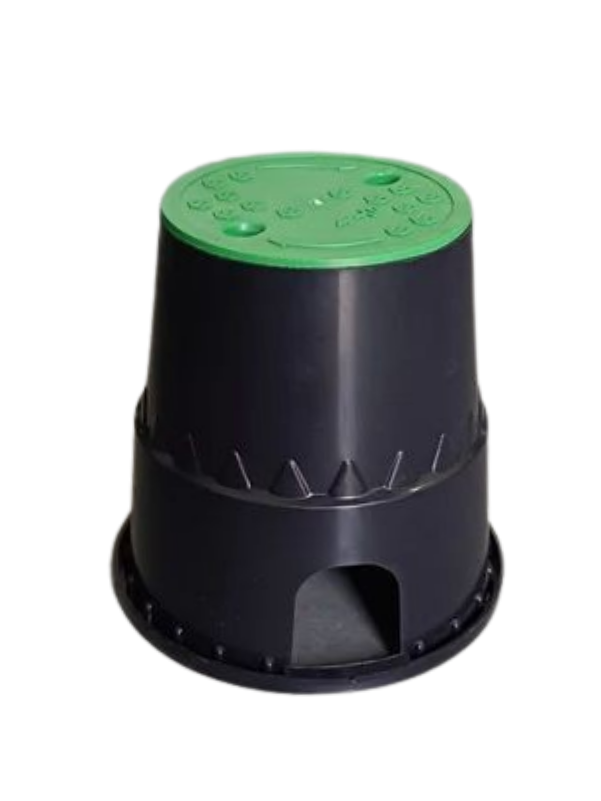
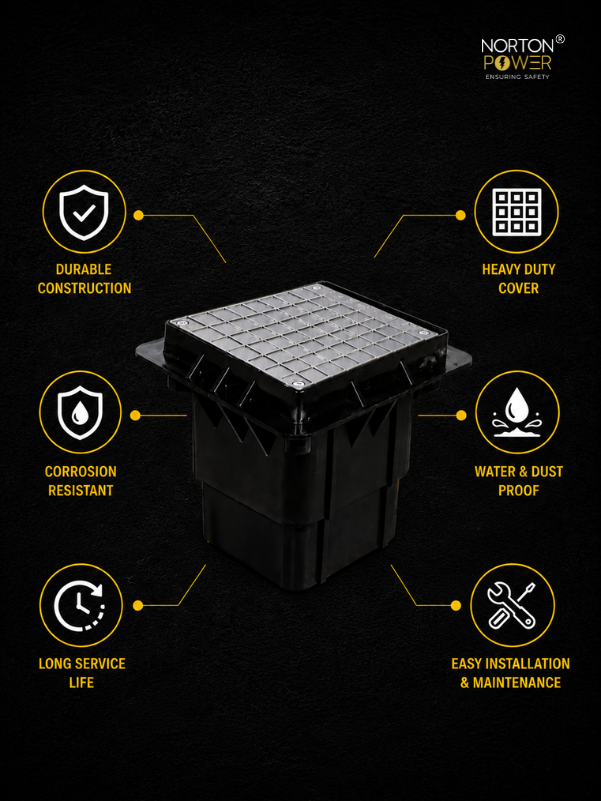
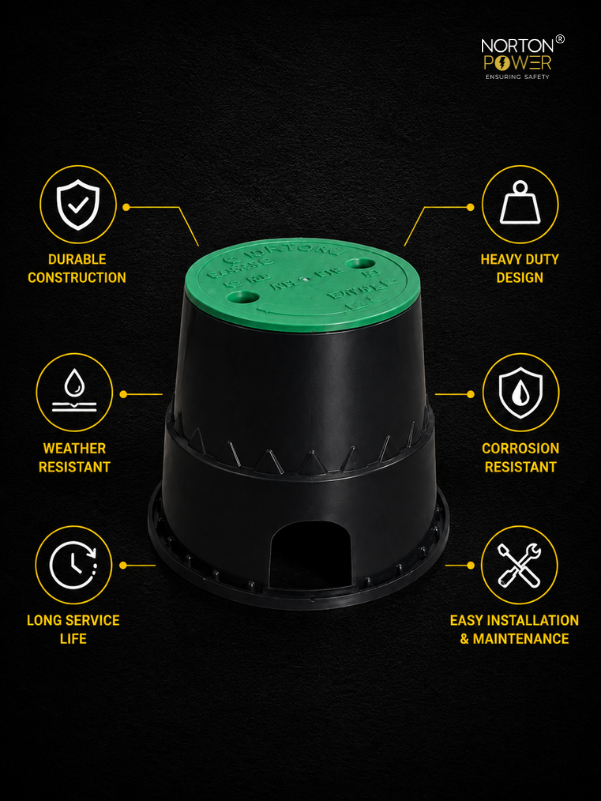
All large metal services (plumbing risers, lift rails, HVAC, cable trays) bond to the earth system to prevent side-flash. Every earth pit gets an inspection cover so the annual resistance test the code expects can be done without excavation — non-conductive SMC or polymer covers are preferred at public entrances.
6. Reference bill of materials
| Item | Typical quantity |
|---|---|
| ESE arrestor (or Franklin rods for a mesh design) | 1 (ESE) or several (Franklin) |
| Lightning mast | 1 per ESE |
| Down-conductor, 25 × 3 mm copper tape | 2+ runs, building height each |
| Copper bonded rod, 17 mm × 3 m, 250 µm Cu, UL 467 | 4–8 (pits on the ring) |
| Earth-enhancing compound, 25 kg bag | 8–16 |
| Ring earthing strip, 25 × 6 mm copper | building perimeter |
| Earth pit covers (SMC / polymer) | 4–8 |
| Test joints, bonding clamps, lugs | per drawing |
7. Checks before you buy
- Which standard does the project follow — NBC 2016 / IEC 62305 (mesh or Franklin) or NF C 17-102 (ESE)? Specify to match.
- Does the air termination cover all rooftop plant, with the right protection radius / mesh size?
- Copper bonded 250 µm rods, CPRI-tested, with compound to hit the resistance target?
- Inspection covers on every pit for the annual test?
- One bonded equipotential mass (lightning + electrical + services)?