On a petrochemical, refinery or tank-farm site, a stray spark is not a nuisance — it is an ignition source in a flammable atmosphere. Earthing, static bonding and lightning protection stop becoming a compliance box and become a safety-critical system that insurers and auditors scrutinise. This guide covers what makes hazardous-area earthing different and how to specify it.
1. Why hazardous-area earthing is different
- The hazard is ignition, not just equipment damage — every conductive object must be at earth potential so it cannot accumulate a charge and spark.
- Static electricity from flowing liquids, filling and pigging is a primary ignition risk that ordinary electrical earthing does not fully address — dedicated bonding is required.
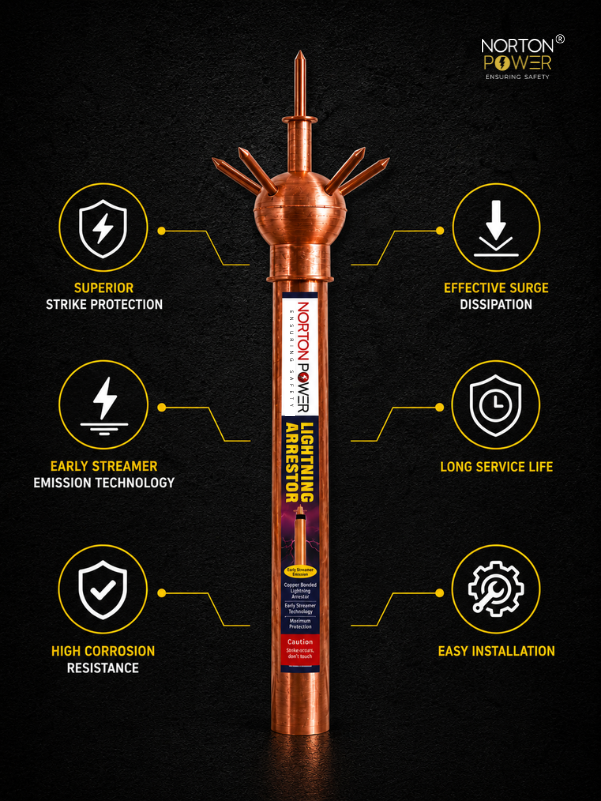
- Insurers and process-safety codes almost always mandate IEC 62305 (conventional / mesh) lightning protection rather than ESE, because ESE is not recognised by IEC.
- Soil is often saline or chemically aggressive (coastal refineries, tank farms), so corrosion resistance drives material choice.
2. Static bonding and grounding
Every tank, vessel, pipe rack, pump, loading arm and road/rail tanker bonds to the earth grid so no two conductive parts can sit at different potentials. Loading and unloading points get dedicated bonding clamps and, for tankers, an interlock that confirms a bond before flow starts. This static grounding is separate from, but bonded to, the electrical safety earth.
3. The earthing grid
A site-wide buried earthing grid (copper strip interconnecting many copper bonded rod pits) ties the whole facility into one low-resistance equipotential mass. Fault currents can be very high, so conductor cross-sections are sized to the fault-current × clearing-time (see our strip-sizing guide), and the resistance target is low (commonly ≤ 1 Ω).
4. Lightning protection (usually IEC 62305)
Tanks and tall columns are struck directly. Protection follows IEC 62305 — bonding of floating tank roofs, air terminals / masts sized by the rolling-sphere method, and down-conductors to the grid. Because the insurance and process-safety regime rarely accepts ESE here, plan for conventional / mesh protection unless the client explicitly allows otherwise.
5. Materials that survive the environment
| Factor | Specification |
|---|---|
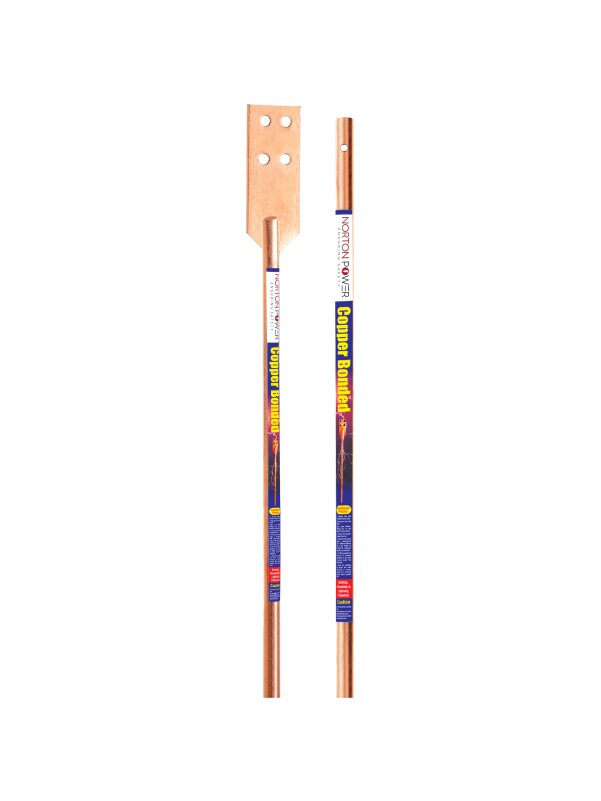
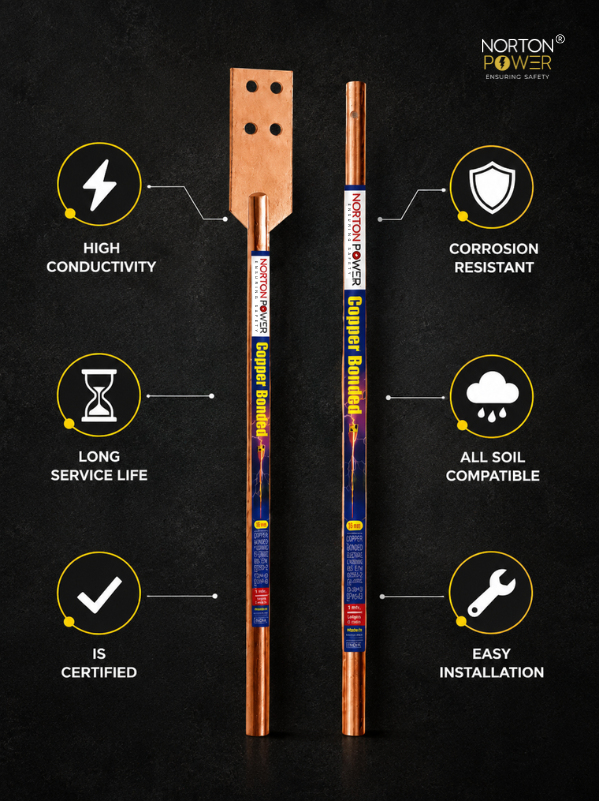
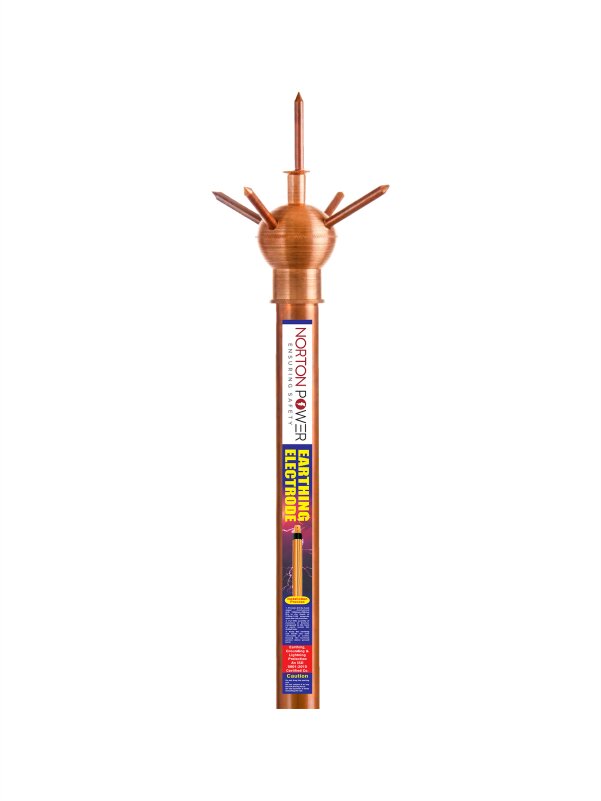
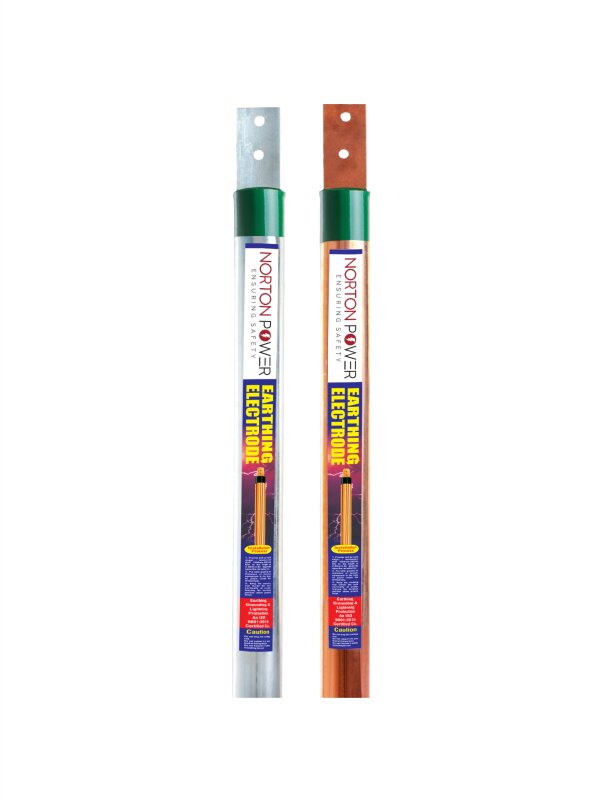
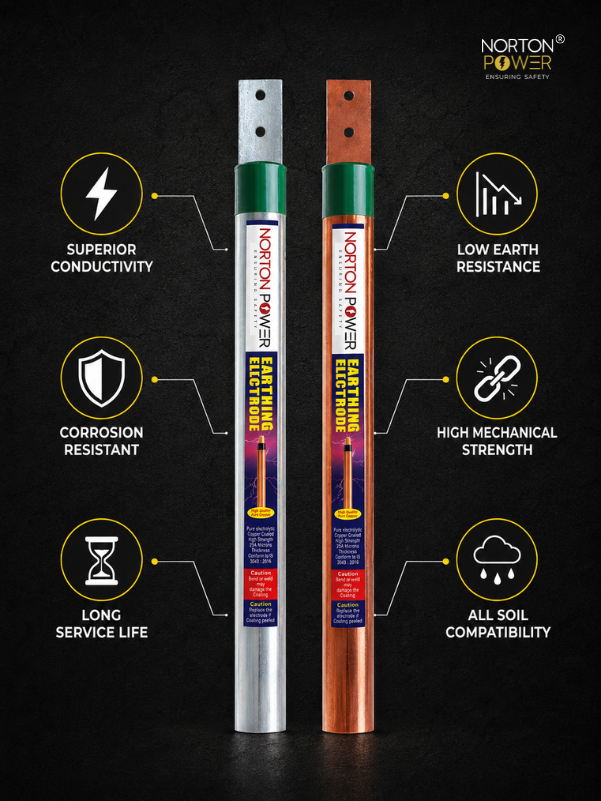
| Electrode | Copper bonded 250 µm (UL 467) — copper resists corrosion far better than GI in saline / chemical soil. |
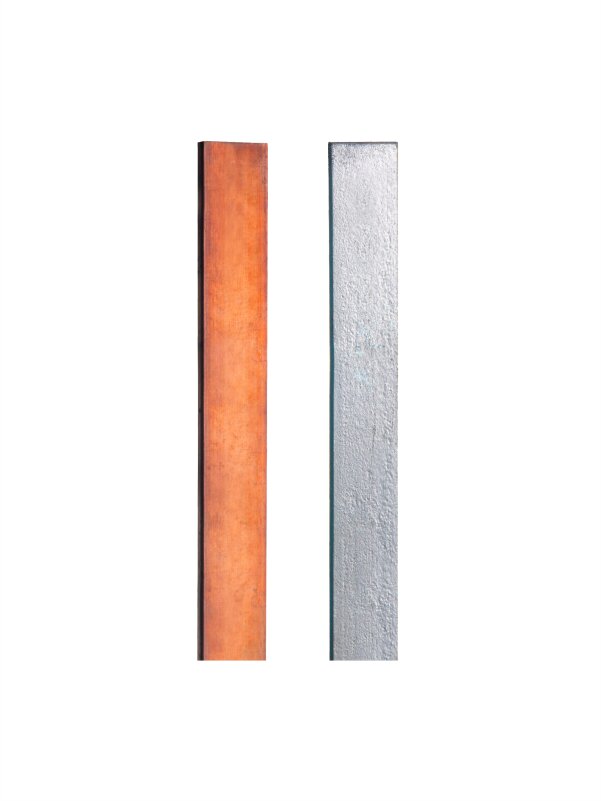
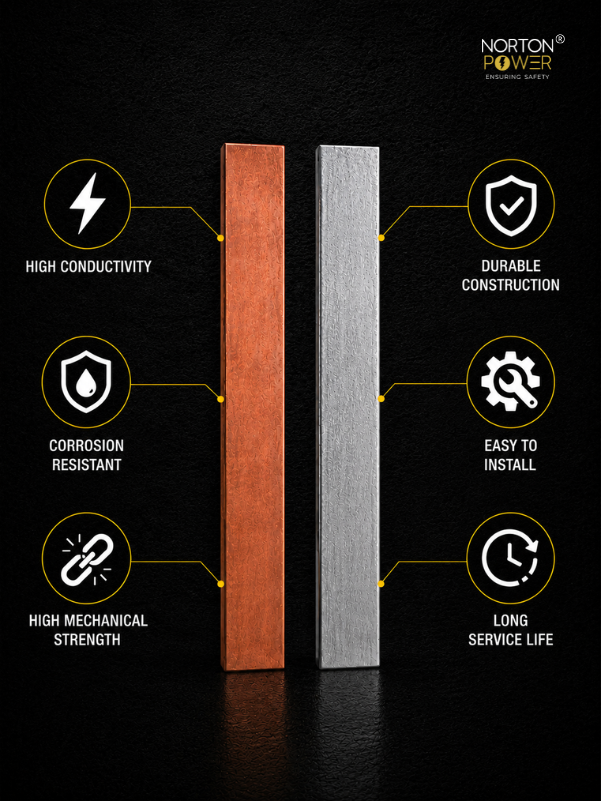
| Grid conductor | Copper strip, sized for the site fault current; exothermic-welded joints for buried HV grids. |
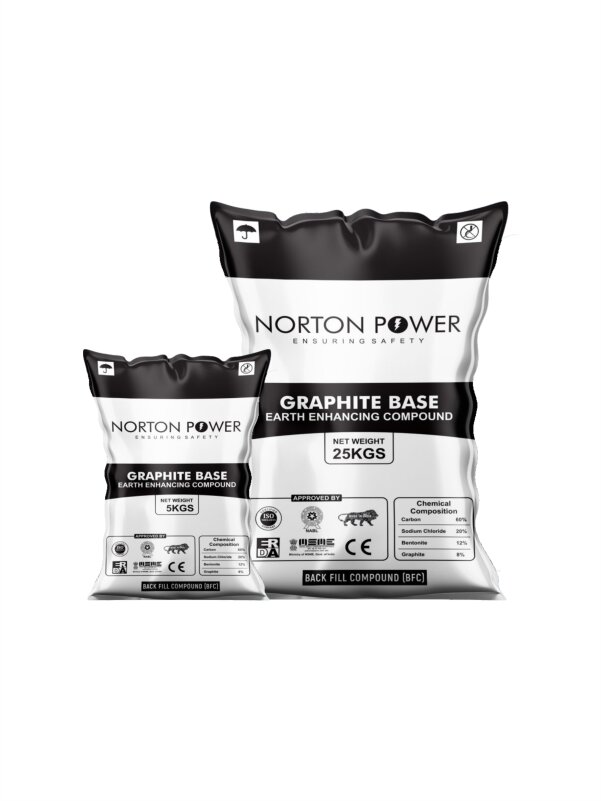
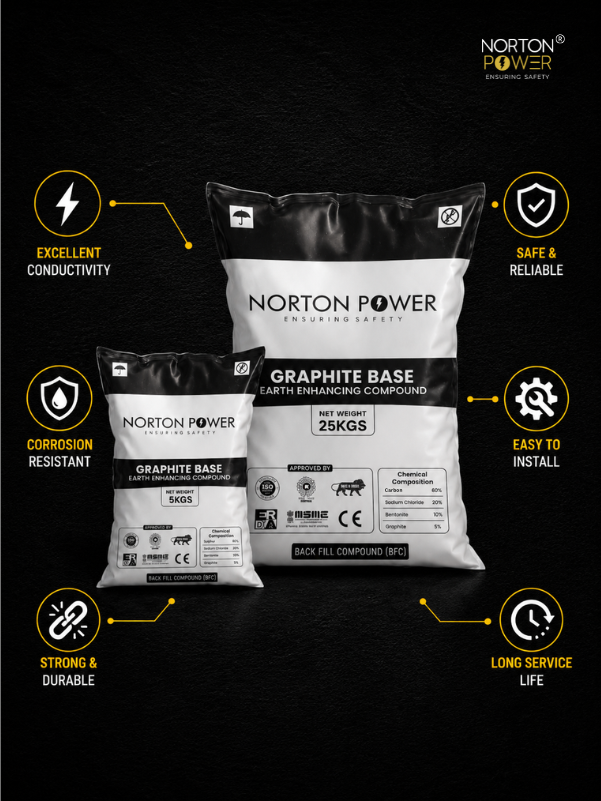
| Backfill | Non-corrosive earth-enhancing compound (never salt-based — salt corrodes the electrode and is unacceptable near hydrocarbons and water tables). |
| Resistance target | Low and stable (commonly ≤ 1 Ω), verified after compound curing. |
6. Checks before you buy
- Does the design cover static bonding of tanks, pipes and loading points, not just electrical earthing?
- Is lightning protection to IEC 62305 (as insurers usually require), not ESE?
- Copper bonded 250 µm rods and copper grid, sized for the site fault current and corrosive soil?
- Non-corrosive (graphite-based) compound, never salt?
- CPRI test reports and a sized BOM against the measured soil resistivity and fault current?