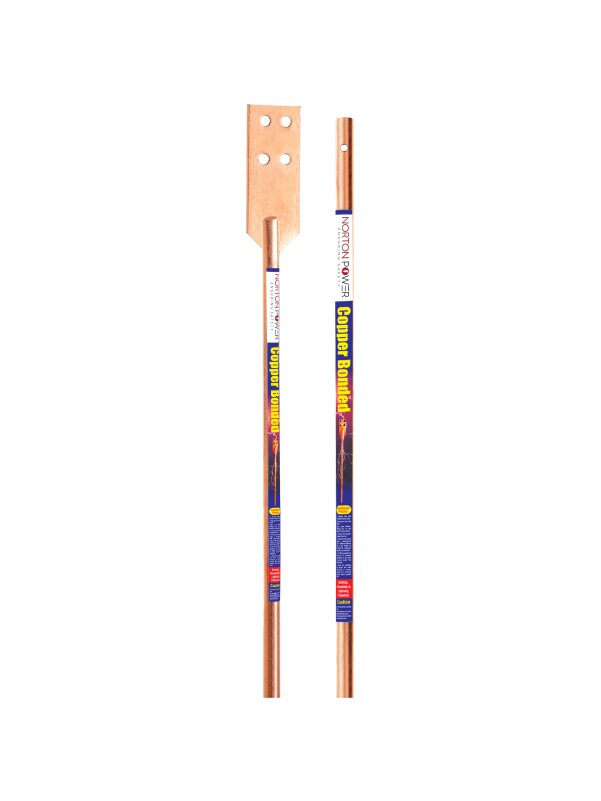
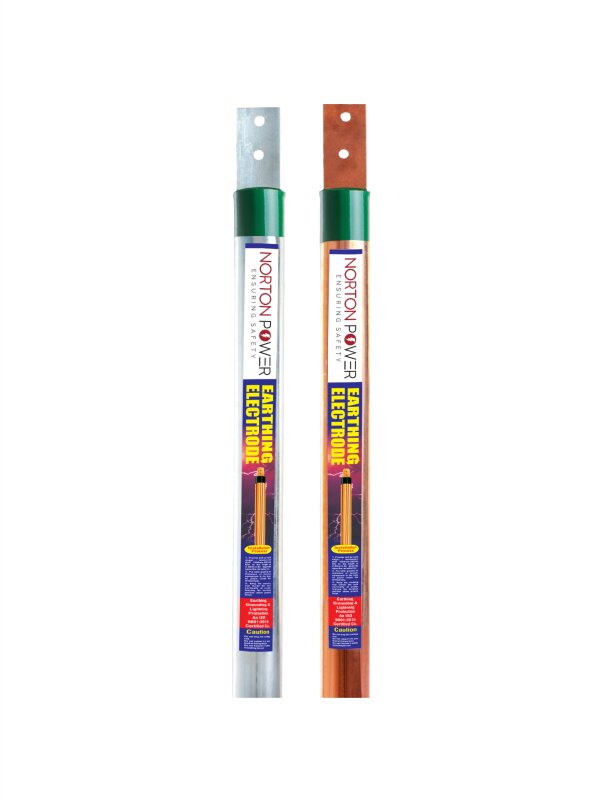
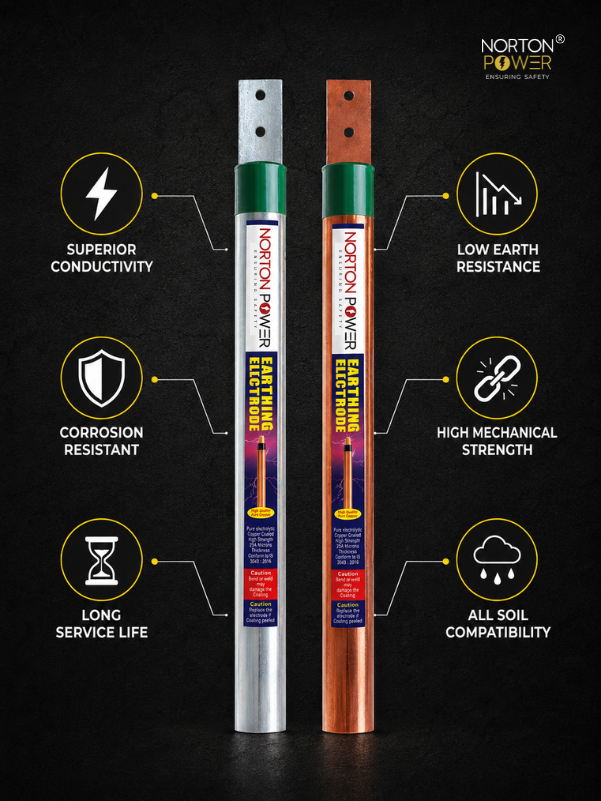
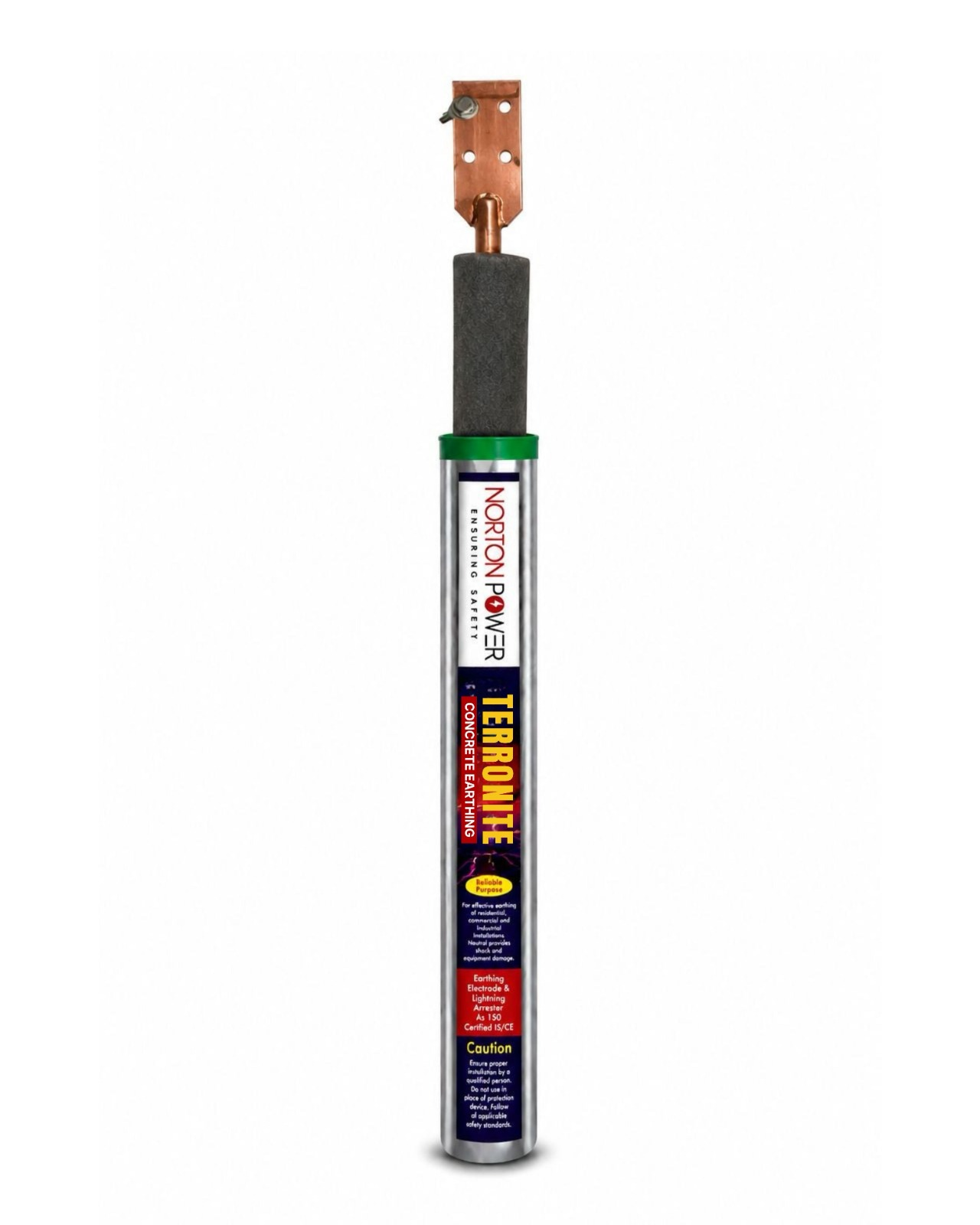
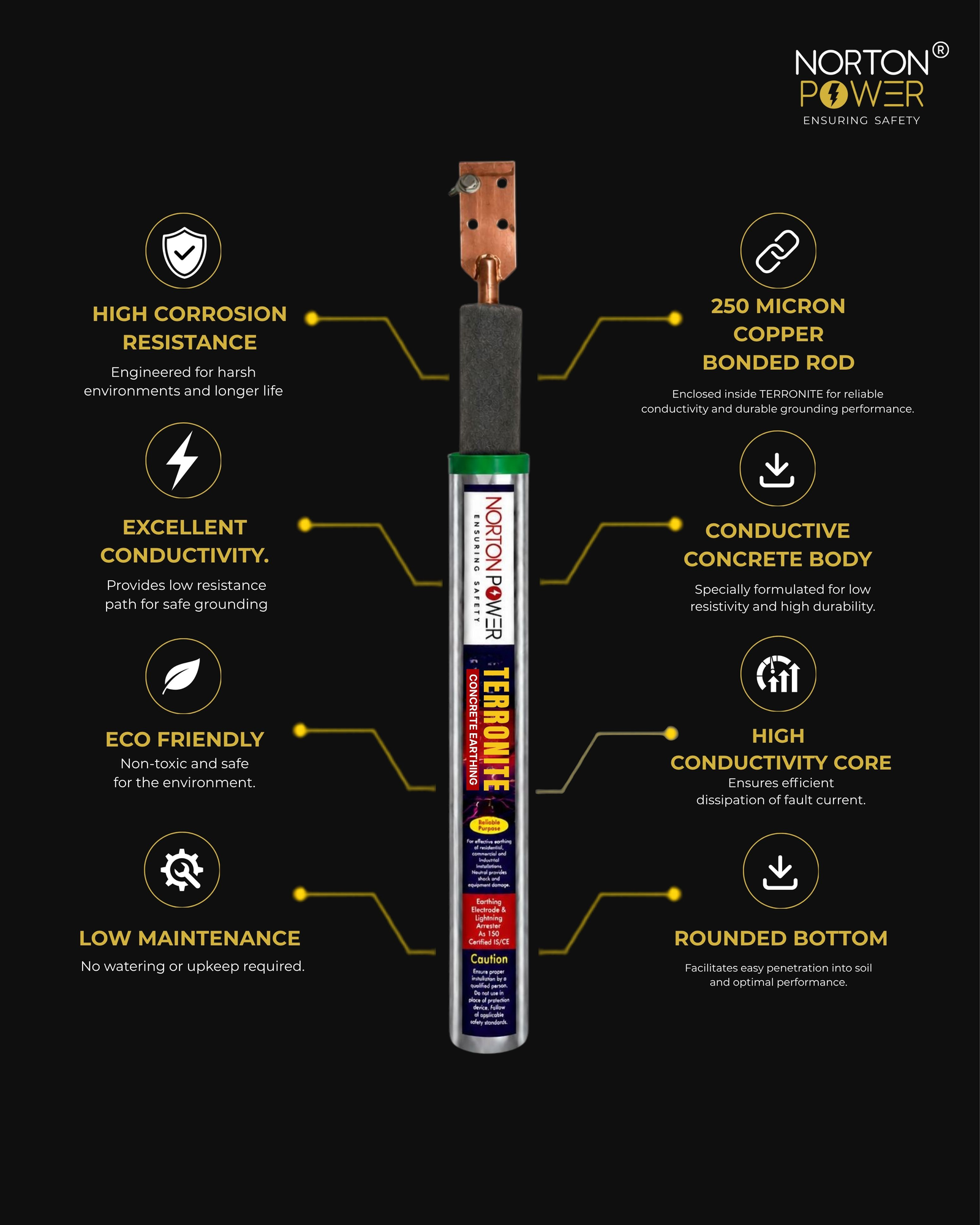
There is no single best earthing for every site - the right electrode depends on the soil resistivity, the fault current, the space available and how much maintenance is realistic. A copper bonded rod is the best all-round choice for most sites; conductive-concrete earthing is best in rocky or high-resistivity soil; a plate is best for high fault current in shallow ground.
Best by soil and duty
| Situation | Best choice |
|---|---|
| Normal soil, most sites | Copper bonded rod (UL 467 250 micron) |
| Rocky, sandy, high-resistivity soil | Conductive-concrete electrode |
| High fault current, shallow ground | Plate electrode |
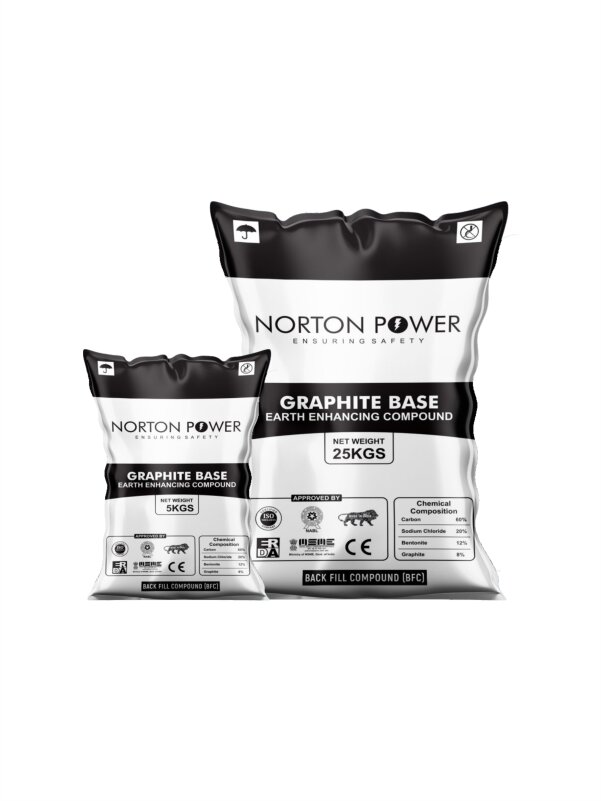
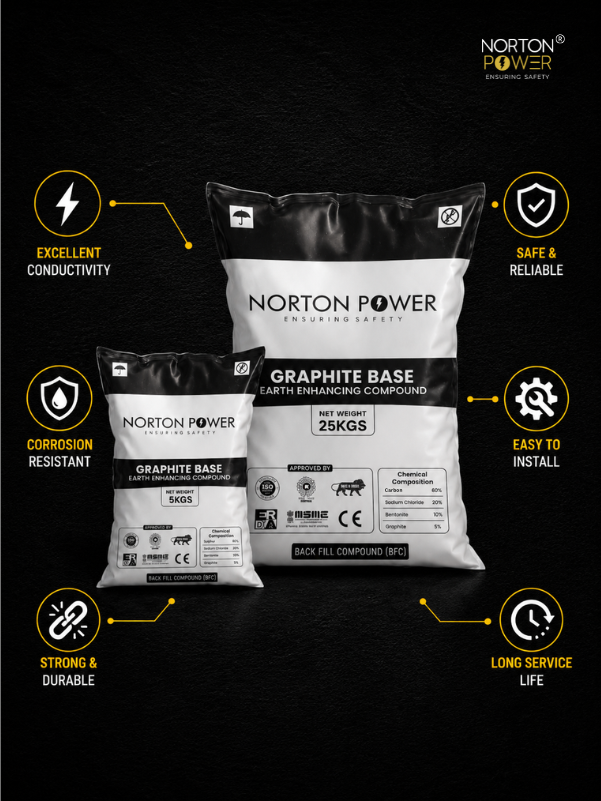
| Dry soil, seasonal variation | Pipe + earth-enhancing compound |
And the best earthing rod
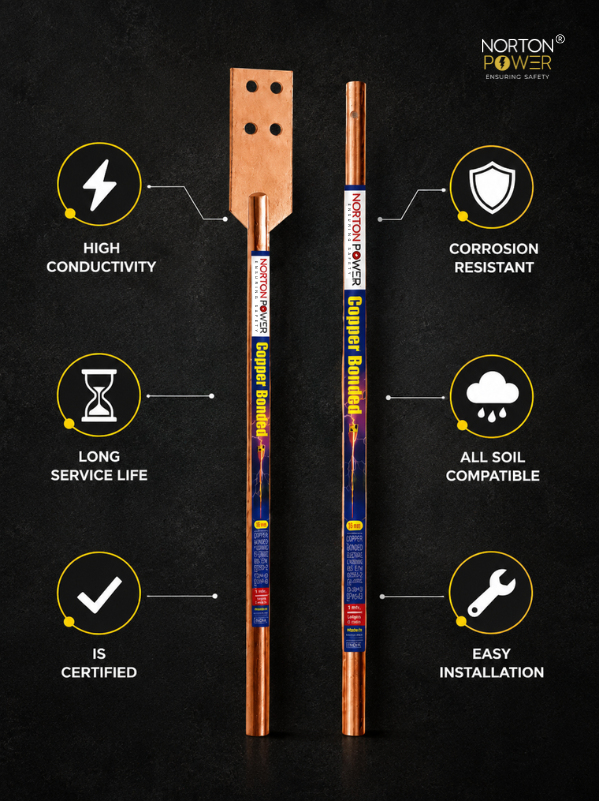
For the rod itself, a 250-micron copper bonded steel rod to UL 467 is the best balance of life, conductivity, strength and cost - see the earthing rod types guide. Solid copper lasts longest at the highest cost; GI is the budget option.