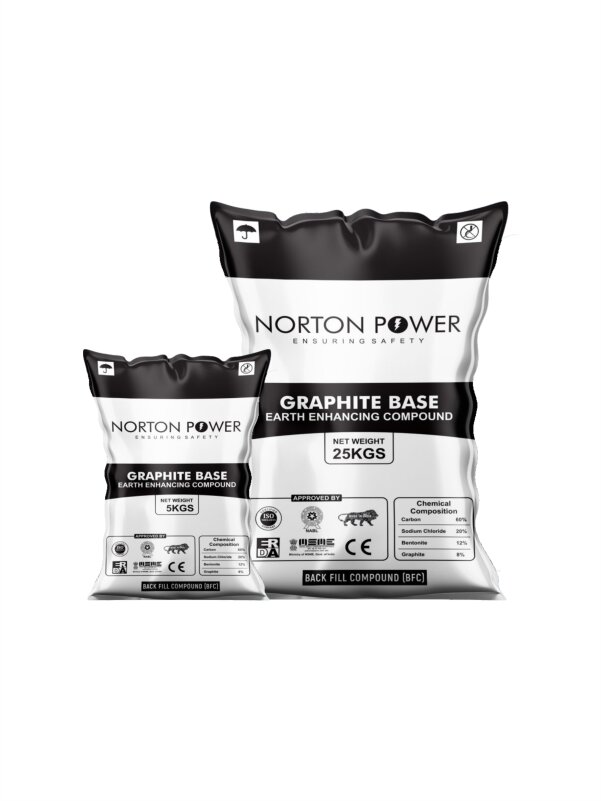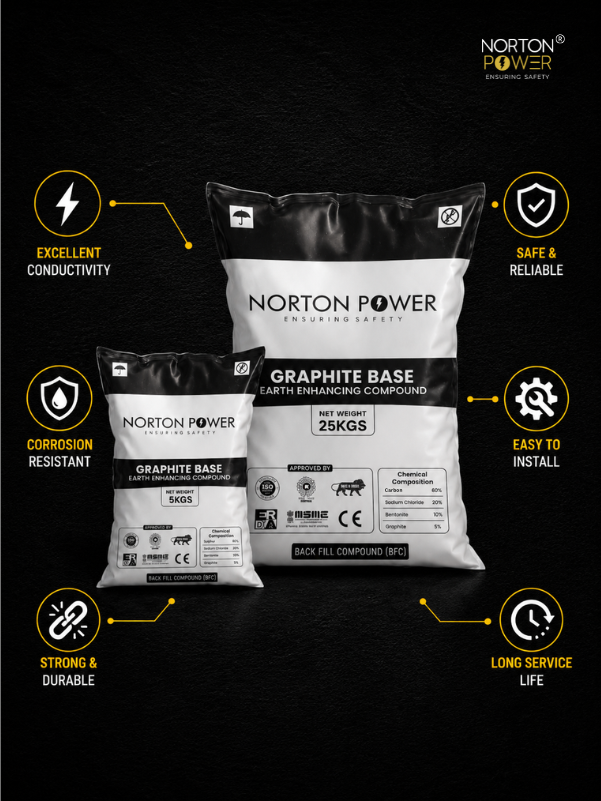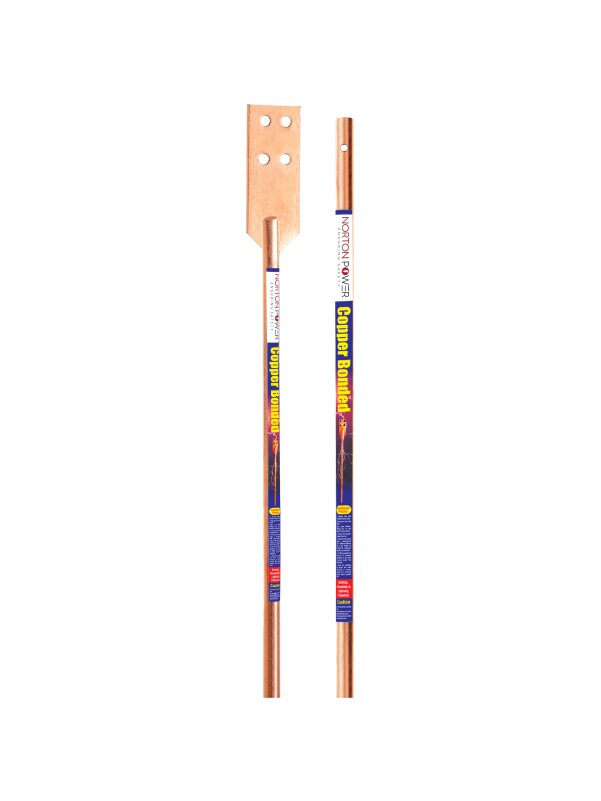
Earth-enhancing compound — also called back-fill compound or ground-enhancement material — is the single most cost-effective way to drop an earth pit's resistance without driving more rods. It is also the step most often done wrong on site. This article covers what it does, when it is worth specifying, and exactly how to apply it.
1. What it is and what it does
Modern earth-enhancing compound is a graphite / carbon-granule based material that, once mixed with water and packed around an electrode, forms a conductive, moisture-retaining gel. It works two ways: it has a very low intrinsic resistivity (a fraction of natural soil), and it massively increases the effective surface area of contact between the electrode and the surrounding earth.
In practice it lowers the apparent soil resistivity in the immediate vicinity of the rod from, say, 150 Ω·m natural soil to roughly 25–40 Ω·m around the electrode — which can cut a single pit's resistance by 60–75%.
2. Why it beats salt-and-charcoal
| Attribute | EE compound · vs · Salt & charcoal |
|---|---|
| Corrosion to the electrode | Non-corrosive · vs · Salt aggressively corrodes the rod |
| Stability over time | Stable conductive gel · vs · Salt leaches away; needs re-treatment |
| Maintenance cycle | Largely maintenance-free · vs · Periodic re-salting / re-watering |
| Environmental | Inert, non-leaching · vs · Salt contaminates the water table |
| Resistance achieved | Lower and holds · vs · Good initially, drifts up |
Salt-and-charcoal pits were the norm for decades because the materials were cheap and local. The catch is that the salt that lowers resistance is the same salt that eats the electrode and washes out with the monsoon — so the pit drifts and the rod fails early. EE compound removes both problems.
3. When it is worth specifying
- Whenever the natural soil resistivity is moderate-to-high (> ~80 Ω·m) and you need to hit a single-figure resistance target.
- Rocky, sandy, or dry terrain where a bare driven rod cannot reach the target on its own.
- Substations, solar plants, telecom and data-centre pits where a stable, maintenance-free earth is required.
- Any site where re-excavating to add rods later would be expensive — compound is cheaper than extra pits.
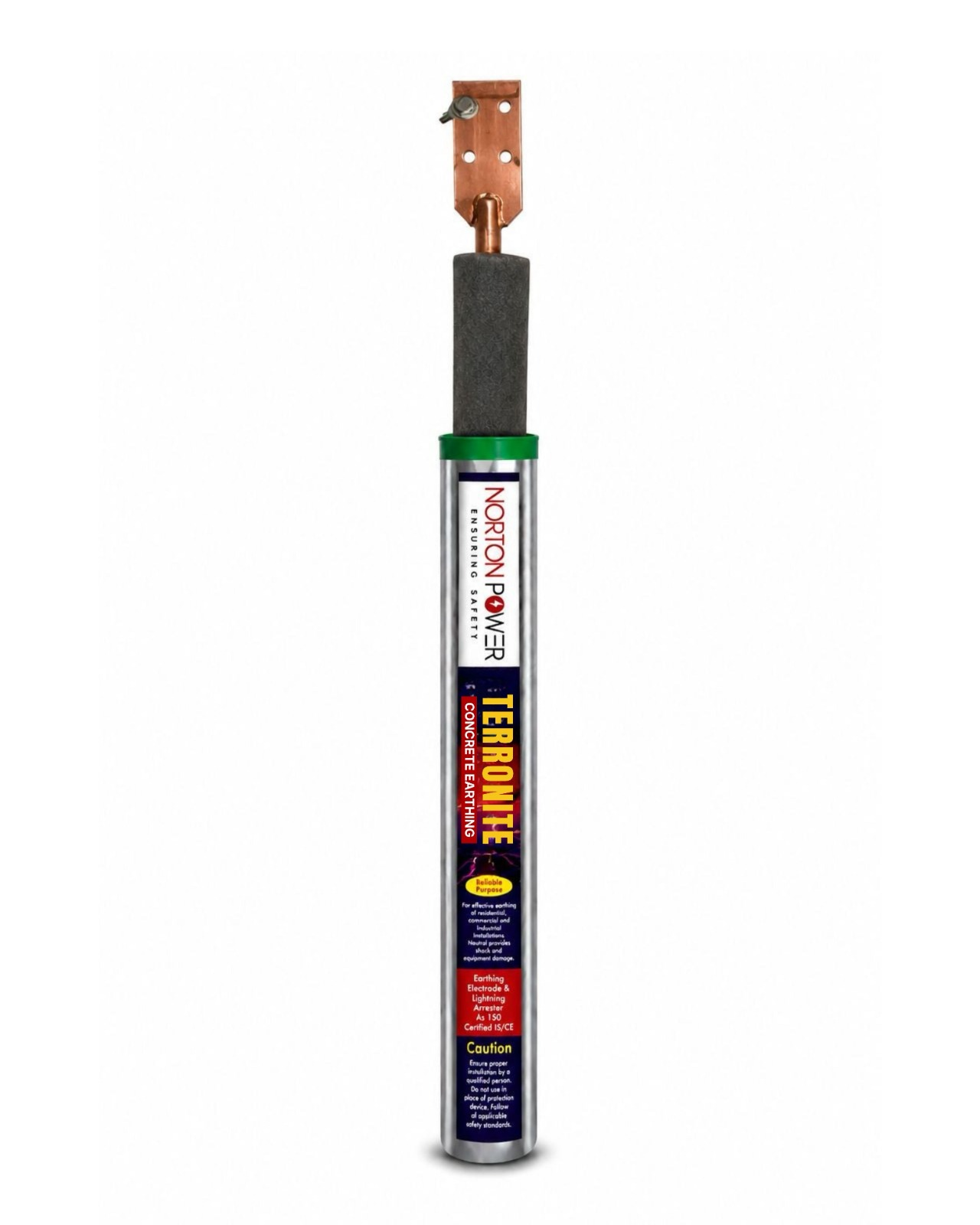
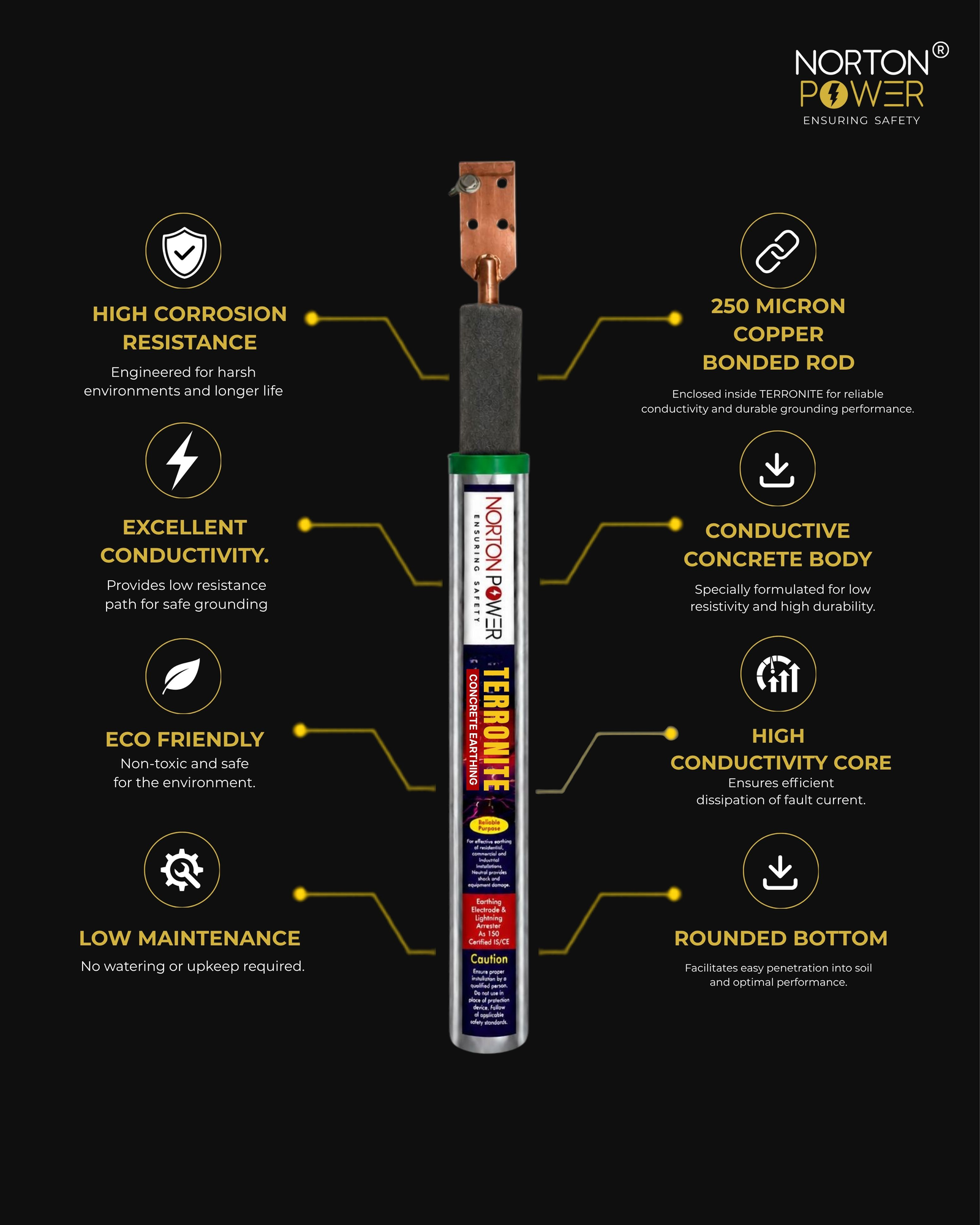
For extreme high-resistivity ground (rock, ρ > 500 Ω·m) where even compound around a rod is not enough, step up to a conductive-concrete earthing electrode — a metallic core fully encased in conductive concrete, designed for exactly that case.
4. How to apply it correctly
- Mix one 25 kg bag with roughly an equal volume of sieved excavated soil (about 1:1 by volume) for a standard single-rod pit.
- Add water while mixing until the blend reaches a moist, kneadable, wet-sand consistency — the compound is hygroscopic and needs water to activate.
- Pour around the driven rod in 200–300 mm layers, lightly tamping each layer to remove air voids (voids = lost contact = higher resistance).
- Top up with 5–10 litres of water to kick off the water-retention behaviour.
- Allow 5–7 days to cure into a stable gel before the acceptance resistance test — readings taken before curing will be higher than the final value.
5. Maintenance
A correctly installed compound pit is largely maintenance-free. If the annual IS 3043 resistance reading drifts up by more than ~20% from commissioning, re-open the pit, add water and a half-bag of compound, and repack — far cheaper than a new pit.
6. Checks before you buy
- Is it graphite/carbon-based and non-corrosive (not salt-based)?
- What is the quoted resistivity of the cured compound (lower is better)?
- Is it non-leaching / environmentally safe for use near a water table?
- What bag size, and how many bags per pit does the supplier recommend for your soil?
- Does the supplier provide a sized BOM (rods + compound + strip) for your target resistance?