Some sites defeat the textbook earth pit. Rock close to the surface, dry sand, lateritic and hill soils can sit at 500–2000+ Ω·m — and a driven rod in that ground may read tens of ohms no matter how hard you hammer. This article maps the options and shows where a conductive-concrete electrode is the right tool.
1. Why driven rods fail in high-resistivity ground
A vertical rod's resistance is dominated by the soil resistivity ρ. Double ρ and you roughly double the resistance. In 1000 Ω·m rock, a single 3 m rod can read several hundred ohms — and you physically cannot drive it deep into rock anyway. Adding identical rods helps only sub-linearly because of mutual interference. Brute force does not work here.
2. The options, in order of escalation
| Approach | When it helps |
|---|---|
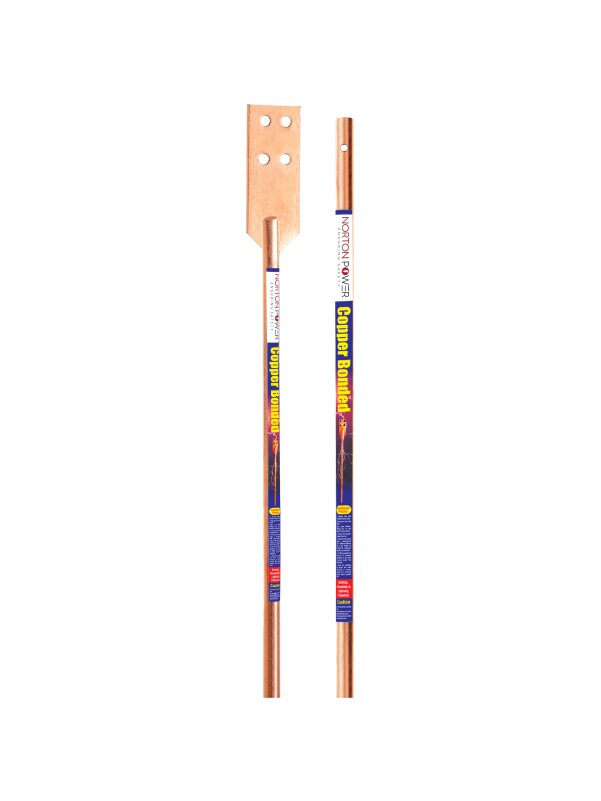
| Deeper / coupled rods | When a conductive, lower-resistivity layer exists below the dry surface — reach it. |
| More rods in a grid | Moderate ρ only; diminishing returns as ρ climbs. |
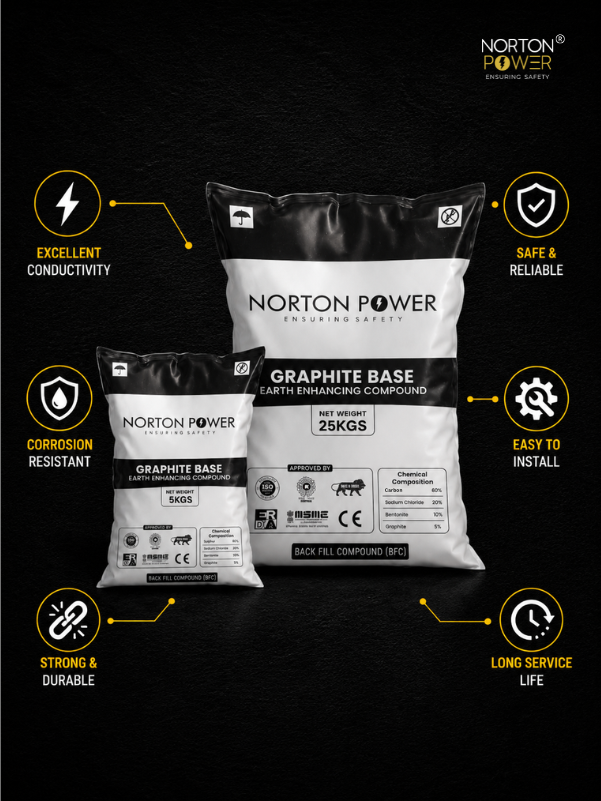
| Earth-enhancing compound | Moderate-to-high ρ; cuts the near-rod resistivity sharply and is the first thing to try. |
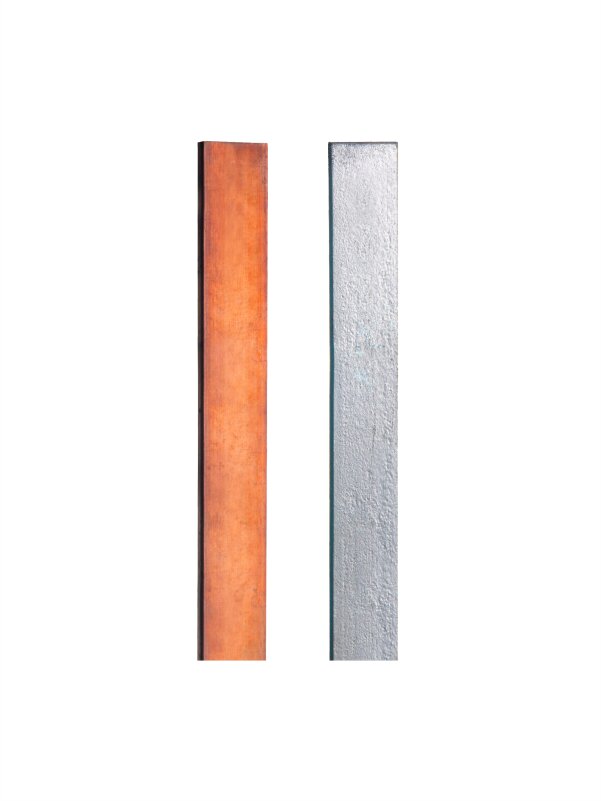
| Horizontal / trench electrodes | Shallow rock — bury long copper strips in trenches where you cannot go deep. |
| Conductive-concrete electrode | High-to-extreme ρ, rock and dry sand — the electrode brings its own low-resistivity medium. |
3. What a conductive-concrete electrode is
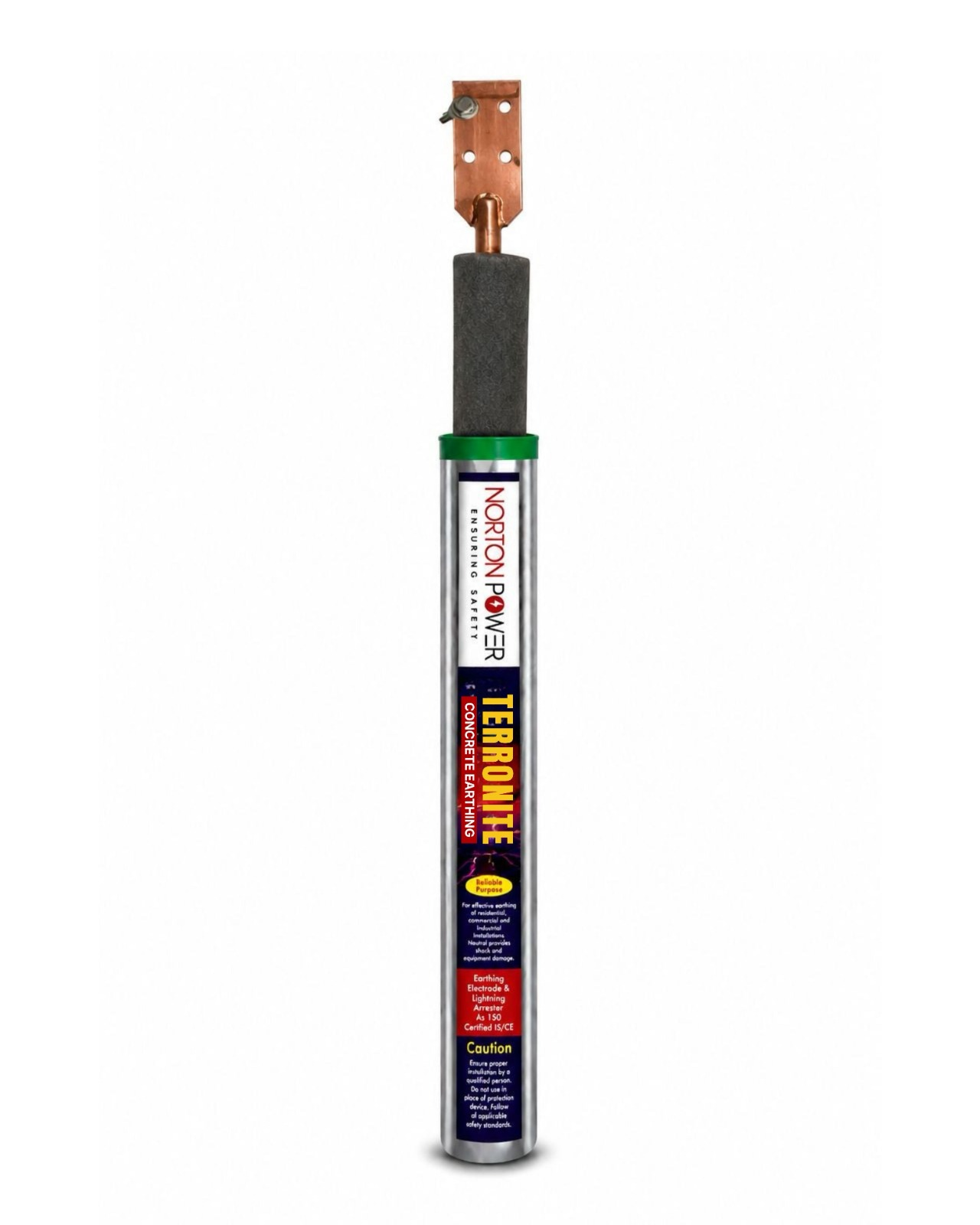
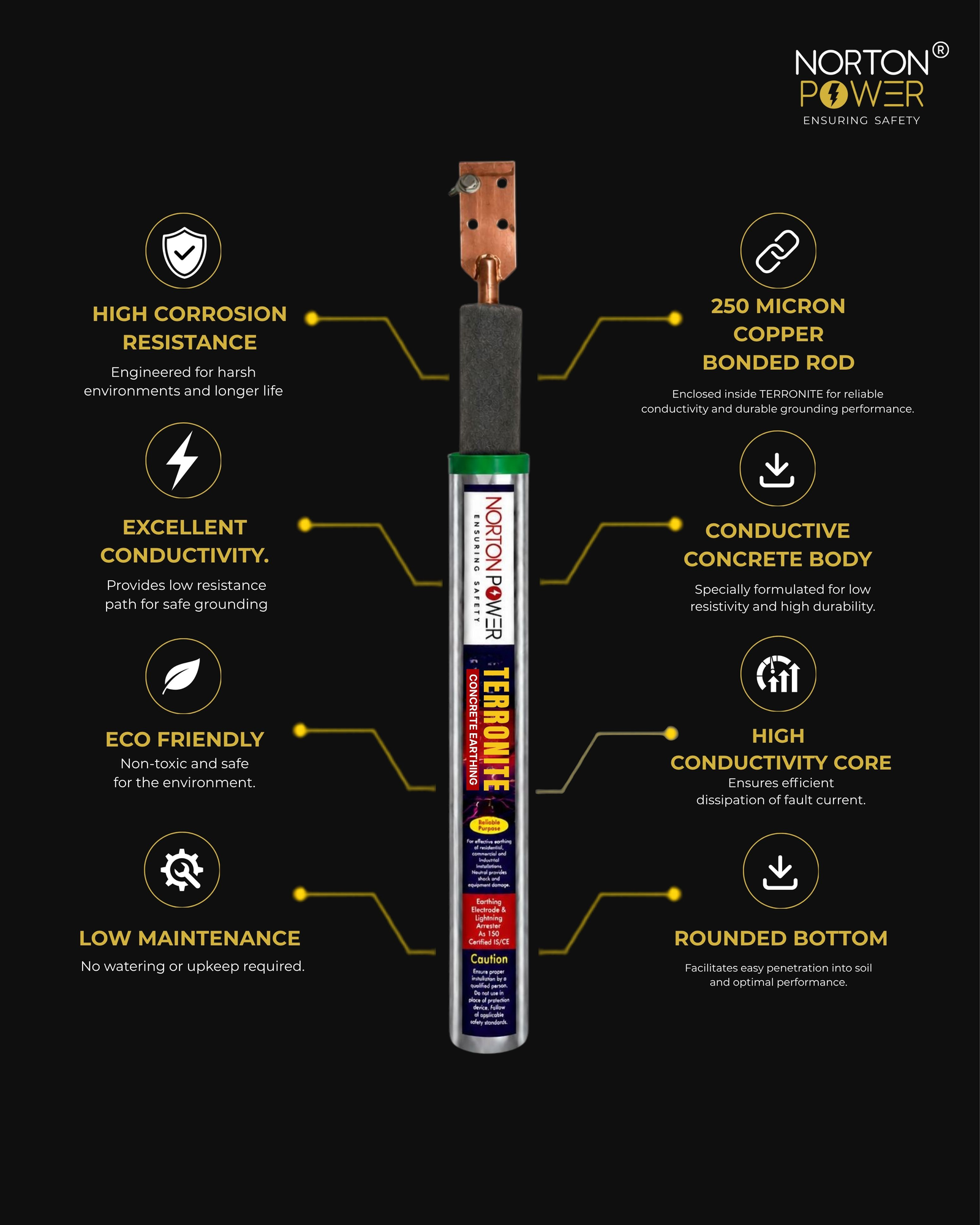
A conductive-concrete (Marconite-type) earthing electrode is a metallic core fully encased in a specially formulated conductive concrete with very low resistivity (typically < 0.1 Ω·m) and strong moisture retention. Because the electrode brings its own low-resistance medium and a large dissipation surface area, it achieves a stable earth even where the surrounding soil is hostile — and it is tested to IEC 62561-7.
Crucially, the conductive medium does not corrode the core or wash away like a salt pit, so the system is effectively maintenance-free over a long service life — exactly what a remote rocky site needs, where return visits are expensive.
4. Applicability map
- Rocky / hard substrata where rods cannot be driven to depth.
- Dry, sandy and lateritic soils with seasonal high resistivity.
- Sites with big seasonal swings — the moisture-retaining jacket steadies the reading across summer and monsoon.
- Remote or hard-to-access sites (telecom hilltops, transmission towers) where maintenance-free is the priority.
- Substations, plants and data centres on difficult ground that still need a low, stable earth.
5. How it is installed
Conductive-concrete electrodes are installed vertically in a bored pit or horizontally in a trench where rock prevents depth. The conductive backfill is mixed and packed around the core to fill the cavity completely (no voids), then bonded to the earthing strip / grid exactly like a rod pit. Horizontal installation in a trench is the usual answer to shallow rock.
6. Checks before you buy
- Get a real soil-resistivity survey first (Wenner 4-pin) — high-resistivity design is impossible to do blind.
- What is the resistivity of the conductive medium, and is it non-corrosive / non-leaching?
- Is the electrode tested to IEC 62561-7?
- Can it be installed horizontally for shallow-rock sites?
- What backfill quantity per electrode, and what target resistance for your measured ρ?