In a hospital, the earth is a patient-safety system. A patient connected to monitors and infusion lines cannot tolerate the small leakage currents and potential differences a factory shrugs off, and life-critical equipment must never lose its ground reference. Hospital earthing therefore layers strict equipotential bonding and a clean, low-resistance earth on top of ordinary building earthing. This guide covers what that involves.
1. Why healthcare earthing is a special case
- Patients are electrically vulnerable — invasive lines can carry tiny currents straight to the heart, so touch-voltage limits are far stricter than normal.
- Life-critical equipment (ventilators, monitors, OT systems) must keep a stable earth reference and stay energised through faults.
- Imaging and diagnostics (MRI, CT, cath labs) need a low-noise reference earth or the images are corrupted.
- The building still needs conventional safety earthing and lightning protection underneath all of this.
2. Medical-location earthing (theatres, ICUs)
Critical medical locations are covered by IEC 60364-7-710 (and IS 3043 practice). The defining requirement is a supplementary equipotential bonding system: every exposed and extraneous conductive part in the patient area (bed, trolley, panels, gas outlets, equipment frames) bonds to a common bonding busbar so no two touchable parts can differ in potential. Operating theatres typically also use an isolated (IT) power system with insulation monitoring so a first fault does not trip life-support.
3. Clean reference earth for imaging
MRI, CT and cath-lab equipment vendors specify a low-impedance, low-noise earth (often a dedicated low-resistance electrode set bonded to the main earth). Copper electrodes and copper bonding conductors are used for their low impedance, and the imaging earth bonds to the building earth through controlled paths so there is one equipotential mass without earth loops.
4. The main earthing and lightning system
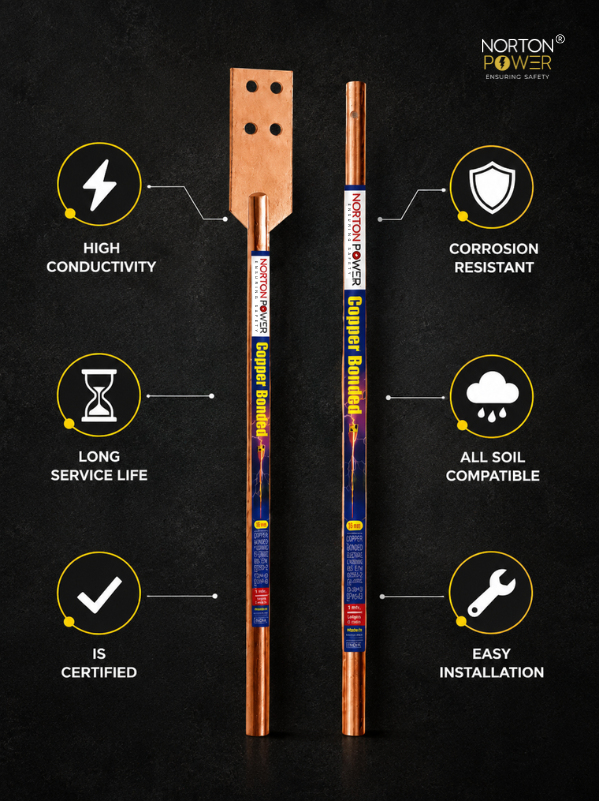
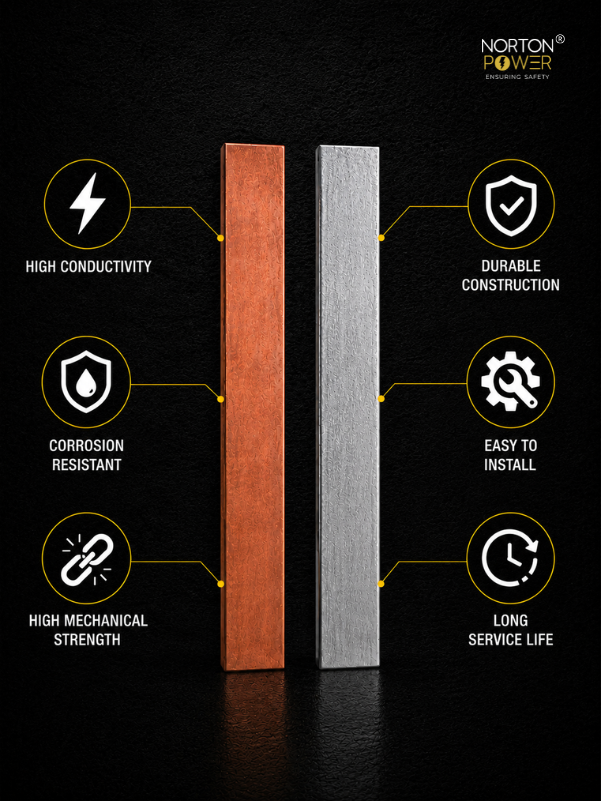
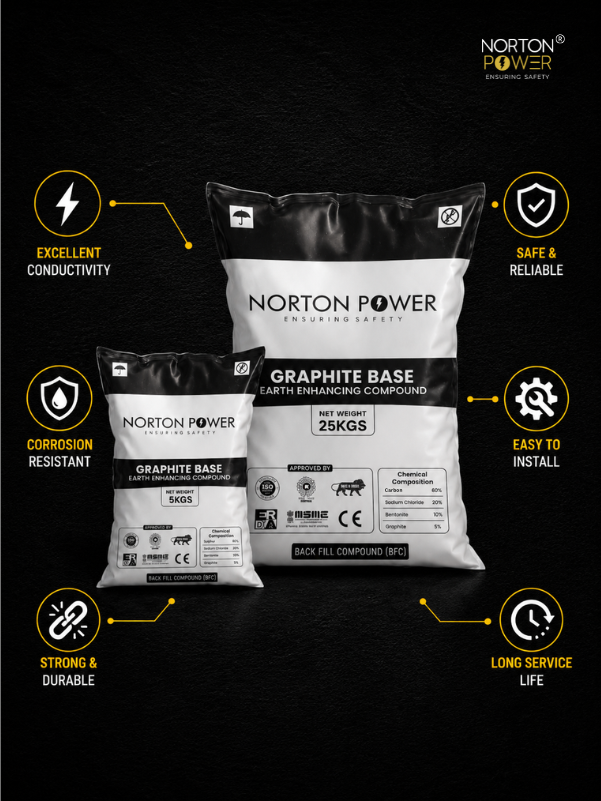
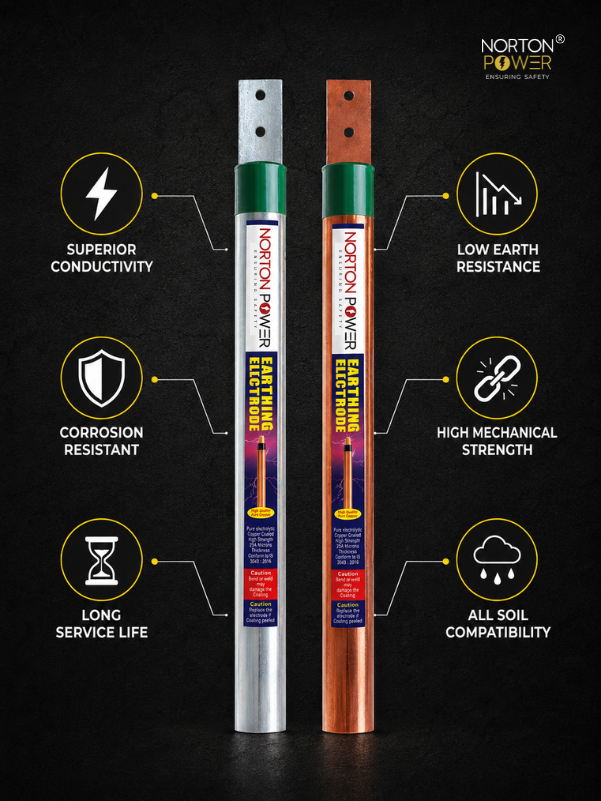
- A low-resistance electrode network — copper bonded 250 µm rods interconnected by copper strip, with earth-enhancing compound — sized to the target (commonly ≤ 1 Ω for a large hospital).
- Separate but bonded earths for the electrical safety system, the medical equipment earth, and the imaging reference, all tied to one common earthing point.
- Lightning protection for the building (air termination, down-conductors, ring earth) per IS/IEC 62305, bonded to the same mass.
- Non-conductive SMC pit covers at public and patient areas.
5. Checks before you buy
- Does the design provide supplementary equipotential bonding busbars in every critical medical location, not just building earth?
- Copper bonded 250 µm electrodes and copper conductors for a low-impedance, low-noise earth?
- Is the imaging reference earth handled to the equipment vendor spec and bonded without loops?
- Compound-backed pits sized to the resistance target, CPRI-tested electrodes?
- A single bonded mass (safety + medical + imaging + lightning)?
6. Reference bill of materials
| Item | Typical quantity |
|---|---|
| Copper bonded rod, 17 mm × 3 m, 250 µm Cu, UL 467 | 16–24 (perimeter + imaging earth) |
| Earth-enhancing compound, 25 kg bag | 32–48 |
| Copper earthing strip, 25 × 6 mm (ring + risers + bonding) | ~200 m |
| Equipotential bonding busbars + copper bonding cable | per medical location |
| Earth pit covers (non-conductive SMC) | 16–24 |
| Lugs, clamps, test joints | per drawing |