A wind turbine is often the tallest structure for kilometres, with rotating blades sweeping the sky, which makes direct lightning strikes a routine design case rather than a rare event. Its earthing and lightning system has to take a full strike from a blade tip all the way to ground without damaging the machine, and hold a low, stable earth on the remote, often high-resistivity sites turbines are built on. This guide covers how it is done.
1. Why turbines are extreme lightning targets
- Height plus exposed hilltop or coastal sites make strikes frequent, and blades are designed with receptors precisely because they will be hit.
- A strike must pass from the blade receptor, through the nacelle and tower, to earth on a defined low-impedance path, bypassing bearings and electronics.
- IEC 61400-24 governs turbine lightning protection specifically, on top of IEC 62305.
2. The foundation ring earth
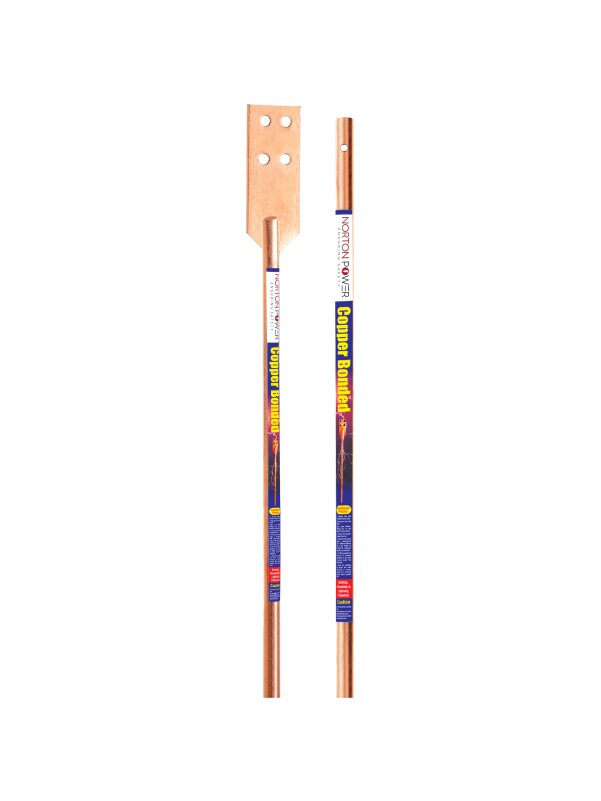
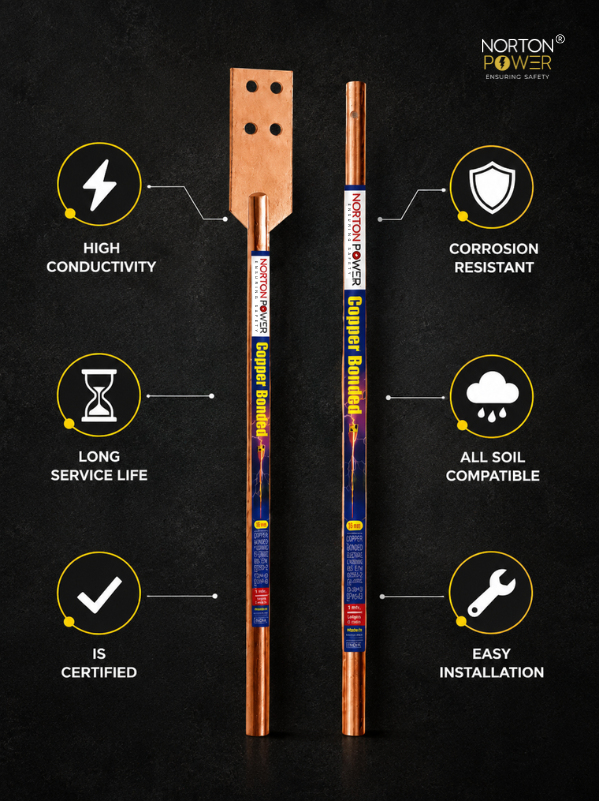
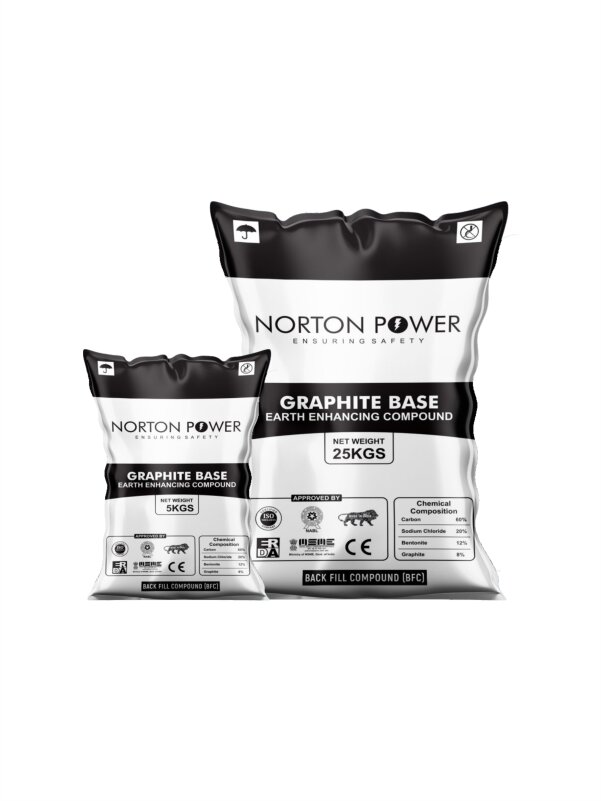
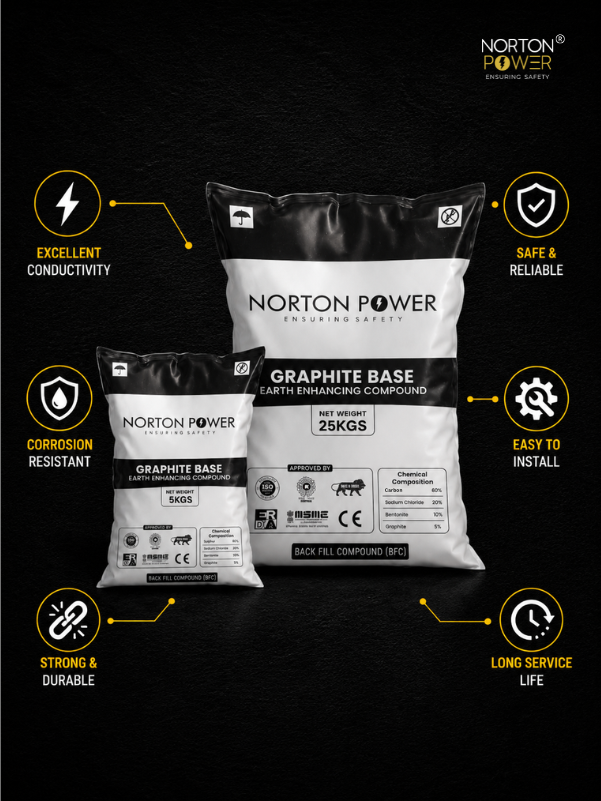
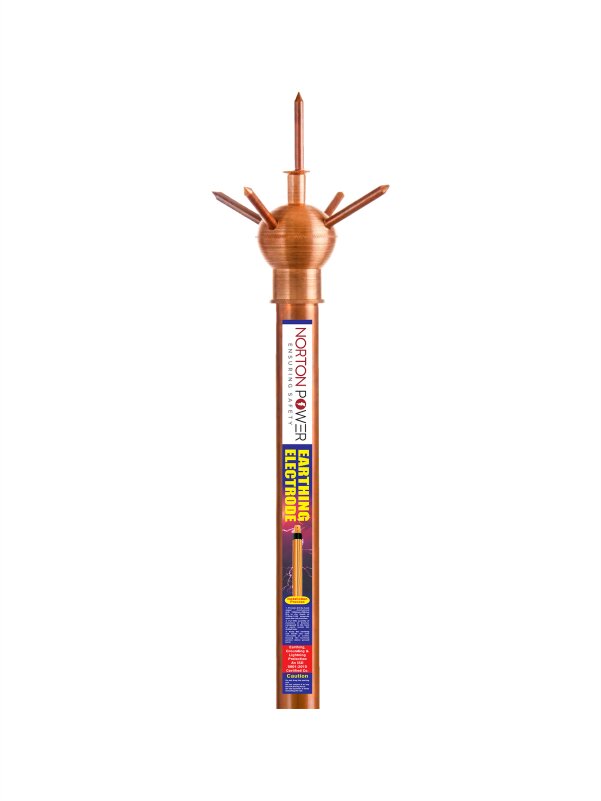
Each turbine sits on a large reinforced foundation. A copper ring earth electrode is buried around the foundation, bonded to the foundation reinforcement and the tower base, and supplemented by copper bonded rods and earth-enhancing compound to reach the target resistance. The ring gives the strike current a large, low-impedance dissipation area right at the base.
3. The blade-to-ground down-path
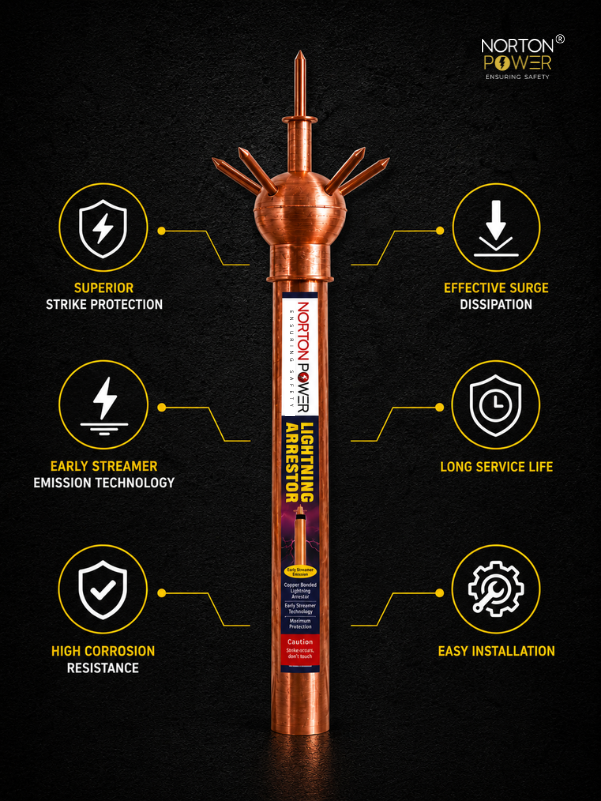
Lightning enters at blade-tip receptors and is carried by a down-conductor in each blade to the hub, then via the nacelle and tower structure (or dedicated conductors) to the foundation ring earth. Bonding across the drivetrain and bypass paths protect the bearings, gearbox and generator; surge protection guards the power and control electronics.
4. Bonding across the farm
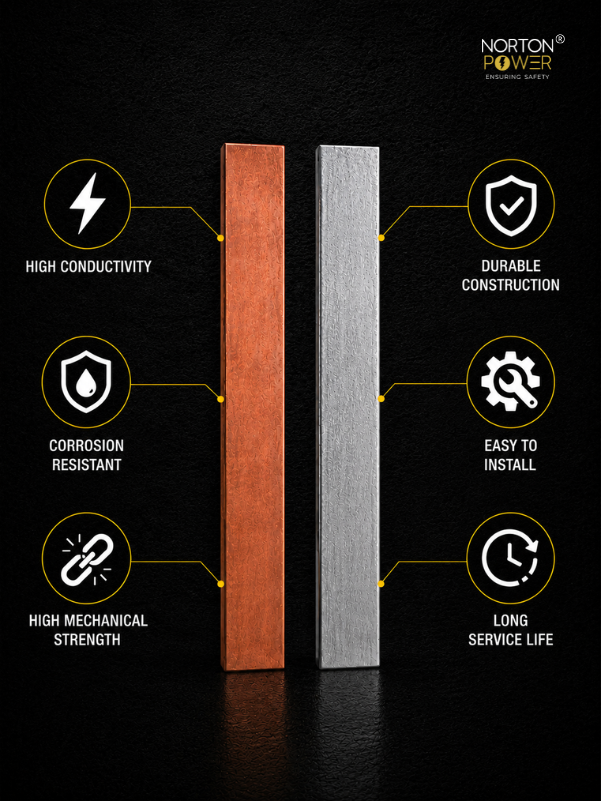
Individual turbine earths are interconnected by the buried cable-trench earth conductor running between turbines and back to the collector substation, so the whole farm is one bonded system. The collector substation itself has a full earthing grid sized to its fault current.
5. Remote, high-resistivity sites
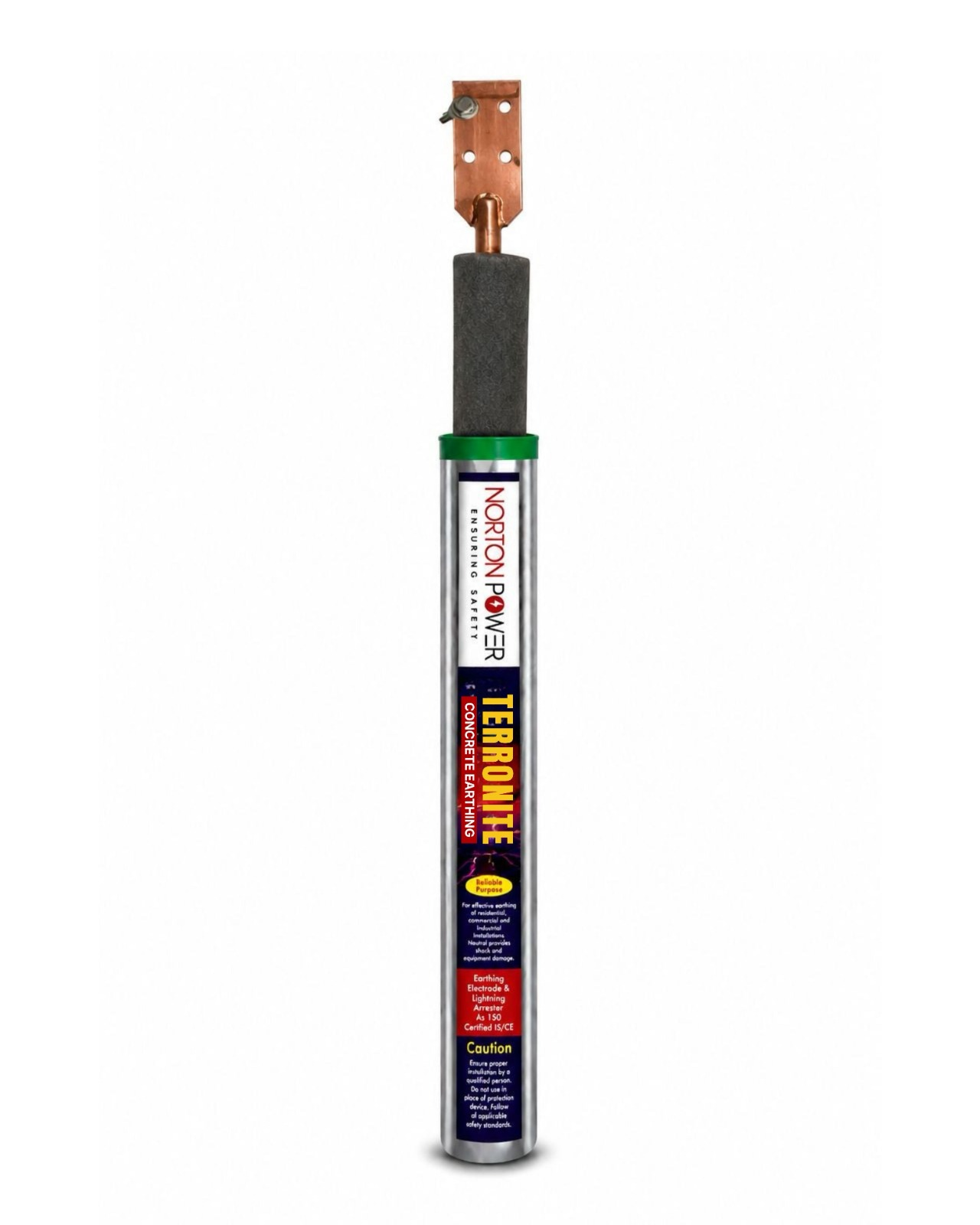
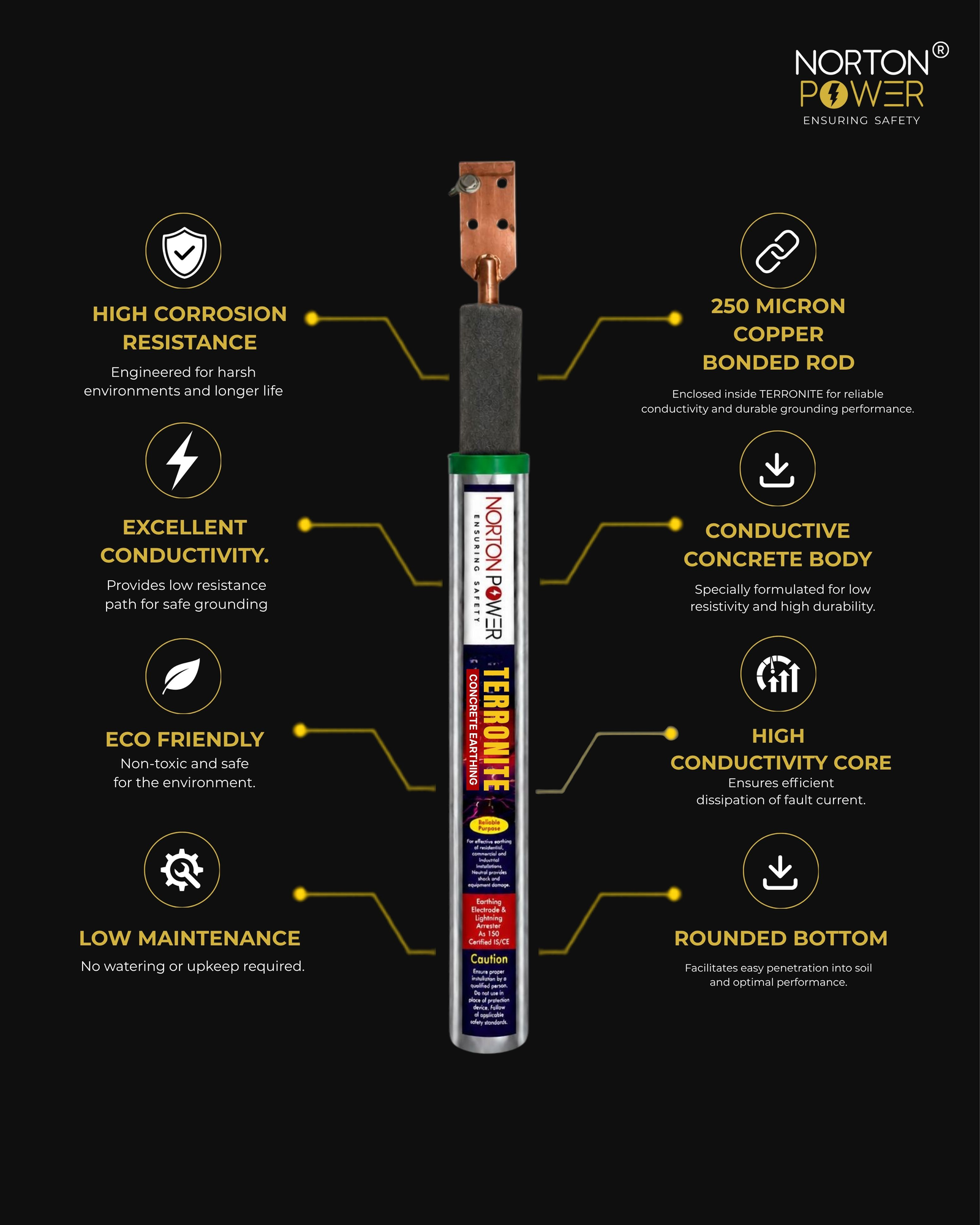
Wind sites are frequently on rock, dry ridges or coastal ground where a plain rod cannot reach the target. The answer is the ring earth plus earth-enhancing compound, and for genuinely high-resistivity or rocky ground, conductive-concrete earthing electrodes (IEC 62561-7) installed vertically or in trenches. Copper throughout resists the corrosive coastal environments many farms sit in.
6. Checks before you buy
- Is the design to IEC 61400-24 (turbine-specific) plus IEC 62305, with a foundation ring earth?
- Copper bonded 250 µm rods and copper conductors, sized for lightning and fault current in a corrosive environment?
- For rocky / high-resistivity sites, is a conductive-concrete or compound solution included?
- Are turbines interconnected and bonded to the collector substation grid?
- CPRI-tested electrodes and a sized BOM against the measured soil resistivity?